February 10, 1920  The Dirt on Baseball

“Part of every pitcher’s job was to dirty up a new ball the moment it was thrown onto the field… They smeared it with dirt, licorice, and tobacco juice; it was deliberately scuffed, sandpapered, scarred… and as it came over the plate, [the ball] was very hard to see.” – Ken Burns, Baseball

Pitcher Max Surkont once said “Baseball was never meant to be taken seriously — if it were, we would play it with a javelin instead of a ball”.  I’m not sure about javelins, but this much I know.  It’s a lot of fun to watch a home run, hit out of the park.

The New York Yankees hit 267 home runs last year, breaking the single-season record held for twenty-one years, by the Seattle Mariners.  But that’s not always how the game was played. The “Hitless Wonders” of the 1906 Chicago White Sox won the World Series with a .230 club batting average. Manager Fielder Jones said “This should prove that leather is mightier than wood”.  Fielder Allison Jones.  That’s the man’s real name.  If that’s not the greatest baseball name ever, it’s gotta be one of the top ten.

1994UpperDeckAllStar44This was the “dead-ball” era of the Major Leagues, an “inside baseball” style relying on stolen bases, hit-and-run plays and, more than anything, speed.

That’s not to say there were no power hitters. In some ways, a triple may be more difficult than a home run, requiring a runner to cover three bases in the face of a defense, still in possession of the ball. Pittsburgh Pirates outfielder Owen “Chief” Wilson set a record  36 triples in 1912. “Wahoo” Sam Crawford hit a career record 309 triples in 18 years in Major League Baseball, playing for the Cincinnati Reds and Detroit tigers from 1899 to 1917. 100 years later, it’s unlikely that either record will ever be broken.

In his 1994 television miniseries “Baseball”, Ken Burns explained that “Part of every pitcher’s job was to dirty up a new ball the moment it was thrown onto the field… They smeared it with dirt, licorice, and tobacco juice; it was deliberately scuffed, sandpapered, scarred… and as it came over the plate, [the ball] was very hard to see.”

5565612_origSpitballs lessened the natural friction with a pitcher’s fingers, reducing backspin and causing the ball to drop. Sandpapered, cut or scarred balls tended to “break” to the side of the scuff mark. Balls were rarely replaced in those days.  By the end of a game, the ball was scarred, misshapen and entirely unpredictable.  Major League Baseball outlawed “doctored” pitches on February 10, 1920, though it remained customary to play an entire game with the same ball.

The first ever game to be played “under the lights” was forty years in the past in 1920, but the practice would not be widespread, for another fifteen years.

Late afternoon on August 16, the Cleveland Indians were playing the New York Yankees at the Polo Grounds. Cleveland shortstop Ray Chapman took the plate in the top of the 5th, facing “submarine” pitcher Carl Mays.

submarine-425thA submarine pitch is not to be confused with the windmill underhand pitch we see in softball.  Submarine pitchers throw side-arm to under-handed, with upper bodies so low that some scuff their hands on the ground, the ball rising as it approaches the strike zone.

Submarine pitch

It seems Chapman didn’t see it coming. He never moved.  The crack of the ball hitting Ray Chapman’s head was so loud that Mays thought he had hit the end of the bat, fielding the ball and throwing to first for the out. Wally Pipp, the first baseman best known for losing his starting position to Lou Gehrig because of a headache, knew something was wrong. The batter made no effort to run but simply collapsed, slowly dropping to the ground with blood streaming out of his left ear.

ray_chapman_1917_indians_3.0
Ray Chapman

29-year-old Ray Chapman had said this was his last year playing ball.  He wanted to spend more time in the family business he had just married into. The man was right.  Raymond Johnson Chapman died 12 hours later, the only player in the history of Major League Baseball, to die from injuries sustained during a game.

The age of one-ball-per-game died with Ray Chapman, and with it the era of the dead ball. The lively ball era, had begun. Batters loved it, but pitchers struggled to come to grips, with all those shiny new balls.

MLB rule #3.01(c) states that “Before the game begins the umpire shall…Receive from the home club a supply of regulation baseballs, the number and make to be certified to the home club by the league president. The umpire shall inspect the baseballs and ensure they are regulation baseballs and that they are properly rubbed so that the gloss is removed. The umpire shall be the sole judge of the fitness of the balls to be used in the game”.

Umpires would “prep” the ball using a mixture of water and dirt from the field, but this resulted in too-soft covers, vulnerable to tampering. Something had to take the shine off the ball without softening the cover.

Philadelphia Athletics third base coach Lena Blackburne took up the challenge in 1938, scouring the riverbanks of New Jersey for just the right mud. Blackburne found his mud hole, describing the stuff as “resembling a cross between chocolate pudding and whipped cold cream”. By his death in the late fifties, Blackburne was selling his “Baseball Rubbing Mud” to every major league ball club in the country, and most minor league teams.
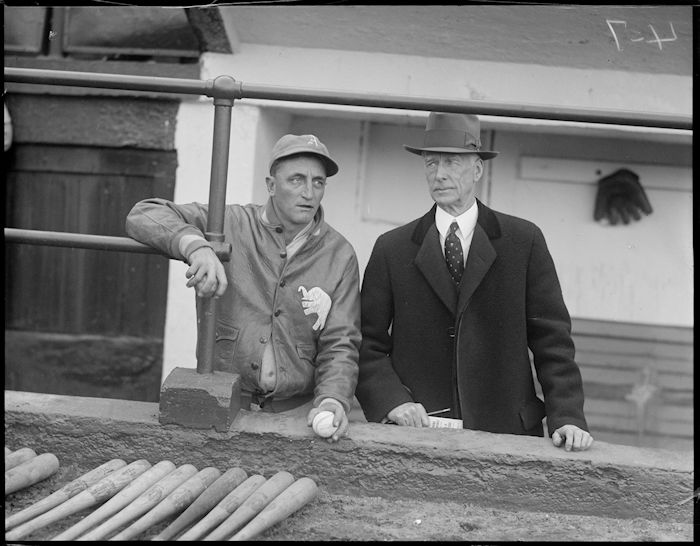
Philadelphia_Athletics_coach_Lena_Blackbourne_and_manager_Connie_Mack_in_the_dugout_at_Fenway_Park2
Philadelphia Athletics coach Lena Blackburne with team owner Cornelius McGillicuddy, better known as “Connie Mack”, Fenway Park

In a world where classified information is kept on personal email servers, there are still some secrets so pinky-swear-double-probation-secret that the truth may Never be known. Among them Facebook “Community Standards” algorithms, the formula for Coca Cola, and the Secret Swamp™, home of Lena Blackburne’s Baseball Rubbing Mud.

gettyimages-482263221-594x594

There’s an old joke here on Sunny Cape Cod™, that we have four seasons:  Almost Winter, Winter, Still Winter and Bridge Construction.  As we gaze out on the frozen tundra longing for that first crocus of Spring, one thing is sure. The first pitchers will show up to the first spring training camp, a few short days from now. Every baseball thrown from pre-season to the 2019 World Series, will first be de-glossed with Lena Blackburne’s famous, Baseball Rubbing Mud.

Play Ball!

Go Sox.

If you enjoyed this “Today in History”, please feel free to re-blog, “like” & share on social media, so that others may find and enjoy it as well. Please click the “follow” button on the right, to receive email updates on new articles.  Thank you for your interest, in the history we all share.

February 7, 138AD The Highest Paid Athlete, in History (It’s Not who you Think)

Crashes were frequent and spectacular, often killing or maiming driver and horse, alike.  Such wrecks were called naufragia, a Latin word translating as”shipwreck”.  As many as forty chariots crashed in one catastrophic wreck, near Delphi.

For we who are New England sports fans, the Smug™ yet lies heavy on the air, following back to back World Championships for the Boston Red Sox, and New England Patriots.  Having worked for the latter organization forty years ago when the team couldn’t get a game on TV, I have to tell you.  This is a lot more fun.

Another banner year
Most will find this graphic braggadocious, if not obnoxious.  A Chicago Cubs fan, will understand.

The winners of Superbowl LII received $112,000 each for winning the Big Game.  Losing players were paid $56,000, apiece.  Not bad for a single day’s work, but it raises an interesting  question.  Who is the highest paid athlete, of all time?

On December 13, 2017 Forbes Magazine answers as follows:

“The Highest-Paid Athletes of All-Time”

1. Michael Jordan Career earnings: $1.85 billion (2017 dollars)
2. Tiger Woods: $1.7 billion
3. Arnold Palmer: $1.4 billion
4. Jack Nicklaus Career earnings: $1.2 billion
5. Michael Schumacher: $1 billion
6. Phil Mickelson: $815 million
7. (tie) Kobe Bryant: $800 million
7. (tie) David Beckham: $800 million
9. Floyd Mayweather: $785 million
10. Shaquille O’Neal: $735 million

Seems Forbes missed one guy who earned nearly half-again, as the top ten.  Combined.

gaius-appuleius-diocles-highest-paid-athlete800-1485165317

The earliest chariots came around some 4,000 years ago, with the invention of the spoke-wheel. As a weapon of war, the use of these open, two-wheeled carriages came to a peak in 1300BC, around the Battle of Kadesh. Chariots lost their military importance as horses were bred to become bigger and stronger, able to carry a rider in the control position. The vehicle was gone as a weapon of war by the 1st century AD, but chariot races remained popular in Byzantine times, until the 6th century.

Chariot_spreadChariots go back to the earliest days of the Roman Republic, coming down from the ancient Greeks, by way of the Etruscan empire. The mythical abduction of the Sabine women was carried out, while the Sabine men watched a chariot race. While Romans never used them as weapons of war, chariots were used in triumphal processions, pulled by teams of horses, dogs, tigers and even ostriches.

It was the racetrack, the circus,  where the sport of chariot racing put the Fanatic in fans.  None greater, than the Circus Maximus.

What the Greeks saw as an opportunity for talented amateurs to rise within their chosen sport, the Romans regarded as entertainment.  A class of professional drivers, rose to meet the demand.  There were four teams or “factions” (factiones), distinguished by the color of their outfit:  Red, Blue, Green and White.

666a2787d4e5f542a91e5218309cc586Modern sport has seen its share of fan passion rising to violence, but the worst “soccer hooligan” fades to docility, compared with the crowd come to watch the chariot races.  In the year 69, Emperor Vitellius had commoners put to death for talking trash about the Blue faction.  Ten years later, a fan threw himself on the funeral pyre, of his favorite driver.  The week-long outbreak of violence known as the Nika Riots of 532 cost the lives of some 30,000 spectators.  It all started, over a chariot race.

Mercedes Benz Stadium in Atlanta, home of Super Bowl LIII, has a rated capacity of 71,000 spectators, expandable to 75,000.  The Circus Maximus measured 2,037-feet long by 387-feet wide and seated as many as a quarter-million.  Come race day, the city was all but deserted.

Twelve chariots would enter each race, three from each faction.  Golden-tipped dolphins were tipped over, to count the laps.  Each race ran seven.

course_de_char2

A raised median called a spina ran down the center, adorned with stone statuary and obelisks.  Ganging up to drive opposing handlers into the stone median or the stands, whipping opponents and even hauling them out of their chariots  was not only permitted, it was encouraged.

Tales of poisoned horses and drivers were not unheard of.  Lead tablets and amulets were inscribed with curses, spiked through with nails and thrown from the stands.  One such curse reads:

I call upon you, oh demon, whoever you are, to ask that from this hour, from this day, from this moment, you torture and kill the horses of the green and white factions and that you kill and crush completely the drivers Calrice, Felix, Primulus, and Romanus, and that you leave not a breath in their bodies.

ba90ba114005e082444846ca7ff751f7

Racing chariots were as light as possible and extremely flimsy, to increase speed.  With no suspension, even a bump could throw a driver into the path of oncoming teams.  Clogs were built into lattice floors, to hold the driver’s feet.  Teams of two (biga), three (triga) and four (quadriga) horses were common, but teams as large as six were not unheard of.  Though it was rare, ten-horse teams were known to take the field.

While Greek drivers held the reins in their hands, Roman charioteers wrapped them around the waist.  Unsurprisingly, any driver thrown out would be dragged to death or trampled, unless able to cut himself free.

Crashes were frequent and spectacular, often killing or maiming driver and horse, alike.  Such wrecks were called naufragia, a Latin word translating as”shipwreck”.  As many as forty chariots crashed in one catastrophic wreck, near Delphi.

Roman Chariot Race

It is often said to “Beware the old man in a land where men die young“.  The Roman countryside was dotted with the graves of twenty-year old chariot drivers.  Yet, on this day in 138, the Spanish driver Gaius Appuleius Diocles was only midway through a 24-year career, spanning 4,257 races.     He won 1,462 of them and placed in another 1,438.

Diocles wasn’t the “winningest” driver in Rome, though he did own an extremely rare ducenarius, a horse which had won at least 200 races.  Flavius Scorpus scored 2,048 victories before being killed in a wreck at the age of twenty-seven.   Pompeius Muscosus won 3,559.  Diocles was the master of the “come from behind” victory.  Crowds loved it.  In his 24 years, Diocles went from White to Green to Red factions amassing an impressive 35,863,120 sesterces, over the course of a long career.

It was enough to keep the entire city of Rome in grain for a year, equivalent to $15 Billion, today.  Not bad for a guy whose name indicates he probably started out a slave, freed by a guy named Gaius Appuleius.

If you enjoyed this “Today in History”, please feel free to re-blog, “like” & share on social media, so that others may find and enjoy it as well. Please click the “follow” button on the right, to receive email updates on new articles.  Thank you for your interest, in the history we all share.

January 19, 1945 Sibling Rivalry

Remember that familiar cat or those famous three stripes, next time you lace up.  You just might be wearing a piece of history.

In the biblical story of Genesis, Cain was born to Adam and Eve, followed by his brother Abel. The first to be born slew his own brother, the first human to die, and Cain was cast out to wander in the land of nod, east of Eden.

According to legend, the evil King Amulius ordered the twin sons of Rhea Silvia and the war god Mars drowned in the Tyber River. Instead the boys washed ashore, to be suckled by a she-wolf. Romulus and Remus founded a town on the site of their salvation, the traditional date being April 21, 753BC. Romulus later murdered his brother after some petty quarrel, making himself sole ruler of the settlement. He modestly called the place “Rome”, after himself.

Two thousand years later, two brothers come into this story. The enmity between Adolf and Rudolf Dassler never rose to fratricide but it came close, a hatred for one another which lasted, beyond the grave.  And you may be wearing one of their products, as you read this.

Oh.  Did I tell you they were both, Nazis?

The Bavarian town of Herzogenaurach is located in the Middle Franconia region of West Germany, about 14 miles from Nuremberg. In the early 20th century, the local textile economy collapsed in the face of more industrialized competitors. Many turned to shoe-making. By 1922, the small town of 3,500 boasted some 122 cobblers. Christoph Dassler was one such, specializing in felt slippers.

adolf_dassler
Adolf Dassler

Adolf “Adi” Dassler was the third son and youngest of four children born to Christoph and Paulina Dassler.  An avid sportsman and athlete, Adi engaged in a variety of sporting events including track & field, futbol, skiing and ice hockey.  Usually with close friend Fritz Zehlein, the son of a local blacksmith.

The “Great War” descended over Germany in 1914, and the elder Dassler boys were conscripted into the army. Not yet thirteen, Adi was apprenticed to a baker, but turned to his father instead to learn the intricate stitching of the cobbler. Adi was particularly interested in sports, and how the proper shoe could improve athletic performance.

Adi himself was drafted into the army in 1918, five months before his 18th birthday.

Adi returned to what he knew after the war, repairing shoes while starting a business of his own. The German economy lay in ruins.  Dassler was forced to scavenge war materials, to form his designs. Leather from bread pouches. Canvas from uniforms. And always the need to improvise, jury rigging available machinery in the absence of electricity.

Rudolf Dassler trained to become a police officer, but left to join his brother’s company, forming the Dassler Brothers Sports Shoe company, in 1924.  Dassler Brothers may have been the first to use metal spikes, fashioned by Adi’s old buddy, Fritz Zehlein.

The following year, the company was making leather Fußballschuhe with nailed studs and track shoes with hand-made spikes.

jesseowensadidasshoesFormer Olympian and coach of the German Olympic track & field team Josef Waitzer took an interest in the work, becoming a friend and consultant. Dassler brothers shoes were used in international competitions as early as the 1928 games in Amsterdam and the Los Angeles games, of 1932.


With the rise of Adolf Hitler and the Nazi party in 1933, it was hard not to see the economic self-interest, in politics. The Dassler brothers – Adi, Rudi and Fritz joined the party on May 1.

bundesarchiv_bild_183-r96374,_berlin,_olympiade,_jesse_owens_beim_weitsprung
Jesse Owens

For the family business, the big break came in 1936, when American Olympian Jesse Owens agreed to compete in Dassler Brothers shoes. This American athlete of African ancestry went on to win four gold medals, a humiliating defeat for Hitler’s Aryan “master race”, but the sporting world soon beat a path to Adi’s door.

Compared with his brothers, Rudi seems to have been the more ardent Nazi.  Adi confined himself to coaching Hitler Youth teams, while Rudi was off at rallies and political meetings.  It was much of what led to their parting of the ways.

Germany once again found itself at war and Adi switched over to producing army boots.  Christoph and Paulina lived with their two grown sons and their wives, and five grandchildren.  Käthe (Martz) Dassler, Adi’s wife, had frequent run-ins with her mother and father-in-law, and seems to have had a relationship of mutual detestation with Rudi’s wife, Friedl.

Family fault lines were already irreparable in 1943, when Adi and Käthe climbed into a bomb shelter, already occupied by his brother and his family. Adi commented “The dirty bastards are back again,” referring to Allied war planes overhead. Rudi was convinced his brother was talking about him.

Rudolf blamed his brother and his “Nazi friends” when he was called up to fight the Russians, in the east.  Adi himself was drafted but dismissed, when his civilian services were deemed indispensable to the war effort.

Stationed in Tuschin that April, Rudi wrote to his brother: “I will not hesitate to seek the closure of the factory so that you be forced to take up an occupation that will allow you to play the leader and, as a first-class sportsman, to carry a gun.”

The Soviet Red Army overran Tuschin on January 19, 1945, decimating Dassler’s unit.  Rudi fled to Herzogenaurach where a doctor certified him as militarily “incapable”, due to a frozen foot.

rudolf_dassler
Rudolf Dassler

Allied “de-nazification” efforts after the war led to a blizzard of recriminations between the two brothers, and the end of the Dassler Brothers Shoe Factory.  These two hated each other.

Adi Dassler’s new company would be known as Adidas.  Rudi tried to copy the idea and called his new company “Ruda”, but it didn’t have the same ring.  He settled on “Puma”.

Herzogenaurach became a two-factory town, a German Hatfield & McCoys.  The rivalry extended to the two football clubs in town, ASV Herzogenaurach and 1FC Herzogenaurach.  There were Adidas stores, and Puma stores. Adidas restaurants, and Puma restaurants.  And don’t even think about being served if you had the wrong shoes on your feet.  The place was so saturated with the hate these two brothers felt for each other, it came to be the “Town of Bent Necks“.   For sixty years, people ignored or talked with each other, based on whose side they were on.

The Dassler brothers never reconciled.  They are buried in the same cemetery, as far away from each other as it is possible to be.  The families are now out of the business, and so is the antagonism that held out for all those years.  So remember that familiar cat or those famous three stripes, next time you lace up.  You just might be wearing a piece of history.

071512_1035_adidasvspum1

If you enjoyed this “Today in History”, please feel free to re-blog, “like” & share on social media, so that others may find and enjoy it as well. Please click the “follow” button on the right, to receive email updates on new articles.  Thank you for your interest, in the history we all share.

January 7, 1927 Harlem Globetrotter

No less a figure than Wilt Chamberlain said “Meadowlark was the most sensational, awesome, incredible basketball player I’ve ever seen. People would say it would be Dr. J or even Jordan. For me it would be Meadowlark Lemon”.

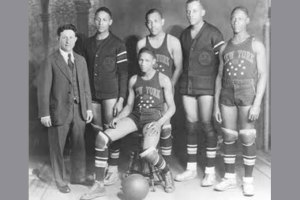
In 1926, 24 year old Abraham Saperstein organized a basketball team.  He called it the “Savoy Big Five,” after Chicago’s famous Savoy Ballroom.  At least that’s what the official team history says, except the Savoy didn’t open until 1927, so we may have to just go with it.

January 7, 1927 Harlem Globetrotters

Saperstein renamed them the “Harlem Globetrotters”, even though they were from Chicago, the team arriving in a Model “T” Ford for their debut game on January 7, 1927.   For two years it had been exhibition games before dances.  Now, the big game in Hinckley, Illinois would be played in front of 300 fans, with a total game payout of $75.

harlemglobetrotters1927
Harlem Globetrotters, 1927

They toured Wisconsin, Minnesota, and Iowa, playing almost every night against any and all challengers. Saperstein himself sometimes suited up to fill in for an injured player.  The Globetrotters played their 1000th game in Iron Mountain, Michigan in 1934.

In 1941, Negro League 1st baseman Reece “Goose” Tatum caught Saperstein’s eye.  A goose-tatummulti-sport athlete and teammate of Satchel Paige, Tatum would entertain the crowd with comedic routines whenever he put a runner out.  He was 6’4″ with an 84″ wingspan, able to touch his knees without bending. He’s credited with inventing the hook shot, an early version of the “skyhook” that would make Kareem Abdul-Jabbar famous, 30 years later.

Tatum was the original “Clown Prince” of the Globetrotters, though that title more often goes Meadowlark Lemon and his confetti-in-the-water-bucket routine.  Tatum combined natural athletic ability with a comedic timing that would change the whole direction of the club.  He passed away in 1967 at the age of 45, when sports reporter Lawrence Casey of the Chicago Daily Defender wrote, “Like Joe Louis in boxing, Babe Ruth in baseball, Bobby Jones in golf, Goose Tatum was king of his chosen sport.”

When Goose was drafted into the Army Air Corps in 1942, the Globetrotters signed their bob-karstensthird Caucasian, the first-ever white player to be offered a contract, Bob Karstens.  Karstens was the newest showman on the team, creating the signature pregame “Magic Circle,” the behind-the-back backhand shot, the “yo-yo” basketball and the “goofball,” a basketball filled with weights to give it a crazy bounce.  It was the early 1940s and the Harlem Globetrotters were the most famous, and the most profitable, professional basketball franchise in the world.

A near-fatal car accident cost Boid Buie his left arm when he was 13.  Never a great athlete before the crash, he worked so hard on his goals that Buie became the “One Armed Firecracker”.  He signed with the Globetrotters in 1946, playing 9 seasons as a starter and averaging 14 points per game.  Ever since the 2011 Elite Showcase Basketball Classic, the MVP Award is presented in the name of Boid Buie.buie

The Globetrotters were a serious basketball team throughout the early years, winning the World Professional Basketball Tournament as late as 1940.  They gradually worked more comic routines into their game in the late 40s and 50s as the newly founded NBA gained popularity until finally, they were better known for entertainment than for sport.

“Playing the bones” has a musical history going back to ancient China, Egypt, Greece and Rome.  Part of 19th century minstrel shows and traditional to musical genres ranging from Irish, to Bluegrass, to Zydeco. Freeman Davis’ “Brother Bones” recording of the 1925 jazz standard “Sweet Georgia Brown” became the Globetrotters’ theme song in 1952.

Former point guard with the NBA Baltimore Bullets, Louis “Red” Klotz, formed an exhibition team in 1952 to play against the Globetrotters.  In a nod to future President Dwight Eisenhower, he called them the Washington Generals.  The Generals played serious basketball while their opponents juggled balls, spun them on fingertips, and made trick shots.  The two teams played 13,000 games between 1953 and 1995, of which the Generals actually won 6.

Those of us who came of age in the 70s remember Curley Neal and Meadowlark Lemon,

who joined the club in 1954.  Who remembers that Wilt “the stilt” Chamberlain joined theteam four years later?  Chamberlain would be the first Globetrotter to have his jersey retired.

Chamberlain and the Globetrotters did their part to warm the Cold War, with a nine game series in Moscow, in 1959.  The Generals stayed at home, this time they brought the “Chinese Basketeers”.  An audience of 14,000 sat in stupefied silence, finally warming when they realized that this was more show than sport.  The team was paid the equivalent of $4,000 per game which could only be spent in Moscow, prompting the American press to observe that the Soviets were becoming capitalists.

abe-sapersteinAbe Saperstein passed away in 1966, aged 63.  The owner and founder of the Harlem Globetrotters, he was also founder and first Commissioner of the American Basketball League, and inventor of the three point shot.   Elected to the Basketball of Fame in 1971.  Here’s a great trivia question for you.  At 5’3″, Saperstein is the shortest male member in the place.  In 2005, he was inducted into the National Jewish Sports Hall of Fame.

Meadowlark Lemon “defends” Betty Ford

Saperstein’s creation went on, signing Olympic Gold Medalist Lynette Woodard their first ever female player in 1985.  Pope John Paul II became an honorary Globetrotter in 1986, in a ceremony in front of 50,000 in Saint Peter’s Square.

The list of official honorary Globetrotters includes Henry Kissinger, Bob Hope, Kareem Abdul-Jabbar, Whoopi Goldberg, Nelson Mandela, Jackie Joyner-Kersee, and Jesse Jackson.  Jesse Owens, the track star who stuffed Adolf Hitler at the 1936 Berlin olympics, accompanied the Globetrotters to Berlin in 1951.  Bill Cosby and Magic Johnson are both signed to $1 a year lifetime contracts, though Cosby’s contract was increased to $1.05 in 1986.

Ninety years after their founding, the Harlem Globetrotters show no signs of slowing down.  In 2015, the team drafted 6’6″ 2015 college slam dunk champion LaQuavius Cotton from Mississippi’s Delta State University, and trick shot expert “Dude Perfect” of Mickinney, Texas.  How do you not root for a team with two guys named LaQuavius Cotton and Dude Perfect?

pope-francis“Flight Time Lang” teaches Pope Francis to spin the ball
Shortly before he passed in 1999, Wilt Chamberlain was asked about the greatest basketball player of all time.  “Meadowlark was the most sensational, awesome, incredible basketball player I’ve ever seen.  People would say it would be Dr. J or even Jordan. For me it would be Meadowlark Lemon.”  Meadowlark Lemon played over 16,000 games with the Harlem Globetrotters before retirement, and passed away on December 27, 2015 in Scottsdale, Arizona, aged 83.  Rest in Peace, sir.  You brought a lot of smiles to the little boy in me.

November 17, 1968 The Heidi Bowl

“Short of pre-empting Heidi for a skin flick, NBC could not have managed to alienate more viewers that evening.”

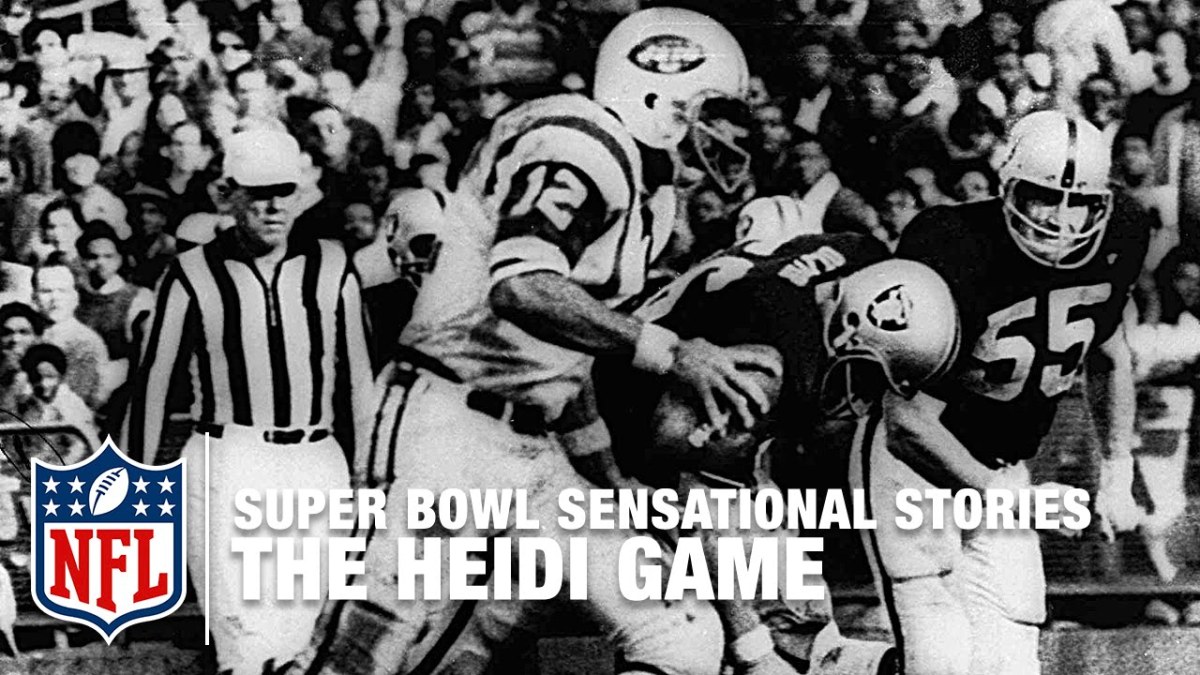
For a football fan, November 17, 1968 was shaping up to be one hell of a game.  The second-best team in the world Oakland Raiders if the results of Super Bowl II were any indication, against the future American Football League champion and Super Bowl III winner, New York Jets.

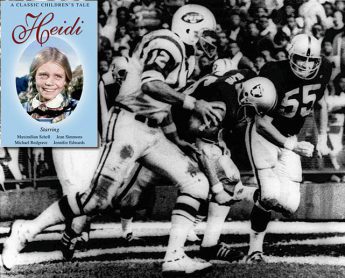
raiders-jets-heidi-bowlNBC executives, were thrilled.  The AFL was only eight years old in 1968 and as yet unproven compared with the older league, the NFL/AFL merger still two years in the future. 
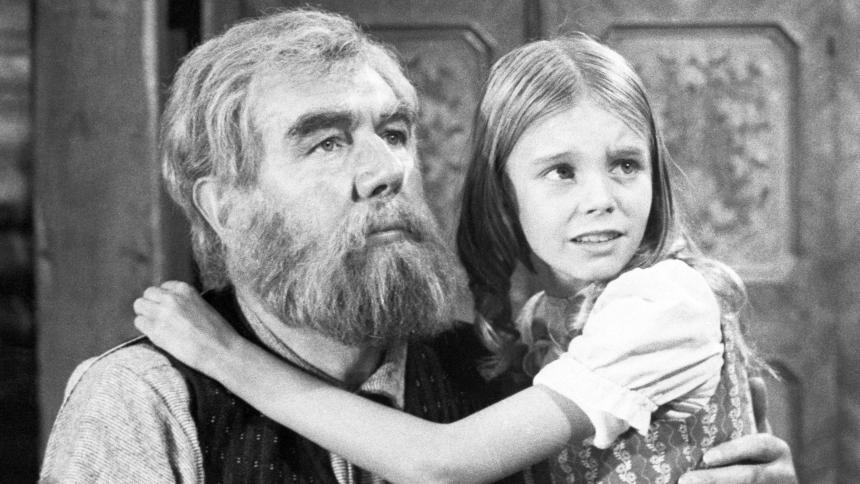
This game was expected to keep viewers in their seats, adding to the already large audience expected for the 7:00pm presentation of Heidi, a modern remake of the children’s classic story from 1880.

Most pro football games were played in 2½ hours in those days, and league executives scheduled this one, for three.  The contract with Heidi prime sponsor Timex specified a 7:00 start and so the order went down.  There would be no delays.

The game did not disappoint, voted among the ten most memorable games in professional football history in 1997, and the most memorable regular season contest, ever.  The rivalry between the two clubs was intense, a high-scoring game where the lead changed, no fewer than eight times.  

image-952333-860_poster_16x9-yegb-952333

Network brass began to worry as early as 6:20 E.T., that the game wouldn’t end on time.  7:00 arrived with a minute & five seconds left to play and the Jets ahead, 32-29. 

Network and affiliate switchboards began to light up, fans demanding the game be broadcast in its entirety, while others asked if Heidi would begin, on time.  

6a00d8341c630a53ef0105360145c0970c-800wi

NBC Sports executive producer Don “Scotty” Connal and network president Julian Goodman had by this time agreed to “slide the network”, to begin Heidi as soon as Curt Gowdy signed off from the game.

By this time phone switchboards were jammed, solid.  NBC’s CIrcle-7 phone exchange blew twenty-six fuses, in an hour.  Broadcast Operations Control (BOC) supervisor Dick Cline nervously watched the clock as Connal frantically tried to call, but couldn’t get through.

The television audience watched Oakland running back Charlie Smith return the kickoff from the end zone to the Oakland 22-yard line with 1:01 remaining on the clock, when the feed was broken.

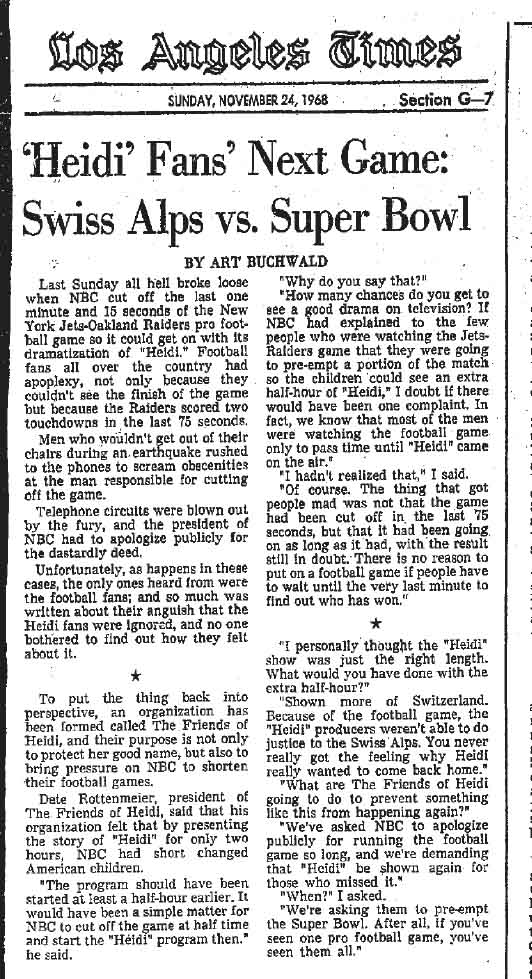
Heads exploded across the nation as callers reached out to newspapers and television stations, even local police departments, to demand the score.  And to bitch.   Humorist Art Buchwald wrote “Men who wouldn’t get out of their chairs in an earthquake rushed to the phone to scream obscenities [at the network].”

Meanwhile, the Oakland Raiders staged the most amazing come-from-behind rally in the history of sport, scoring two touchdowns in nine seconds.  Gamblers were apoplectic on learning the news, that the Raiders had beat the 7½ point spread. 

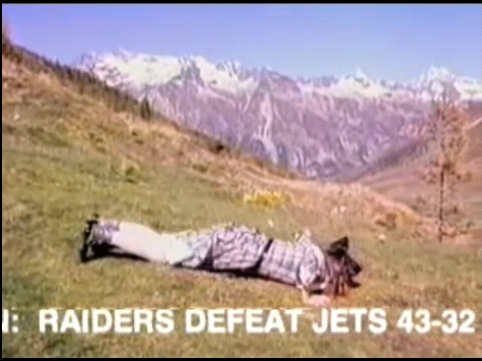
The film was just reaching a most tear-jerking moment as Heidi’s paralyzed cousin Clara was taking her first halting steps, as NBC broke in: “SPORTS BULLETIN: RAIDERS DEFEAT JETS 43-32”.

If half the nation hated NBC at that moment, now the other half did, as well. Sportswriter Jack Clary quipped, “The football fans were indignant when they saw what they had missed. The Heidi audience was peeved at having an ambulatory football score intrude on one of the story’s more touching moments. Short of pre-empting Heidi for a skin flick, NBC could not have managed to alienate more viewers that evening.”

heidi-game-news-bulletin-4-e1348762143862The “Heidi Bowl” was prime time news the following night, on all three networks. NBC’s Huntley-Brinkley Report aired the last sixty seconds while ABC Evening News anchor Frank Reynolds read excerpts from the movie, with clips of the Raiders’ two touchdowns cut in. CBS Evening News’ Harry Reasoner announced the “result” of the game: “Heidi married the goat-herder“.
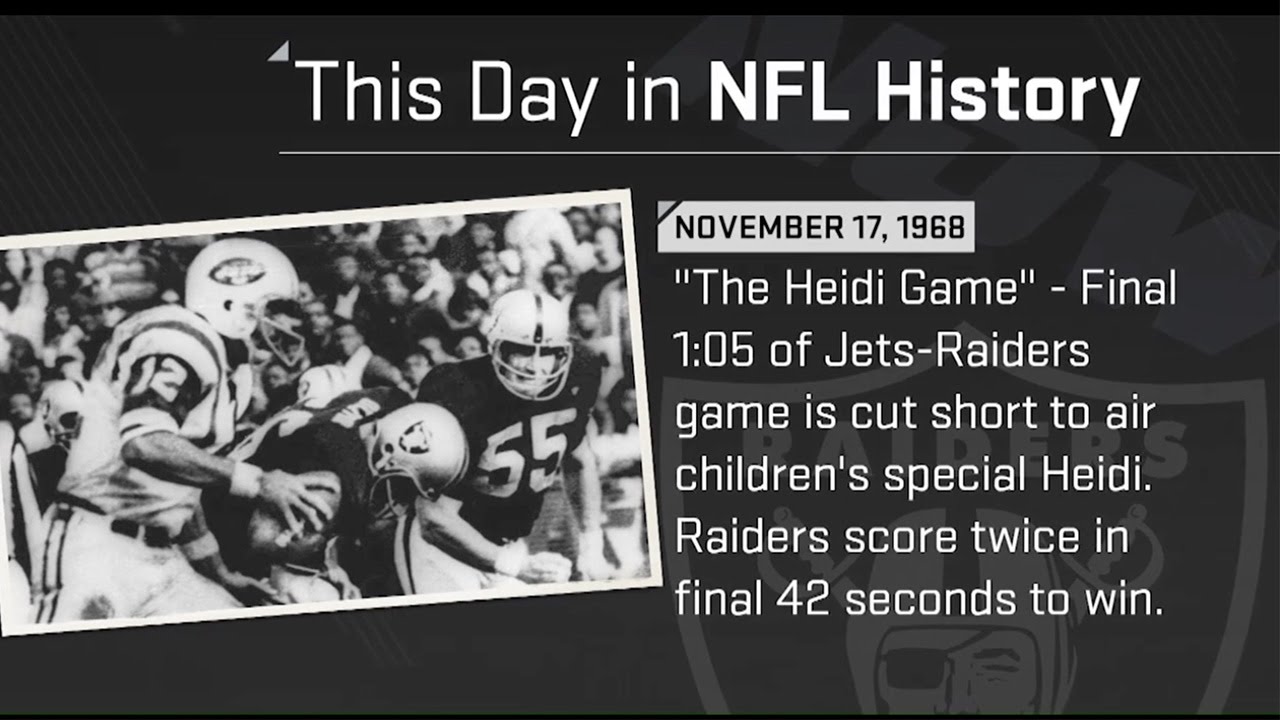
NBC had no option but self-mockery, to redeem itself from the fiasco. One testimonial read “I didn’t get a chance to see it, but I hear it was great”. It was signed by Joe Namath.

A special “Heidi phone” was installed in the BOC, to prevent future such disasters. In 2005, TV Guide listed the Heidi Bowl at #6 of the “100 Most Unexpected TV Moments” in television history.

Actress Jennifer Edwards in the title role of the film, may have had the final word: “My gravestone is gonna say, ‘She was a great moment in sports'”.

maxresdefault (18)

If you enjoyed this “Today in History”, please feel free to re-blog, “like” & share on social media, so that others may find and enjoy it as well. Please click the “follow” button on the right, to receive email updates on new articles.  Thank you for your interest, in the history we all share.


October 6, 1945 The Curse of the Billy Goat

Red Sox fans are well aware of the famous choke in game 6 of the ‘86 World Series, resulting in the line “What does Billy Buckner have in common with Michael Jackson? They both wear one glove for no apparent reason”. What my fellow Sox fans may not be aware of, is that the former Cub was wearing a Chicago batting glove under his mitt. For “luck”.

For a Red Sox fan, there was nothing sweeter than the 2004 World Series victory ending the curse of the Bambino.  Babies grew up and had babies of their own during that time. There were grandchildren and great grandchildren, and sometimes even great-greats, and still the drought wore on. It was 86 years, the third-longest World Series championship drought in Major League Baseball history.

Long suffering fans of the Chicago White Sox endured the second-longest such championship dearth, following the “Black Sox” scandal of 1919.  For 88 years, that mournful cry came down through the ages:  “Say it ain’t so, Joe”.

curse-of-the-billy-goatYet, the suffering inflicted by the curse of the Black Sox and that of the Bambino, pales in comparison with the 108-year drought afflicting the Chicago Cubs since back-to-back championships in 1907/1908.  And they say it’s the fault of a Billy goat.
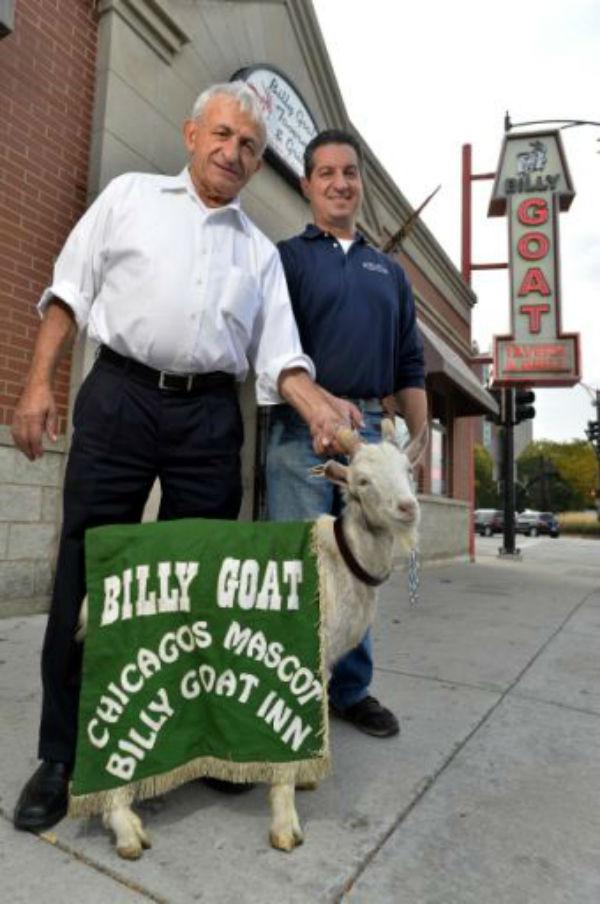
It was game four of the World Series between the Cubbies and the Detroit Tigers, October 6, 1945, with Chicago home at Wrigley Field. Billy Sianis, owner of the Billy Goat Tavern in Chicago, bought tickets for himself and his pet goat “Murphy”.  Really.

Now, goats don’t smell any sweeter than most other livestock, save for the male in rut.  This part of the animals fertility cycle happens in the fall for many breeds and, while it’s pure speculation, the oft-repeated expression “smells like a goat”, comes to mind.  There are different versions of the story, but they all end with the pair being ejected, and Billy casting a curse. “Them Cubs“, he said, “they ain’t gonna win no more“.

Curse_of_the_Billy_Goat-2

Sianis’ family claims that he sent a telegram to team owner Philip Wrigley reading, “You are going to lose this World Series and you are never going to win another World Series again. You are never going to win a World Series again because you insulted my goat.”
Billy Sianis was right. The Cubs were up two games to one at the time, but they went on to lose the series. They’ve been losing ever since.

Sam-and-Bill-Sianis-owners-of-Chicago-s-Billy-Goat-Tavern-2015Billy Sianis himself is gone now, but they brought his nephew Sam onto the field with a goat in 1984, to help break the curse.  They did it again in 1989, 1994 and 1998, and always the same result.
The Florida Marlins taunted the Cubs in August of 2009, parading a goat in front of the Cub’s dugout between the second and third innings. Chicago manager Lou Piniella was not amused, though the Cubs squeaked by with that one, 9-8.

In 2003, the year of the goat on the Chinese calendar, a group of Cubs fans brought a goat named Virgil Homer to Houston, during the division championship series. They couldn’t get him into Minute Maid Park, so they unfurled a scroll outside and proclaimed the End of the Curse.

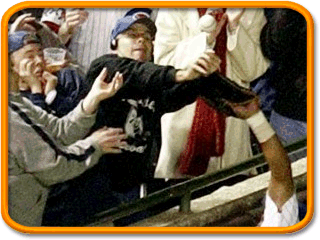
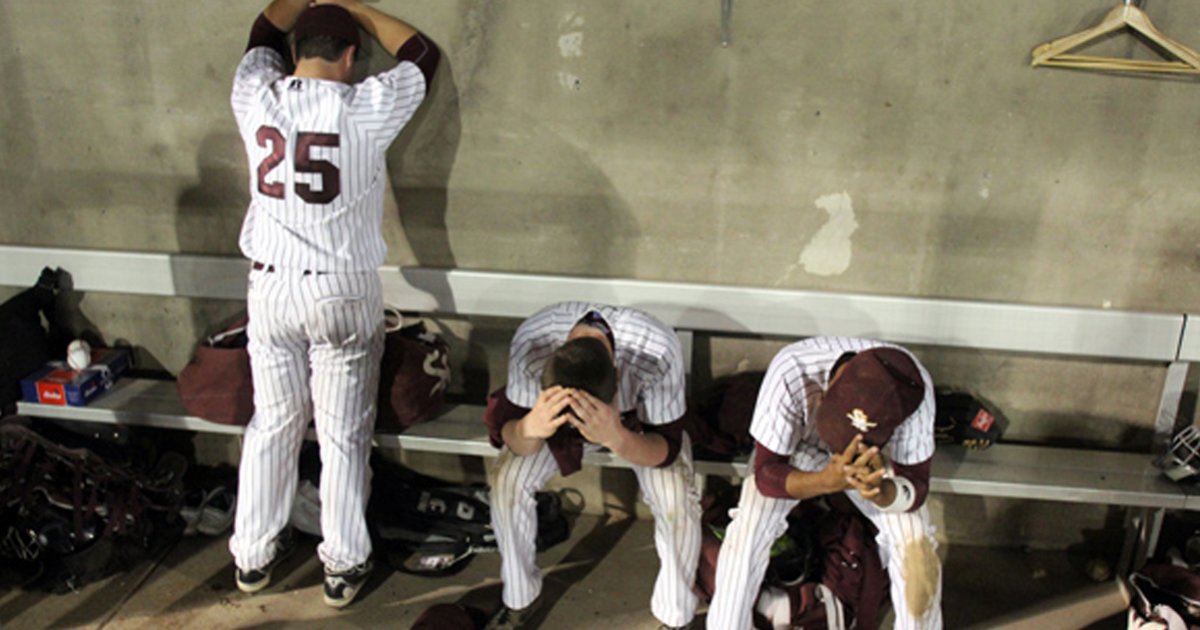
Ol’ Virgil got them through that series, but the curse came roaring back in game 6 of the NL championship. It was Cubbies 3, Florida Marlins 0 in the 8th inning of game 6. Chicago was ahead in the series, when lifelong Cubbies fan Steve Bartman reached down and deflected a ball that should have easily been caught by Chicago outfielder Moisés Alou. The Marlins came back with 8 unanswered runs in the inning, while Bartman required a police escort to get out of the field alive.

cubsFor fourteen years, Chicago mothers frightened wayward children into behaving, with the name of Steve Bartman.
In 2008, a Greek Orthodox priest sprinkled holy water around the Cubs dugout. Goat carcasses and parts have appeared at Wrigley Field on multiple occasions, usually draped across the statue of Harry Caray.

Five fans set out on foot with a goat from the Cubs’ Spring Training facility in 2012.  “Crack the Curse” was supposed to do it.  These guys walked 1,764 miles from Mesa, Arizona to Wrigley Field. The effort raised a lot of money for the Fred Hutchinson Cancer Center, but the curse of the Billy goat remained serene, and unbreakable.

Red Sox fans are well aware of the famous choke in game 6 of the ‘86 World Series, resulting in the line “What does Billy Buckner have in common with Michael Jackson? They both wear one glove for no apparent reason”. What my fellow Sox fans may not be aware of, is that the former Cub was wearing a Chicago batting glove under his mitt. For “luck”.

profile

2015 was the Year of the Goat on the Chinese zodiac. In September, five “competitive eaters” consumed a 40-pound goat in 13 minutes and 22 seconds at Chicago’s “Taco in A Bag”. The goat was gone. Surely that would work. The Cubs made it all the way to the National League Championships, only to be broomed by the New York Mets.

Mets 2nd baseman Daniel Murphy was the NLCS MVP that year, setting a postseason record for consecutive games with a home run. Mets fans joked that, Murphy may be the Greatest of All Time (GOAT), but he wasn’t the first.

1913MilwaukeeBrewers_goatThe cookies pictured above were baked in 2016, and that might’ve finally done it.  That’s right.  The Mother of all Droughts came to a halt in extra innings of game seven, following a 17-minute rain delay.  At long last, Steve Bartman could emerge from Chicago’s most unforgiving doghouse, his way now lit by his own World Series ring. The ghost of Billy Sianis’ goat, may finally rest in peace.

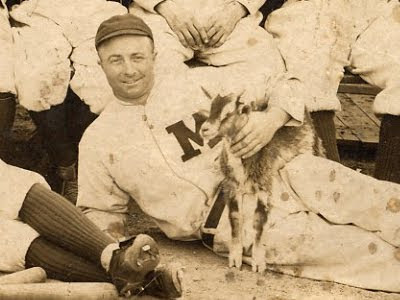
In reading up for this story, I discovered that the 1913/1914 Milwaukee Brewers roster included a nanny goat, called Fatima. Honest.  I wouldn’t kid you about a thing like that.

If you enjoyed this “Today in History”, please feel free to re-blog, “like” & share on social media, so that others may find and enjoy it as well. Please click the “follow” button on the right, to receive email updates on new articles.  Thank you for your interest, in the history we all share.

September 26, 1995 Last Skate

There was nothing but potential in that rookie year, but that bright future was never meant to be.

Having come of age in this part of the world, it’s hard to imagine anyone over forty never having been to the old Boston Garden.

Originally built as a boxing venue, “The Garden” was then known as the Boston Madison Square Garden.

President Calvin Coolidge flipped a switch at the White House in November 1928, turning the lights on at the brand new arena.  Three days later, a crowd of 14,000 watched Dorchester native Dick “Honeyboy” Finnegan take the World featherweight championship away from French boxer Andre Routis, in a ten round decision.

From the earliest days, the Boston Garden was the site of political conventions, tennis matches, roller derbies and bike races.  There you could hear the sounds of a Christian revival one night, and a dance marathon the next.

FDR, Winston Churchill and Dwight Eisenhower all delivered speeches from the floor of the Garden.  Legend has it that JFK mapped out his political strategy for the 1960 Presidential election, while watching a Bruins game.

I saw my first big-time rock concert, when Aerosmith played the Garden in 1975.

The Boston Celtics played to 16 championships on the old parquet, along with 19 Conference and 15 Division titles.

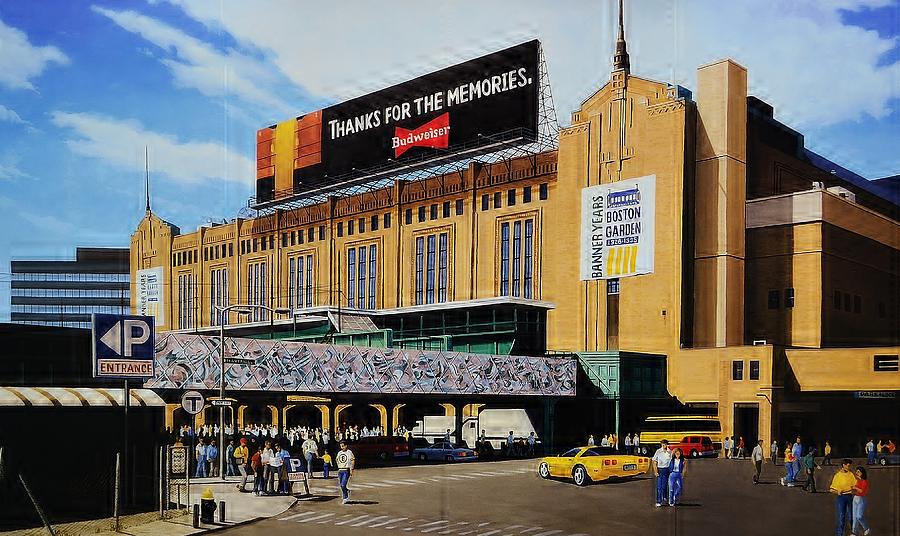
boston-garden-t-kolendera
Boston Garden is a painting by T Kolendera

Five times did the Bruins hold Lord Stanley’s Cup aloft on the home ice of the Garden, adding to 19 Eastern Division championships, two Conference championships, and a President’s trophy.

In the end, obstructed seats and a lack of air conditioning spelled the end for the Boston Garden.  On this day in 1995, Cam Neely scored the final goal in a 3-0 victory over the arch rival Montreal Canadiens.  There would be no more.

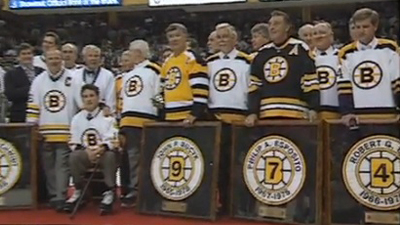
Many of the Greats of Boston hockey were there that night, to take a final skate around the Bruins’ home ice.   Johnny Bucyk was on-hand, along with Milt Schmidt.  There was Phil Esposito, Ray Bourque and Bobby Orr, and possibly the greatest, though few will remember the name of Normand Léveillé.

032013orr1

A first-round draft pick in 1981, Léveillé scored 33 goals in his first 60 games with the Bruins.  There was nothing but potential in that rookie year, but that bright future was never meant to be.

On October 23, 1982, Boston was playing the Canucks in the ninth game of his second season.  Léveillé complained of feeling dizzy, and lost consciousness during trainers’ examination .  An aneurysm had burst inside of his head.  The delicate filaments of his brain were being torn apart, as a spider’s web is destroyed by a garden hose.

Emergency brain surgery was followed by three weeks in a coma.  At 19, Normand Léveillé would never play hockey again.  He was lucky to be alive.

boston-garden-finalBound to a wheelchair after thirteen years and barely able to stand without aid of a walker, Normand Léveillé came back to the Garden twenty-three years ago tonight, to skate there one last time.

Let sports reporter Brent Conklin finish this story:

“For the final skate, an ecstatic Léveillé held his cane in front of him, while Bourque, facing Léveillé, pulled him around the ice; the crowd clamored in approval as eyes throughout the Garden filled up with tears.

Léveillé’s girlfriend, Lucie Legare, said at the end of the ceremony: “He said the biggest emotion wasn’t to put on the (Bruins) sweater again, but to have his fellow men there, caring. I cried. It’s just too much.”

“It was the highlight of the day,” Orr said.

Thus ends a long chapter in the history of sports. And although the luxurious Fleet Center becomes the center of attention on Oct. 7 — when the Bruins open their season versus the New York Islanders — to the very last second of the post-game ceremony, memories were still being made and dreams realized at rickety old Boston Garden”.

If you enjoyed this “Today in History”, please feel free to re-blog, “like” & share on social media, so that others may find and enjoy it as well. Please click the “follow” button on the right, to receive email updates on new articles.  Thank you for your interest, in the history we all share.

September 23, 1908 Merkle’s Boner

Bad as it was, Buckner’s Bungle at first had nothing on a Flub that will live for the Ages, Fred Merkle’s Screw-up at Second, a Blooper that would always be known as “Merkle’s Boner”.

For Boston sports fans, there is little to match for pure unhappiness of memory, with the 86-year World Series Championship drought known as the “Curse of the Bambino”.

Babies grew up and had babies of their own during that time. There were grandchildren and great grandchildren, and sometimes even great-greats, and still the drought wore on.  It was 86 years.  One of the longest World Series championship droughts in Major League Baseball history.

The third longest, actually, behind those of the Chicago White Sox (87 games) and the Chicago Cubs, (107 games).  Pity the long suffering baseball fans, of Chicago.

763.jpg

It’s the worst moment in Boston baseball, unless you count the ball that lost the 1986 world series, the one that dribbled through Bill Buckner’s legs at First Base and snatched defeat from the jaws of victory in game six, against the New York Mets.

And that after defeating the Arch Nemesis New York Yankees by 5½ games, for the championship of the American League East.

An unfortunate joke emerged from that game, about Bill Buckner’s most regrettable moment.  A joke unbefitting the caliber of the man’s career in Major League Baseball.

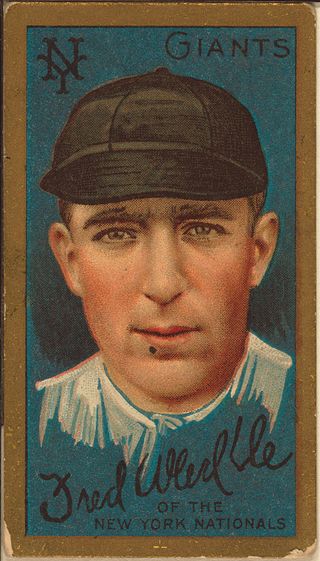
Bad as it was though, Buckner’s Bungle at first had nothing on a Flub that will live for the Ages, Fred Merkle’s Screw-up at Second, a Blooper that will always be known, as “Merkle’s Boner”.

fred_merkle_1908.0
Fred “Bonehead” Merkle

On this day in 1908, the New York Giants faced off with the Chicago Cubs in the last of a three-game series at the Polo Grounds, in upper Manhattan.

The Giants held a slim lead at this time for the National League pennant, but the Cubbies had managed to hold on to a 2-0 series lead. This game was going to be a Big Deal.

Fred Merkle was 19 years old that day, the youngest player in the National League.

In the bottom of the 9th, Merkle came to the plate with two outs, the score tied 1–1, and Harry “Moose” McCormick on first.

Merkle singled and McCormick advanced to third. Al Bridwell, followed with a single of his own and McCormick crossed the plate, with the winning run.

Except, that’s not the way it happened.

The fans poured onto the field, convinced that the game was over. Fans did that, in those days.

320px-Fred_Merkle_baseball_cardMerkle thought so too, and ran to the Giants’ clubhouse, never touching second base.

Cubs second baseman Johnny Evers noticed and, after fielding the ball and touching second, appealed to umpire Hank O’Day to call the out.

The Ump called Merkle out on a force play. The run didn’t count.

With the winning run nullified, the Giants’ victory was erased and the score tied, 1-all. There was no hope of resuming play, with thousands of fans on the field.

The game was declared a tie, and the two teams finished regular season, tied for first.

The Cubs won the 1908 National League pennant with a 4-2 victory on the rematch, also played at the Polo Grounds, on October 8.

A game that never should have been played, but for a nineteen-year-olds screwup at second, for which Fred Merkle would always be known as “Bonehead”.

Oh.  The joke.  I almost forgot.  Question:  What do Bill Buckner and Michael Jackson, have in common?  Answer:  They both wear one glove, for no apparent reason.

If you enjoyed this “Today in History”, please feel free to re-blog, “like” & share on social media, so that others may find and enjoy it as well. Please click the “follow” button on the right, to receive email updates on new articles.  Thank you for your interest, in the history we all share.

August 20, 1938 Lucky Man

Lou Gehrig hit his 23rd and last major league grand slam on August 20 1938, a record which would stand until fellow “Bronx Bomber” Alex Rodriquez tied it, in 2012.

The Lane Tech High school baseball team was at home on June 26, 1920. 10,000 spectators assembled to watch the game at Cubs Park, now Wrigley Field. New York’s Commerce High was ahead 8–6 in the top of the 9th, when a left handed batter hit a grand slam out of the park. No 17-year-old had ever hit a baseball out of a major league park before, and I don’t believe it’s happened, since. It was the first time the country heard the name, Lou Gehrig.

lou-gehrig-columbiaGehrig was pitching for Columbia University against Williams College on April 18, 1923, the day that Babe Ruth hit the first home run out of the brand new Yankee Stadium. Though Columbia would lose the game, Gehrig struck out seventeen batters that day, to set a team record. The loss didn’t matter to Paul Krichell, the Yankee scout who had been following Gehrig. Krichell didn’t care about the arm either, as much as he did that powerful, left-handed bat. He had seen Gehrig hit some of the longest home runs ever seen on several Eastern campuses, including a 450′ home run at Columbia’s South Field that cleared the stands and landed at 116th Street and Broadway.

lou-gehrig-97280682
Lou Gehrig played Fullback for Columbia during the 1922 season

New York Giants manager John McGraw persuaded a young Gehrig to play pro ball under a false name, Henry Lewis, despite the fact that it could jeopardize his collegiate sports eligibility. He played only a dozen games for the Hartford Senators before being found out, and suspended for a time from college ball. This period, and a couple of brief stints in the minor leagues in the ’23 and ’24 seasons, were the only times Gehrig didn’t play for a New York team.

Gehrig started as a pinch hitter with the New York Yankees on June 15, 1923. He came into his own in the ‘26 season, in 1927 he batted fourth on “Murderers’ Row”; the first six hitters in the Yankee’s batting order: Earle Combs, Mark Koenig, Babe Ruth, Lou Gehrig, Bob Meusel and Tony Lazzeri.

He had one of the greatest seasons of any batter in history that year, hitting .373, with 218 hits: 52 doubles, 18 triples, 47 home runs, a then-record 175 RBIs, with a .765 slugging percentage. Gehrig’s bat helped the 1927 Yankees to a 110–44 record, the American League pennant, and a four game World Series sweep of the Pittsburgh Pirates.

00gehrig60-superJumbo
“Gehrig with his parents, Christina and Heinrich, in 1938. The three lived together in the house until Gehrig got married in 1933”. Hat tip, New York Daily News

Gehrig was the “Iron Horse”, playing in more consecutive games than any player in history. It was an “unbreakable” record, standing for 56 years, until surpassed in 1995 by Cal Ripken, Jr.

Gehrig hit his 23rd and last major league grand slam on August 20 1938, a record which would stand until fellow “Bronx Bomber” Alex Rodriquez tied it, in 2012.

Lou Gehrig collapsed in 1939 spring training, and went into an abrupt decline early in the season. Sports reporter James Kahn wrote: “I think there is something wrong with him. Physically wrong, I mean. I don’t know what it is, but I am satisfied that it goes far beyond his ball-playing”.

lou-gehrigThe team was in Detroit on May 2 when he told manager Joe McCarthy “I’m benching myself, Joe”. It’s “for the good of the team”. McCarthy put Babe Dahlgren in at first and the Yankees won 22-2, but that was it. The Iron Horse’s streak of 2,130 consecutive games, had come to an end.

ny_50yankess_02Gehrig left the team in June, arriving at the Mayo Clinic on the 13th. The diagnosis of Amyotrophic Lateral Sclerosis (ALS) was confirmed six days later, on June 19. It was his 36th birthday. It was a cruel prognosis: rapidly increasing paralysis, difficulty in swallowing and speaking, and a life expectancy of fewer than three years.

Gehrig briefly rejoined the Yankees in Washington, D.C. He was greeted by a group of Boy Scouts at Union Station, happily waving and wishing him luck. Gehrig waved back, but leaned forward to a reporter. “They’re wishing me luck”, he said, “and I’m dying.”

Gehrig appeared at Yankee Stadium on “Lou Gehrig Appreciation Day”, July 4, 1939, his once mighty body now so weakened by the disease which would take his name, as to barely be able to stand.  Only two months earlier, manager Joe McCarthy had asked Babe Dahlgren to take the Iron Horse’s position.  Now he asked the 1st baseman, to look out for his dying teammate.  “If Lou starts to fall, catch him.”

Gehrig was awarded a series of trophies and other tokens of affection by the New York sports media, fellow players and groundskeepers. He would place each one on the ground, already too weak to hold them.

2018_07_loug2

As the ceremony drew to a close, Master of Ceremonies Sid Mercer asked for a few words.  Overwhelmed and struggling for control, Gehrig waved him off.  The New York Times later wrote, “He gulped and fought to keep back the tears as he kept his eyes fastened to the ground”.  62,000 fans would have none of it.  The chant went up.  “We want Lou!” We want Lou!”

Eleanor Gehrig, a “tower of strength” throughout her husband’s ordeal, watched from a box seat.  New York Daily News reporter Rosaleen Doherty wrote that she did not cry, “although all around us, women and quite a few men, were openly sobbing.”

mlb_a_gehrig1x_600x400

At last, Lou Gehrig shuffled to the microphone, and began to speak. “For the past two weeks, you’ve been reading about a bad break.”  As if the neurodegenerative disease destroying his body, was merely a “bad break.” He looked down and paused, as if trying to remember what to say.  And then he delivered the most memorable line, of his life.

“Today, I consider myself the luckiest man on the face of the earth.”

Henry Louis Gehrig died on June 2, 1941.  He was 37.

I drove by Yankee Stadium a while back, and I thought of Lou Gehrig. It was right after the Boston Marathon bombing, in 2013. The sign out front said “United we Stand”. With it was a giant Red Sox logo. That night, thousands of Yankees fans interrupted a game with the Arizona Diamondbacks, to belt out Neil Diamond’s “Sweet Caroline,” a staple of Red Sox home games, since 1997.

Copy-of-BostonBombingNYYankeesSign

I’ve always been a Boston guy myself, I think I’m required by Massachusetts state law to hate the Yankees. But seriously.  They’re a class act..

tumblr_lxr6f2JJlc1qgg9qko1_1280

If you enjoyed this “Today in History”, please feel free to re-blog, “like” & share on social media, so that others may find and enjoy it as well. Please click the “follow” button on the right, to receive email updates on new articles.  Thank you for your interest, in the history we all share.

August 19, 1879 Last of the Bare Knuckle Boxers

Nineteenth century prizefighting rules were nothing like the modern “sweet science” of boxing.

In 1858, the overly crowded tenements of Roxbury Massachusetts teemed with newly arrived Irish immigrants, looked down upon as “unmannered bogtrotters” and given wide berth by the self-appointed elites, of Boston. 5-foot 2-inch Michael Sullivan, newly arrived from County Kerry, worked as “hod carrier” for bricklayers and masons, dug ditches, and did any other job, that was available.

Like many first-generation immigrants, Michael and Catherine Sullivan did whatever they had to do, always hoping for something better, for their children.

John_L._Sullivan1
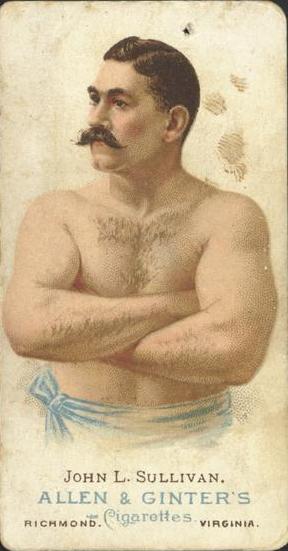
John L. Sullivan

That was the year the couple’s first-born son came into the world. From the beginning, baby John Lawrence was something different. “Strong as a bear” even as an infant, one family legend described little “Sully” clocking a visiting aunt before the age of one, leaving the woman with a black eye.

Sully excelled in sports as a boy and got into plenty of fights, which he easily won. He left high school as a young teenager and made a few bucks in semi-professional baseball, while working as a tinsmith, plumber and mason.

Prize fighting was illegal in those days, looked down upon by the middle classes as “butchery for profit”. The working classes had no such qualms, reveling in the sport in the saloons and music halls of most American cities.

Nineteenth century prizefighting rules were nothing like the modern “sweet science” of boxing. The earliest recognizable form of the sport, as opposed to mere brawling, came about after a 1744 bout in which British boxer George Stevenson was fatally injured, following a fight with Jack Broughton.

Broughton’s “seven rules of boxing” were printed and framed, and posted that August at his London amphitheater.

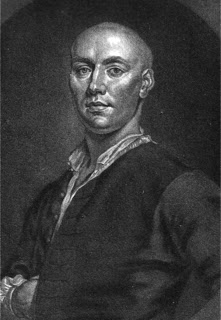
broughton-jack
Jack Broughton

Frank Lewis Dowling wrote in Fistiana; or The Oracle of the Ring:…Results of prize battles from 1700 to December 1867, that Broughton’s rules brought about “that spirit of fair play which off ers so wide a contrast to the practices of barbarous ages…[when] It is to be lamented that, even in modern times, the inhuman practices of uncivilised periods have subsisted to a disgraceful extent, and hence we have heard of gouging, that is to say forcing out the eye of an antagonist with the thumb or finger…kicking a man with nailed shoes as he lies on the ground, striking him in vital parts below the waistband, seizing him when on his knees, and administering punishment till life be extinct…”

In 1838, William “Brighton Bill” Phelps died following a particularly savage match with the British bare-knuckle prize fighter, Owen Swift. Phelps, who had himself killed a man in the ring, died after an 85-round, ninety-five minute fight for which Swift was tried and convicted, of manslaughter. Robert Rodriguez, author of The Regulation of Boxing: A History and Comparative Analysis of Policies Among American States writes that the “London Prize Ring Rules” of that year and amended in 1853 “introduced measures that remain in effect for professional boxing to this day, such as outlawing butting, gouging, scratching, kicking, hitting a man while down, holding the ropes, and using resin, stones or hard objects in the hands, and biting.”

The London prize ring rules specified the size and shape of the ring,  and that of the spikes in the fighter’s shoes, as well as the role for each fighter’s “second”.  Nothing is said of the length or number, of rounds.  Each round ended when a fighter was knocked (or thrown) to the ground.  There followed a thirty-second break when the umpire would cry “Time!”, and an eight-second interval when each combatant was to step up to the “scratch line”.  Failure to come “up to scratch” or incapacity put an end to the match, but 70+-round fights, were commonplace.

72086-004-DDFAAC8EThis was the world of bare knuckle boxing in the age of John L. Sullivan.  He thrived in that world. The urban prize ring was his “temple of manhood”.  He intended to be its Crown Prince.
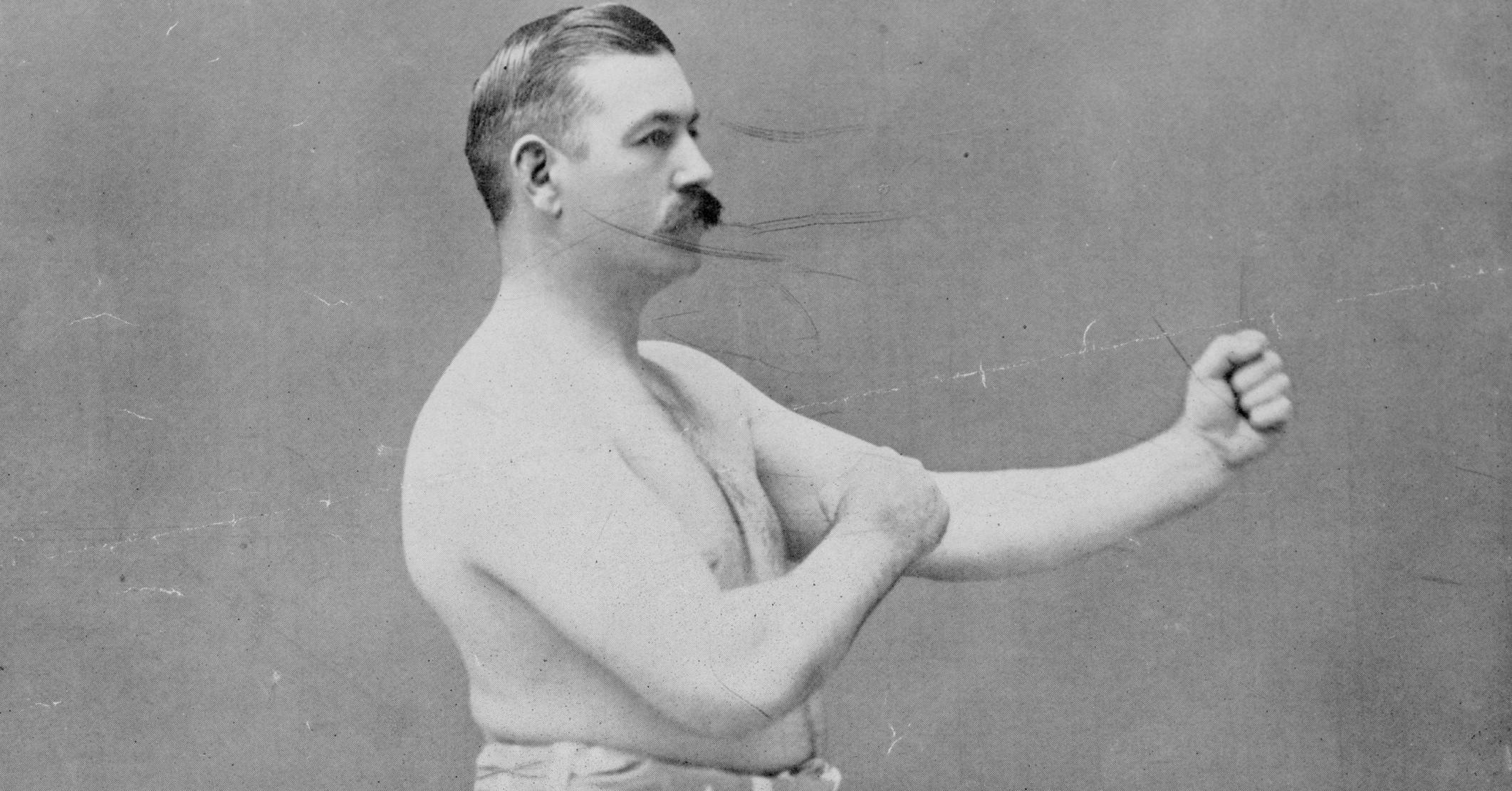
In 1879, Sullivan trounced the veteran brawler Mike Donovan in an exhibition match. The older fighter was the more skilled and experienced, but the 21-year-old made up for it with speed and power. Afterward, Donovan knew that he had “just fought the coming champion of the prize ring.”

A month later, Sullivan challenged “any man breathing” to fight for prizes ranging between $1,000 to $10,000. Sometimes, matches were fought with bare knuckles, other times, with padded gloves and timed rounds.  Over 450 fights, Sullivan seemed unbeatable. “The Hercules of the Ring.”  Gamblers and other backers were making a fortune.

The media eagerly promoted the fighter as an “urban Paul Bunyan”. Stories were told and retold, each becoming more outlandish, as Sullivan “battled wild animals with his bare hands, drank rivers of liquor, had his way with regiments of women. . . .”

The epic drunkenness and domestic violence of the man’s real life at home, went largely unreported.

cropped-john-l-sullivan-1898

Sullivan was a Rockstar, the “Boston Strongboy”, the first professional athlete to make a million dollars. He performed in vaudeville, and hung out with some of the most iconic figures of the ‘gilded age’, from Presidents and Kings to wild west gunslingers. Sullivan made countless public appearances and even considered a run for the United States Senate. A famous song of the era invited listeners to “shake the hand that shook the hand of John L. Sullivan.”

On this day in 1887, thousands of adoring fans crowded the ways to Nantasket Beach in Hull, to glimpse the Heavyweight Champion of the World with his diamond-studded, gold-plated belt.

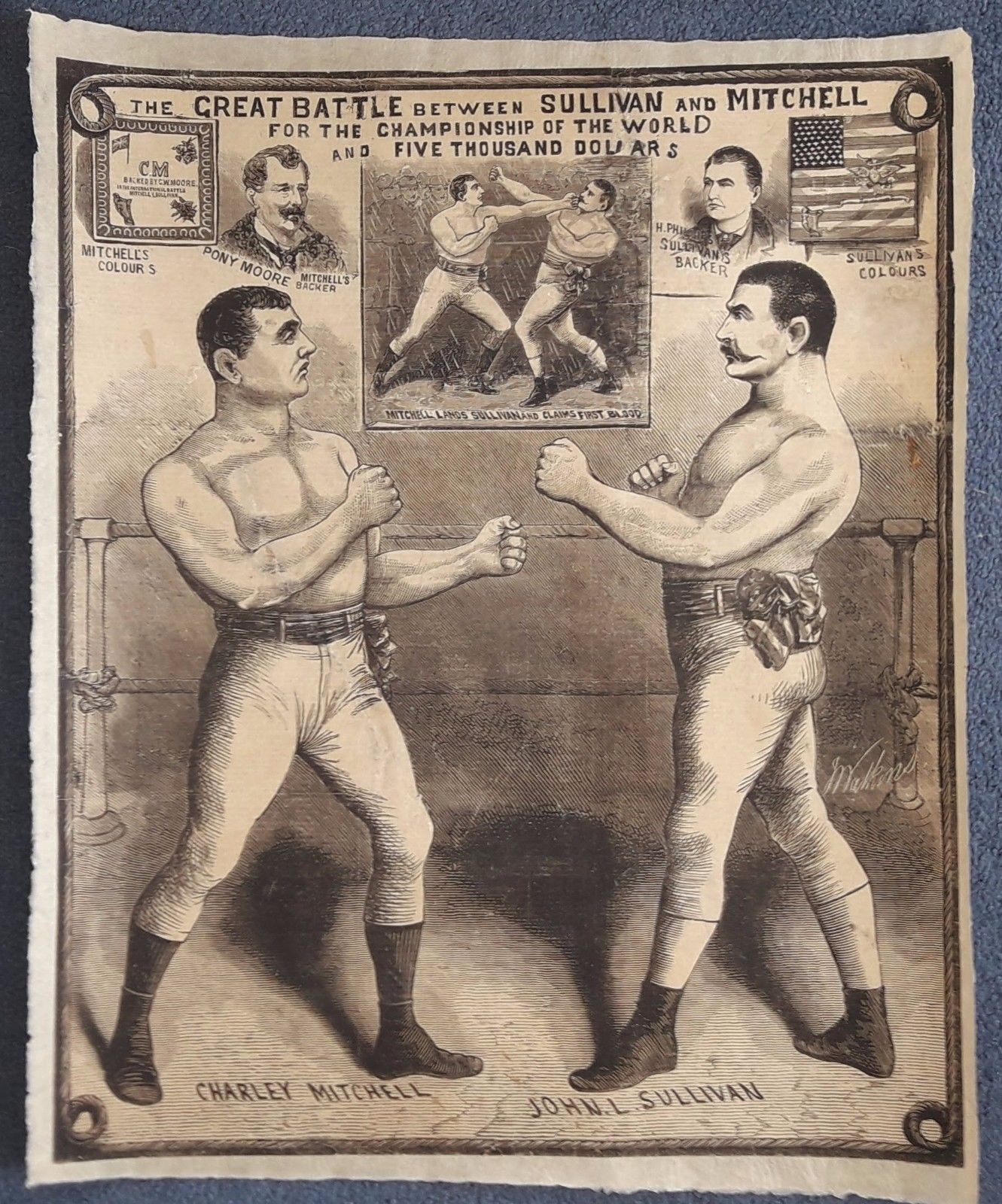
Depending on who you read, Sullivan was first considered world heavyweight champion either in 1888 when he fought Charley Mitchell in France, or in 1889 when he knocked out Jake Kilrain in round 75 of a scheduled 80-round bout.

s-l1600 (1)
Souvenir poster, 1888

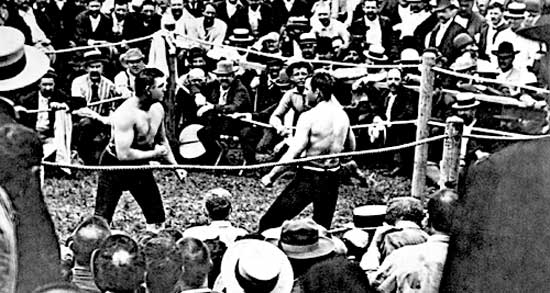
The modern sport of Boxing was born in 1867, with the twelve rules drawn up by John Graham Chambers, member of the British Amateur Athletic Club under the sponsorship of John Sholto Douglas, 9th Marquess of Queensberry.  Timed rounds and gloves remained optional until the night of July 8, 1889, a scheduled 80-round bare knuckle bout between the undefeated champion John L Sullivan, and Jake Kilrain, the last professional fight to be held under the old London Prize Ring rules.

Whiskey had taken its toll on Sullivan by this time.  It looked like he was done when he threw up in the 42nd round, but Sullivan got his second wind.  Kilrain’s second threw in the towel in round 75, afraid that his principle was about to be killed.

John-L.-Sullivan-vs.-Jake-KilrainSullivan’s unbeaten record over 44 professional fights came to an end on July 9, 1892, when “Gentleman Jim” Corbett  unloaded a smashing left in the 21st round that put the champion down, for good.  Sullivan would later say that his opponent only “gave the finishing touches to what whiskey had already done to me.”
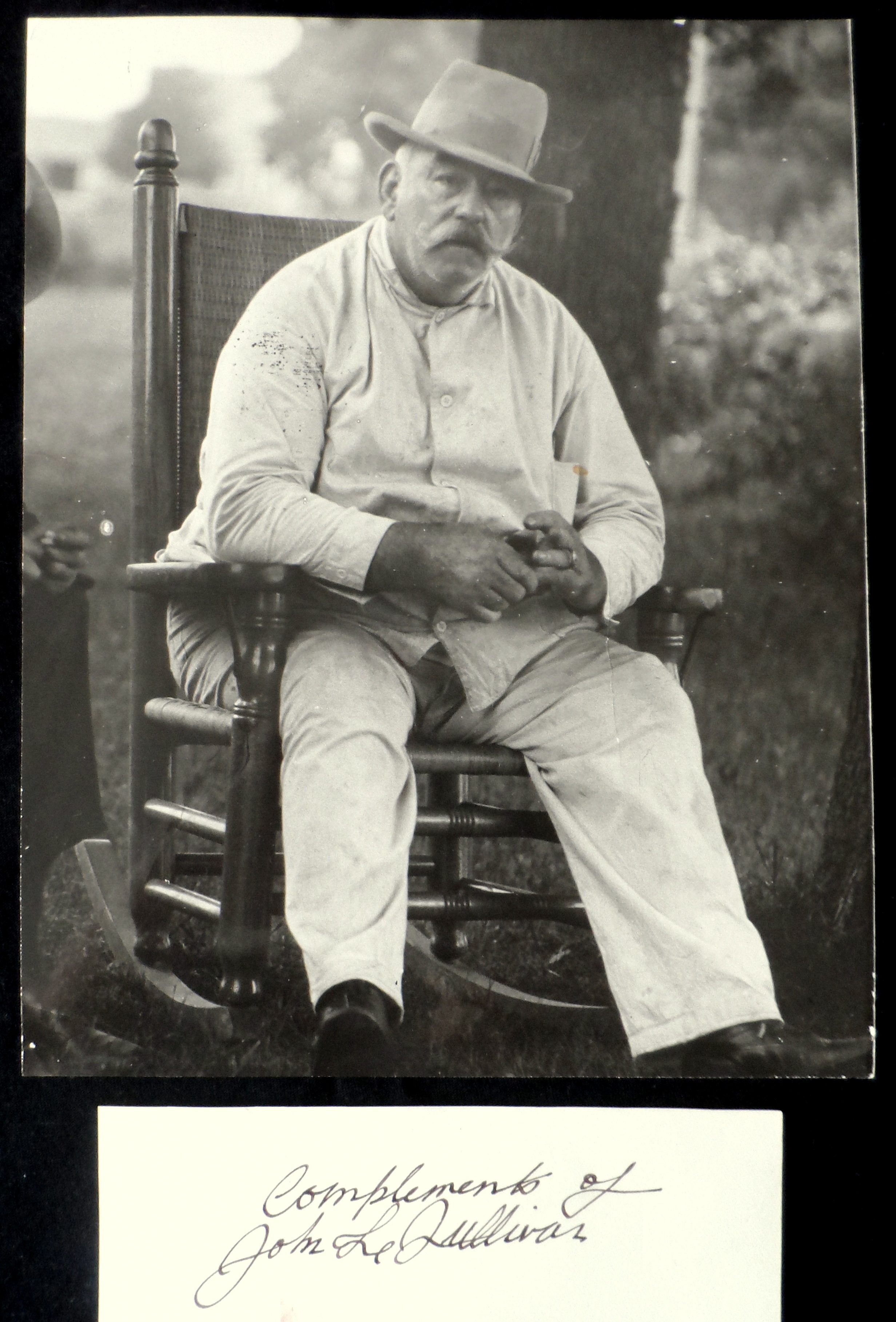
Sullivan retired to his home in Abington Massachusetts. In his later years, the last bare knuckle champ in history became a sports reporter, celebrity baseball umpire and tavern owner. He gave up his life-long addiction to alcohol taking his last drink in 1905. Sullivan took to the temperance lecture circuit, but the prizefighting years and those “Rivers of Whiskey” had taken their toll.

s493881354368189662_p65_i5_w2463

John Lawrence Sullivan earned over a million dollars over his career, and died with an estate valued at $3,675, and ten dollars in his pocket.  He was fifty-nine. Sullivan constantly warned young men to avoid the perils of alcohol. “John L. Sullivan, champion of the world, could not lick whiskey.  What gives any one of them the notion that he can?”

john-l-sullivan-obit

If you enjoyed this “Today in History”, please feel free to re-blog, “like” & share on social media, so that others may find and enjoy it as well. Please click the “follow” button on the right, to receive email updates on new articles.  Thank you for your interest, in the history we all share.