

Planet Earth exists at the center of the solar system, the sun and other celestial bodies revolving around it. That was the “geocentric” model of the solar system, the common understanding during the Renaissance. In the 15th century, Polish mathematician and astronomer Nicolaus Copernicus proposed a radically new model. Copernicus described a “heliocentric” model of the universe, placing the sun at the center, with the earth and other bodies revolving around the sun.
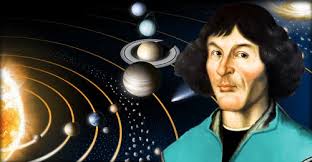
Copernicus resisted the publication of his ideas until the end of his life, fearing that they would offend the religious Interests of the time. Legend has it that he was presented with an advance copy of his “De revolutionibus orbium coelestium” (On the Revolutions of the Heavenly Spheres) as he awakened on his death bed from a stroke induced coma. He took one look at his book, closed his eyes, and never opened them again.
The Italian physicist, mathematician, and astronomer Galileo Galilei, came along about a hundred years later. Galileo has been called the “father of modern observational astronomy”, the “father of modern physics”, and “the Father of Modern Science”. His improvements to the telescope and resulting astronomical observations supported Copernicus’ heliocentric view. They also brought him to the attention of the Roman Inquisition.
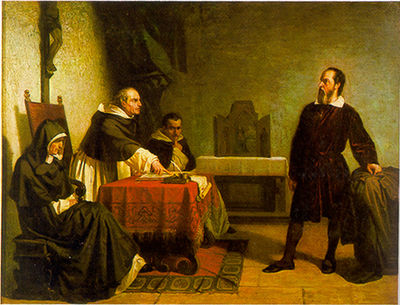
Biblical references such as, “the Lord set the earth on its foundations; it can never be moved.” (Psalm 104:5) and “And the sun rises and sets and returns to its place.” (Ecclesiastes 1:5) became the basis for religious objections to the heliocentric view. Galileo was brought before inquisitor Vincenzo Maculani for trial in 1633. The astronomer backpedaled before the inquisition, testifying in his fourth deposition of June 21, 1633, that “I do not hold this opinion of Copernicus, and I have not held it after being ordered by injunction to abandon it. For the rest, here I am in your hands; do as you please”.
The Inquisition forced Galileo to “abjure, curse, & detest” his Copernican heliocentric views, returning him to his villa in 1634 to spend the rest of his life under house arrest. Galileo died on January 8, 1642, wishing to be buried in the main body of the Basilica of Santa Croce, next to the tombs of his father and ancestors. His final wishes were denied at the time, though they would be honored 95 years later. Galileo Galilei was re-interred in the basilica, in 1737.
Often, atmospheric conditions in these burial vaults lead to a natural mummification of the corpse. Sometimes they look almost lifelike. When it came to the saints, believers took this to be proof of the incorruptibility of these individuals, and small body parts were taken as holy relics.
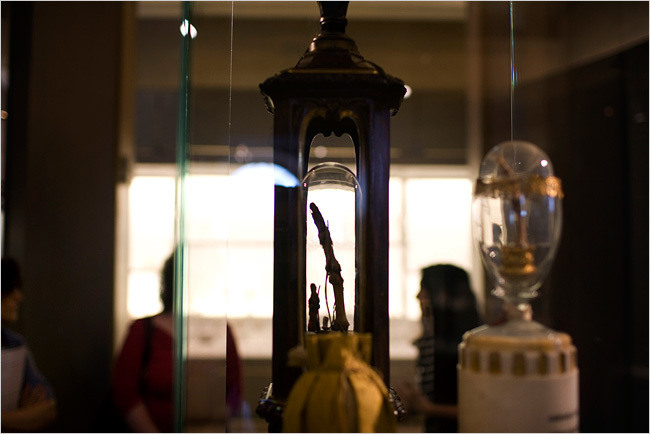
The custom was quite old when Galileo was reinterred in 1737. Galileo is not now and never was a Saint of the Catholic church, though it’s possible the condition of his body made him appear thus “incorruptible”. Anton Francesco Gori removed the thumb, index and middle fingers on March 12, 1737, an act which would have been very much in keeping with the customs of the times. The digits with which Galileo wrote down his theories of the cosmos. The digits with which he adjusted his telescope.
Be that as it may, the middle finger from Galileo’s right hand is on exhibit at the Museo Galileo in Florence, Italy, to this day. The only human fragment in a museum otherwise devoted to scientific instruments.
There is symbolism there, if only I could put my finger on it.


 Predicting a solar eclipse isn’t the same as predicting a lunar eclipse; the calculations are far more difficult. When the moon passes through the shadow of the sun, the event can be seen by half of the planet, the total eclipse phase lasting over an hour. In a solar eclipse, the shadow of the moon occupies only a narrow path, and the total eclipse phase is only about 7½ minutes at any given place.
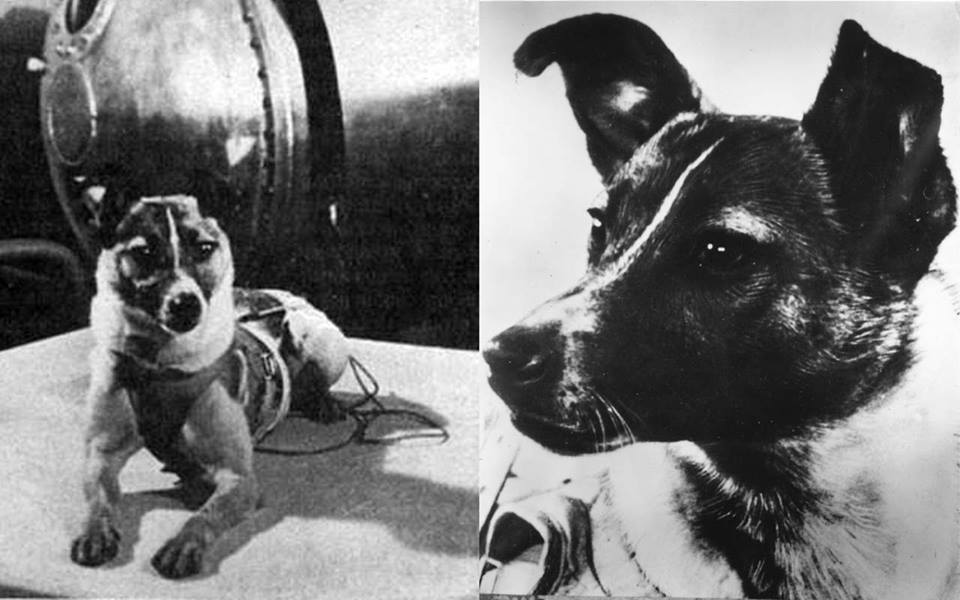
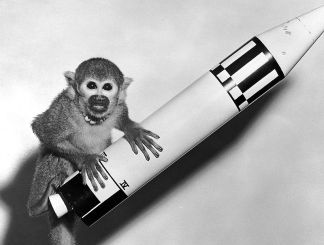
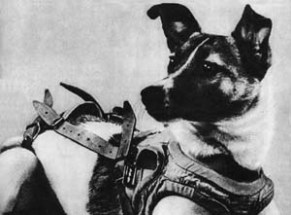
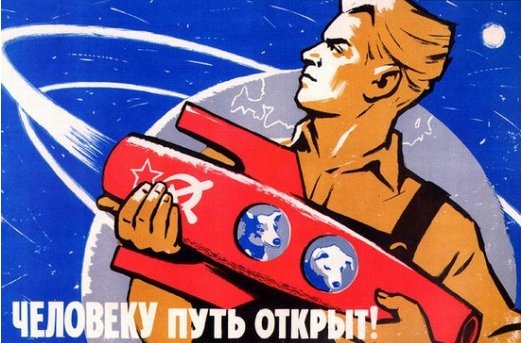
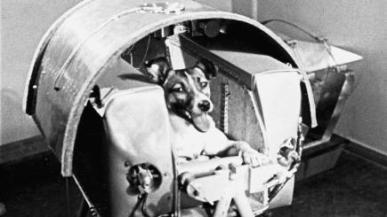 allowed her to stand, sit and lie down. Finally, it was November 3, 1957. Launch day. One of the technicians “kissed her nose and wished her bon voyage, knowing that she would not survive the flight”.
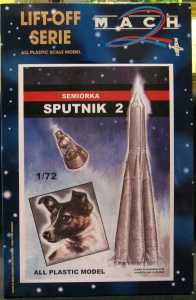 In the beginning, the US News media focused on the politics of the launch. It was all about the “Space Race”, and the Soviet Union running up the score. First had been the unoccupied Sputnik 1, now Sputnik 2 had put the first living creature into space. The more smartass specimens among the American media, called the launch “Muttnik”.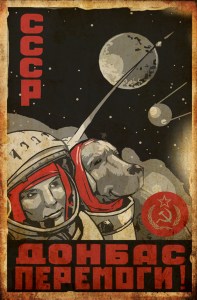
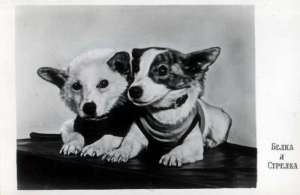 As a dog lover, I feel the need to add a more upbeat postscript, to this thoroughly depressing story.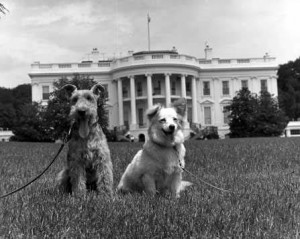



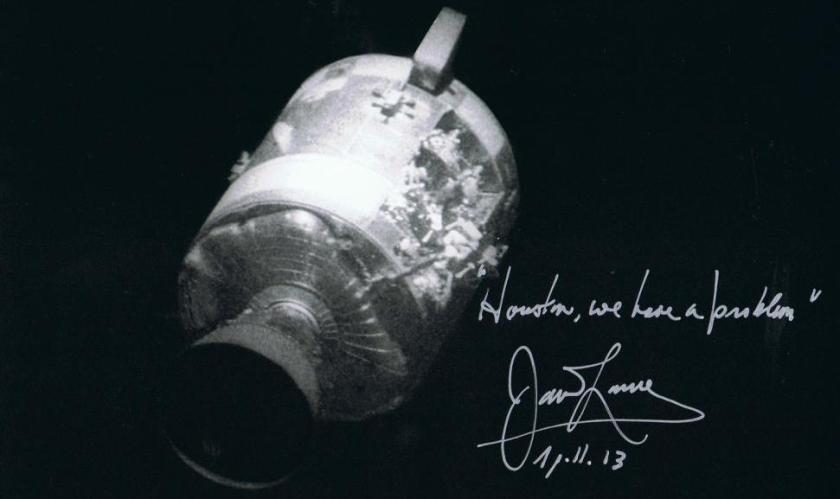
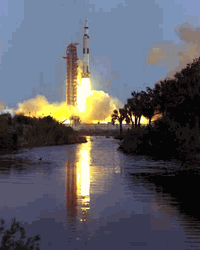 Jack Swigert was supposed to be the backup pilot for the Command Module, (CM), officially joining the Apollo 13 mission only 48 hours earlier, when prime crew member Ken Mattingly was exposed to German measles. Jim Lovell was the world’s most traveled astronaut, a veteran of two Gemini missions and Apollo 8. By launch day, April 11, 1970, Lovell had racked up 572 space flight hours. For Fred Haise, former backup crew member on Apollo 8 and 11, this would be his first spaceflight.
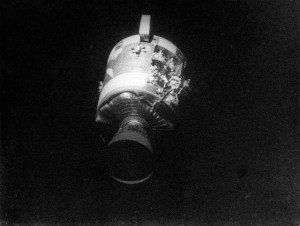
 This situation had been suggested during an earlier training simulation, but had been considered unlikely. As it happened, the accident would have been fatal without access to the Lunar Module.



 On the morning of March 11, 1918, most of the recruits at Fort Riley, Kansas, were turning out for breakfast. Private Albert Gitchell reported to the hospital, complaining of cold-like symptoms of sore throat, fever and headache. By noon, more than 100 more had reported sick with similar symptoms.
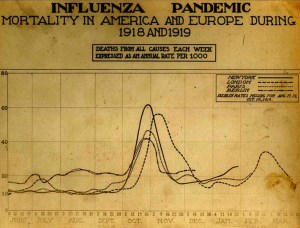 within hours of the first symptoms. There’s a story about four young, healthy women playing bridge well into the night. By morning, three were dead of influenza.
 Around the planet, the Spanish flu infected 500 million people. A third of the population of the entire world, at that time. Estimates run as high 50 to 100 million killed. For purposes of comparison, the “Black Death” of 1347-51 killed 20 million Europeans.

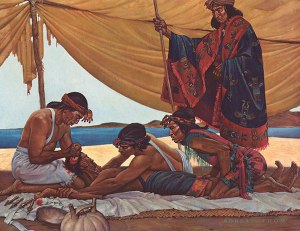 head, and seems to have begun sometime in the Neolithic, or “New Stone Age” period. One archaeological dig in France uncovered 120 skulls, 40 of which showed signs of trepanning. Another such skull was recovered from a 5th millennium BC dig in Azerbaijan. A number of 2nd millennium BC specimens have been unearthed in pre-Colombian Mesoamerica; the area now occupied by the central Mexican highlands through Belize, Guatemala, El Salvador, Honduras, Nicaragua, and northern Costa Rica.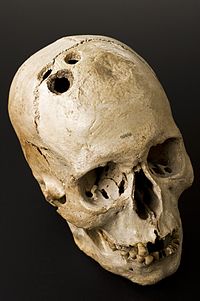
 Trepanation took on airs of pseudo-science, many would say “quackery”, when the Dutch librarian Hugo Bart Huges (Hughes) published “The Mechanism of Brainbloodvolume (‘BBV’)” in 1964. In it, Hughes contends that our brains drained of blood and cerebrospinal fluid when mankind began to walk upright, and that trepanation allows the blood to better flow in and out of the brain, causing a permanent “high”.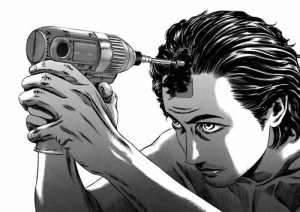


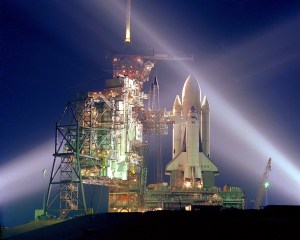
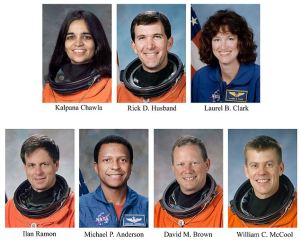 STS-107 launched from the Kennedy Space Center aboard the Space Shuttle Columbia on January 16, 2003. A piece of insulating foam broke away from the external fuel tank eighty seconds after launch, striking Columbia’s left wing and leaving a small hole in the carbon composite tiles along the leading edge. Three previous Space Shuttle missions had experienced similar damage and, while some engineers thought this one could be more serious, they were unable to pinpoint the precise location or extent of the damage. NASA managers believed that, even if there had been major damage, little could be done about it.
 Payload Specialist Colonel Ilan Ramon, born Ilan Wolferman, was an Israeli fighter pilot and the first Israeli astronaut to join the NASA space program. Colonel Ramon’s mother is an Auschwitz survivor, his grandfather and several family members killed in the Nazi death camps. In their memory, Ramon carried a copy of “Moon Landscape”, a drawing by 14 year old holocaust victim Petr Ginz, depicting what the boy thought earth might look like from the moon. Today, there are close to 84,000 pieces of Columbia and assorted debris, stored in the Vehicle Assembly Building at the Kennedy Space Center. To the best of my knowledge, that drawing by a 14 year old boy who never made it out of Auschwitz, is not among them.
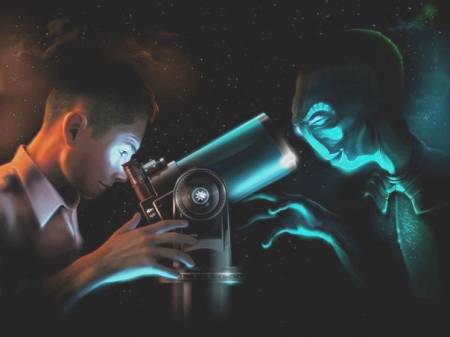
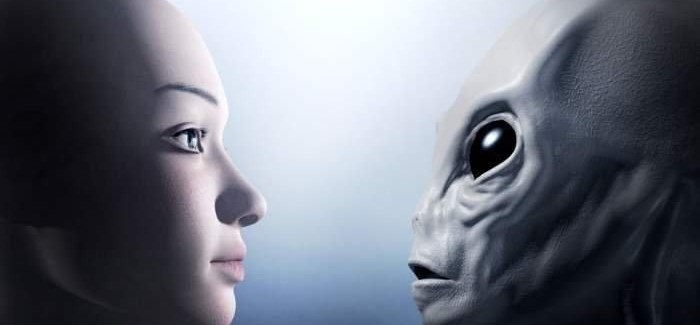
 The British author H. G. Wells wrote The War of the Worlds in 1897, telling the story of an alien invasion of earth by Martians fleeing from the desiccation of their planet. The story was adapted to a radio drama broadcast on Halloween, 1938, so realistic that many listeners sued the network for “mental anguish” and “personal injury”.
 California at Berkeley is running a “distributed computing effort” to identify extraterrestrial life, called SETI@home. With an original objective of 50,000-100,000 home computers, SETI@home currently operates on over 5.2 million computers. With the introduction of the Berkeley Open Infrastructure for Network Computing, or “BOINC” (I didn’t make that up), SETI@home users can even compete with one another, to see who can process the maximum number of “work units”.
 The website explains their mission: “SETI@home is a scientific experiment that uses Internet-connected computers in the Search for Extraterrestrial Intelligence (SETI). You can participate by running a free program that downloads and analyzes radio telescope data”.
 Historical Easter Eggs - Today in History
You must be logged in to post a comment.