

When WWI broke out in 1914, a map of Africa looked nothing like it does today. From the Belgian Congo to Italian Somaliland, most of the continent was carved into colonies of the various European powers. France, Britain, Germany, Italy, Portugal, Belgium and Spain. All administered parts of the African continent.
The 2nd Battalion of the Loyal North Lancashire Regiment was stationed in Bangalore, southern India, at the outbreak of war. By mid-October, the more experienced of their Indian allies had shipped off to France, Egypt and Mesopotamia. Little but leftovers were assigned to the German East African invasion. Many had never even fired a rifle, let alone a machine gun.
Since August, there had been an informal agreement that the African territories would be left alone. That changed on November 2, when an allied force of 8,000 British troops and their Indian allies arrived at the seaport town of Tanga, in what is now Tanzania.
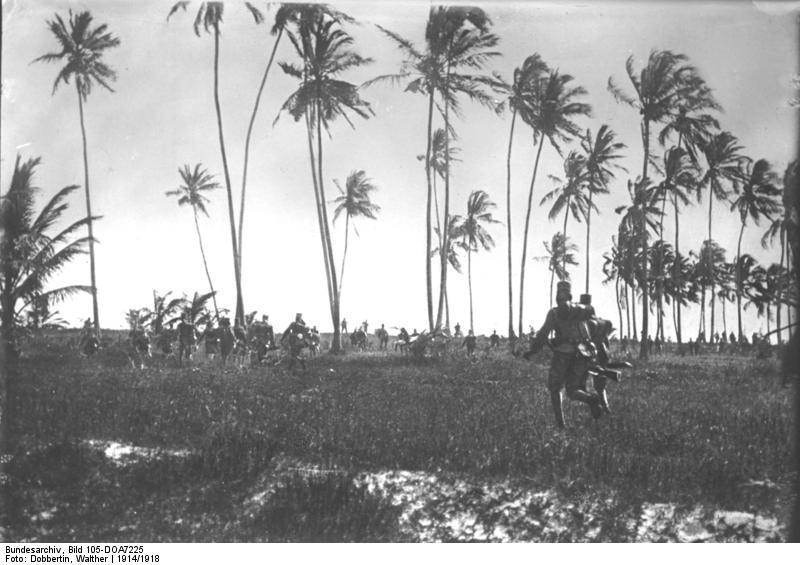 This invasion force, commanded by General Arthur Aitkin, spent that first day and most of the second sweeping for non-existent mines, before finally assembling an assault force on the beaches late on November 3rd. It was a welcome break for the German Commander, Colonel Paul Emil von Lettow-Vorbeck, who had assembled and trained a force of Askari warriors around a core of white German commissioned and non-commissioned officers.
The Germans used those 2 days to bring in more defenders, increasing their number from two companies to almost a thousand individuals. The German and Ascari defenders were well situated and very familiar with the terrain, unlike the British-led allied forces, who had conducted no reconnaissance whatsoever.
The fighting of November 4 met with mixed results. Several columns bogged down in the swamps approaching town, leaving much of their lines in disarray. The harbor contingent had some successes in the fighting that followed, with Gurkhas of the Kashmiri Rifles and the 2nd Loyal North Lancashire Regiment capturing the customs house and Hotel Deutscher Kaiser.
Though outnumbered 8 to 1, the defenders managed to turn their attackers when they got some help from an unexpected direction. Millions of bees, agitated by the gunfire, had joined in the fight.

“Killer” bees are a strain of western honey bees that have been “Africanized”; cross bred with larger, more aggressive African bees, in order to produce more honey in tropical conditions.
The honey producers who crossed these creatures in the 1950s quickly learned what Aitken’s men could have told them in 1914. These things are aggressive, they swarm, and, if angered, they will chase you for a mile and more.
The Germans got some of it, but the bees spent most of their wrath on the British and the Indians, who found themselves pelting for the beaches at maximum speed. I don’t know if it’s true or just a story, but I’ve heard of one radio man who stayed at his post, directing the beach withdrawal as he was stung to death by thousands of bees. According to the story, he received the Victoria Cross, posthumously, for gallantry “while sustaining aerial attack”.
The Battle for Tanga was a humiliating defeat for the British. The Royal Navy refused to carry heavy machine guns back, fearing that they might damage their small landing craft. The guns would be left behind, for future allied forces to deal with. It was a gift for Lettow-Vorbeck, whose forces found enough modern rifles for three Askari companies, along with 600,000 rounds of ammunition, 16 machine guns, several field telephones and enough clothing to last the Schutztruppe for a year.
 Colonel, and later General Lettow-Vorbeck, was called “Der Löwe von Afrika“, the Lion of Africa. He never once had more than 3,000 Germans and 11,000 Askaris under his command, yet he wore the allies out, leading no fewer than 300,000 British, Belgian, and Portuguese troops in a four-years long wild goose chase all over equatorial Africa.
The Lion of Africa returned to Germany a conquering hero at the end of WW1. Of all German field commanders in all theaters of the war, von Lettow alone was undefeated in the field, acclaimed as leading “the greatest single guerrilla operation in history, and the most successful”.
 Paul von Lettow-Vorbeck came to loathe Adolf Hitler, and tried to establish a conservative opposition to the Nazi political machine. When offered the ambassadorship to the Court of St. James in 1935, he apparently did more than merely decline the job. He told Der Fuehrer to perform an anatomically improbable act. Years later, Charles Miller asked the nephew of a Schutztruppe officer about the exchange. “I understand that von Lettow told Hitler to go f**k himself”. “That’s right”Came the reply, “except that I don’t think he put it that politely”.
Persecuted by the Nazis, the Lion of Africa was a broken man by the end of WWII, surviving only due to his former hero status. His home was bombed out and his two sons Rüdiger and Arnd, were dead.
Lettow-Vorbeck would get back on his feet, but for a time he had to depend on food packages from England, sent to him from Sir Richard Meinertzhagen and General Jan Smuts. Two who took to feeding the man, so great was their respect for their former adversary in the earlier war.


 The violent uprising of the early 50s was called “Mau Mau”, an anagram of Uma Uma, roughly translating as “Get out, Get out”. The first “blow against the Colonial regime” was struck on October 3, 1952, when a white woman was stabbed to death near her home in Thika, in the Kiambu County of Kenya.

 Farrokh was attending St. Peter’s boarding school at the time of the rebellion, and calling himself “Freddie”.

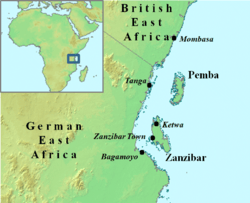 British authorities demanded that Khalid order his forces to stand down and leave the palace. Instead, the new Sultan called up his palace guard and barricaded himself inside.

 Historical Easter Eggs - Today in History
You must be logged in to post a comment.