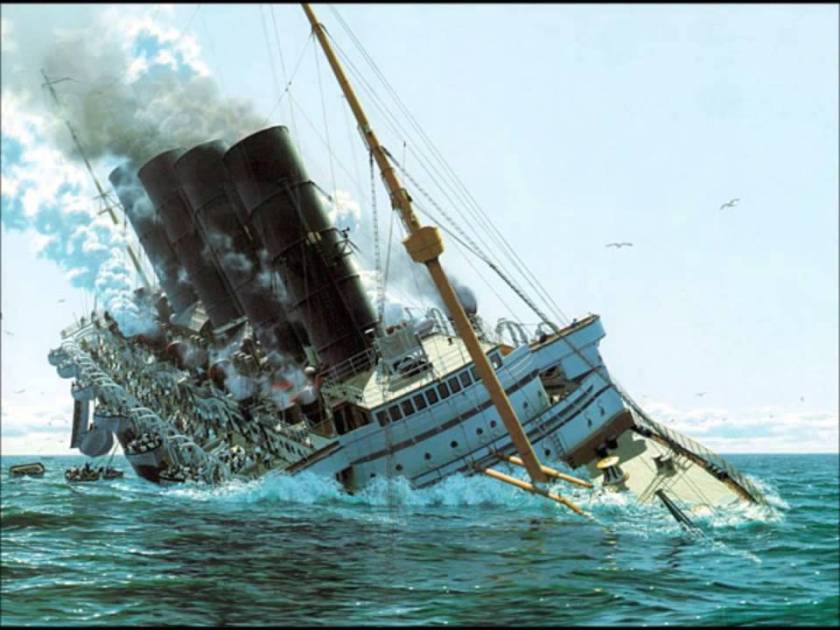
November 22, 1923 Black Tom

The first and most overt reaction from the Kaiser came in the form of unrestrained submarine warfare, when even vessels flying the flags of neutral nations, were attacked. Less apparent at the time, was the covert campaign of sabotage carried out by German agents on US soil.


In the early months of the Great War, Britain’s Royal Navy swept the seas of the Kaiser’s ships and blockaded ports in Germany. The United States was neutral at the time, when over a hundred German vessels sought refuge in American harbors.
maxresdefault

The blockade made it impossible for the Central Powers of Germany and Austria-Hungary to import war materiel from overseas while Great Britain, France, and Russia continued to buy products from US farms and factories. American businessmen were happy to sell to any foreign customer who had the cash but for all intents and purposes, such trade was limited to the allies.

To the Central Powers, this trade had the sole purpose of killing their boys on the battlefields of Europe.

The first and most overt reaction from the Kaiser came in the form of unrestrained submarine warfare, when even vessels flying the flags of neutral nations, were attacked. Less apparent at the time, was the covert campaign of sabotage carried out by German agents on US soil.

Black_Tom_4

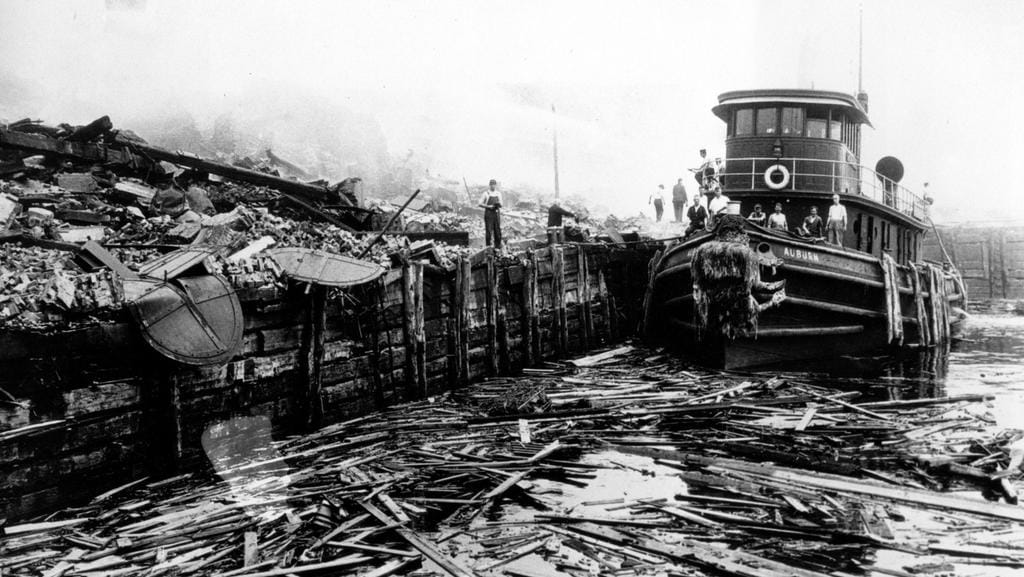
“Black Tom” was originally an island in New York Harbor, next to Liberty Island. So called after a former resident, by WWI, landfill had expanded the island to become part of Jersey City. The area contained a mile-long pier with warehouses and rail lines and served as a major hub in the trade of war materiel to the allies.

On July 30, 1916, the Black Tom terminal contained over two million pounds of ammunition in freight cars, and a hundred thousand pounds of TNT on a nearby Barge.

Around 2:00 that morning, guards discovered a series of small fires. Some of them tried to put them out while others fled, fearing an explosion. The first and loudest blast took place at 2:08am, a massive detonation estimated at 5.5 on the Richter scale.  People from Maryland to Connecticut were awakened in what many believed was an earthquake. The walls of Jersey City’s City Hall were cracked as shrapnel flew through the air. Windows broke as far as 25 miles away while fragments embedded themselves in the clock tower at the Jersey Journal building in Journal Square, over a mile away. The clock stopped at 2:12 am.
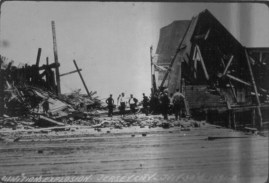
Black_Tom_3

Stained Glass windows were shattered at St. Patrick’s Church and Ellis Island was evacuated to Manhattan.  Damage done to the Statue of Liberty alone was valued at over $2 million in today’s dollars. To this day, the ladder to Liberty’s torch, remains off limits to visitors.

Known fatalities in the explosion included a Jersey City police officer, a Lehigh Valley Railroad Chief of Police, one ten-week-old infant and a barge captain.
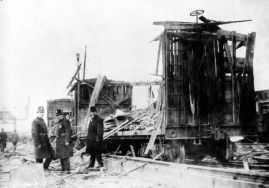
Black Tom 2

The explosion at Black Tom was the most spectacular but by no means the only such attack. The archives at cia.gov reports: “[B]etween 1915 and spring 1917, 43 American factories suffered explosions or fires of mysterious origin, in addition to the bombs set on some four dozen ships carrying war supplies to the Allies”.
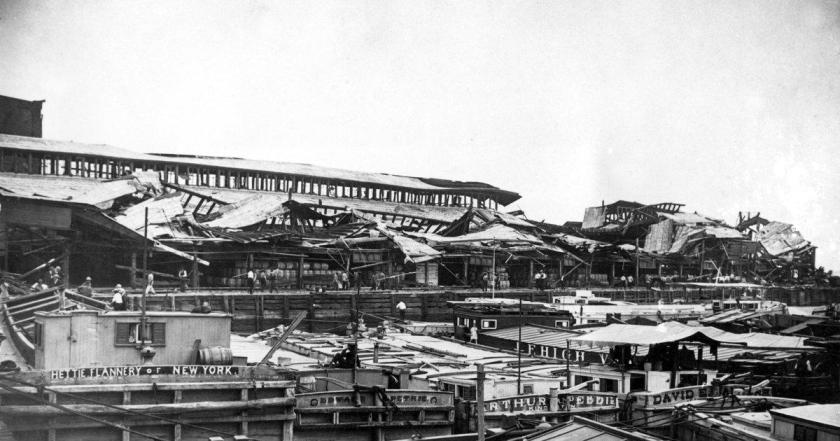
black-tom-island-explosion

Among those responsible for the Black Tom explosion was Naval Lieutenant Lothar Witzke, arrested on February 1, 1918, in Nogales, AZ. Witzke was convicted by court martial and sentenced to death. President Woodrow Wilson later commuted his sentence, to life.

By 1923, most nations were releasing POWs from the “Great War”, including spies. A prison report from Leavenworth shows Witzke heroically risking his own life in prison, entering a boiler room after an explosion and almost surely averting disaster. It may be on that basis that he was finally released.  Imperial German Navy Lieutenant Lothar Witzke was pardoned by President Calvin Coolidge on November 22, 1923 and deported to Berlin, where a grateful nation awarded him the Iron Cross, 1st and 2nd Class.

November 21, 1916 Unsinkable

There was denial aplenty that night, from the well dressed passengers filing onto the decks. Violet Jessop counted the lighted portholes as the small boat creaked ever downward. One row, then two: every abandoned stateroom a tableau. Three, and four: feathered hats on dressers, scattered jewels, sparkling abandoned, on table tops. Five and then six: each lighted circle revealing a snapshot, a last glimpse, soon to slip out of sight.

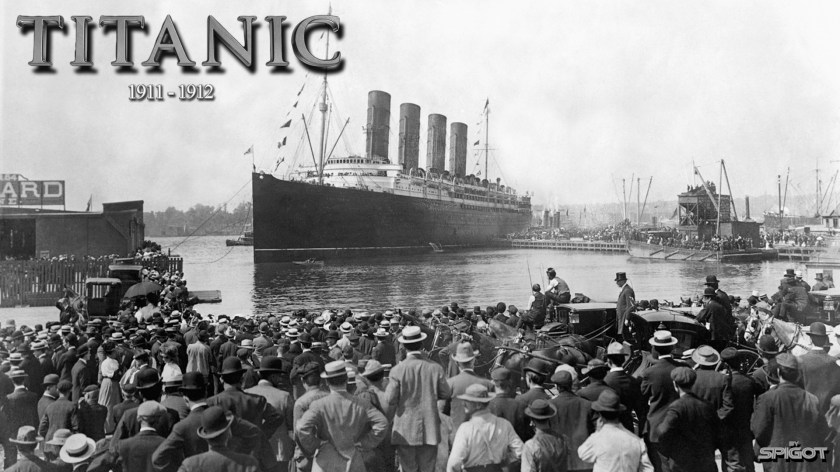
The maiden voyage of the largest ship afloat left the port of Southampton, England on April 10, 1912, carrying 2,224 passengers and crew. An accident was narrowly averted only minutes later, as Titanic passed the moored liners SS City of New York and Oceanic.

The smaller ships lifted in the bow wave formed by Titanic’s passing, then dropped into the trough. New York’s mooring cables snapped, swinging her about, stern-first. Collision was averted by a bare 4-feet as the panicked crew of the tugboat Vulcan struggled to bring New York under tow.

Edward Smith

By the evening of the 14th, Titanic was 400 miles off the coast of Newfoundland, conditions clear, calm and cold. There were warnings of drifting ice from other ships in the area, but it was generally believed that ice posed little danger to large vessels at this time. 

Captain Edward Smith opined that he “[couldn’t] imagine any condition which would cause a ship to founder. Modern shipbuilding has gone beyond that.”

Lookout Frederick Fleet alerted the bridge of an iceberg dead ahead at 11:40pm. First Officer William Murdoch ordered the engines put in reverse, veering the ship to the left. Lookouts were relieved, thinking that collision was averted. Below the surface, the starboard side ground into the iceberg, opening a gash the length of a football field.

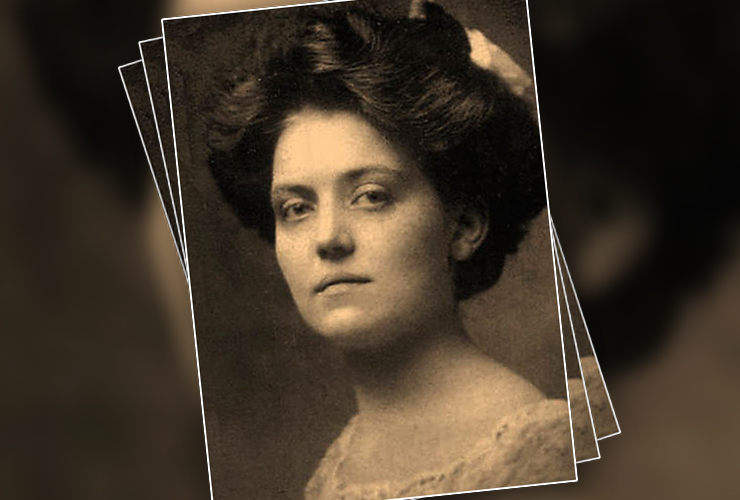
Violet_jessop_titanic

The ship was built to survive flooding in four watertight compartments. The iceberg had opened five. As Titanic began to lower at the bow, it soon became clear. The great ship was doomed.

Those aboard were poorly prepared for such an emergency. The vessel was built for 64 wooden lifeboats, enough for 4,000, but the White Star Liner carried only 16 wooden lifeboats and four collapsibles.

Regulations then in effect required enough room for 990 people. Titanic carried enough to accommodate 1,178.

As it was there was room for over half of those on board, provided that each boat was filled to capacity. So strictly did Royal Navy officer Charles Lightoller adhere to the “women and children first” directive, that evacuation took the form of women and children, only. Many boats were launched, half-full. The first lifeboat in the water, rated at 65 passengers, launched with 28 aboard.

Lightoller himself survived, only by clinging to the bottom of an overturned raft.

titanic-01-wallpaper

Violet Jessop was among those first to leave. A man tossed her a bundle with the words, “ look after this, will you?“. It was a baby.

As ship’s nurse, Jessop was there to look after the comfort of the White Star Line passengers. Now, this small boat full of disoriented women was being lowered into the cold and darkness of night, while all aboard the great vessel was light, and comfort, and warmth.

Denial is a funny thing, that psychological defense mechanism described by Sigmund Freud, in which a person rejects a plain fact too uncomfortable to contemplate. There was denial aplenty that night, from the well dressed passengers filing onto the decks. Violet Jessop counted the lighted portholes as the small boat creaked ever downward. One row, then two: every abandoned stateroom a tableau. Three, and four: feathered hats on dressers, scattered jewels, sparkling abandoned, on table tops. Five and then six: each lighted circle revealing a snapshot, a last glimpse, soon to slip out of sight.

Floating on the still, frigid waters of the north Atlantic, Jessop must have wondered about Captain Smith. This was not their first cruise together. This wasn’t even their first shipwreck.

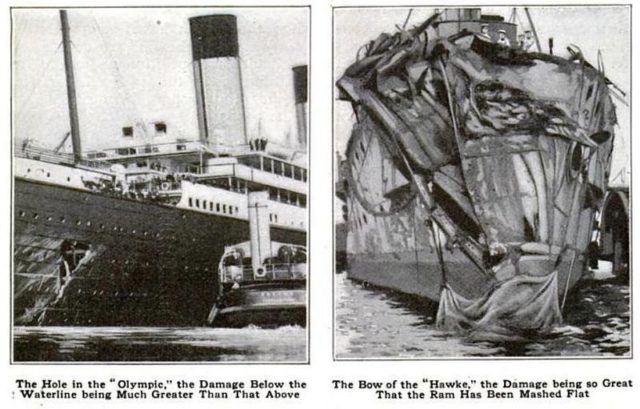
The White Star Line’s RMS Olympic set sail for New York seven months earlier with Captain Edward Smith, commanding. Violet Jessop was on duty as the Royal Navy cruiser HMS Hawke performed mechanical tests, on a course parallel to the trans-Atlantic liner. Something went wrong and the tiller froze, swinging the bow of the Edgar-class cruiser toward the liner. Hydrodynamic forces took over and the two ships collided, just after noon. The hull of the cruiser was smashed, two great gashes carved into the side of Olympic. One was below the water line.

Two compartments flooded, but the watertight doors did their job. Olympic limped back to Southampton for repairs. Captain Smith and Violet Jessop moved on to the maiden voyage of her sister ship, the unsinkable RMS Titanic.

197-640x409

Denial turned to horror that frigid April night in 1912, when six rows of lights became five and then four, and Titanic began to rise by the stern.  RMS Carpathia arrived on the scene around 4am in response to distress calls, and diverted to New York with survivors.  Four days later, a crowd of 40,000 awaited the arrival of 705 survivors , in spite of a cold, driving rain.  It would take four full days to compile and release the list of casualties.

Violet Jessop survived that night.  Captain Smith, did not.

Back in 1907, Director General of the White Star Line J. Bruce Ismay planned a series of three sister ships, to compete with the Cunard lines’ Mauritania, and Lusitania. What these lacked in speed would be made up in size, and luxurious comfort. The three vessels were to be named OlympicTitanic and Gigantic.

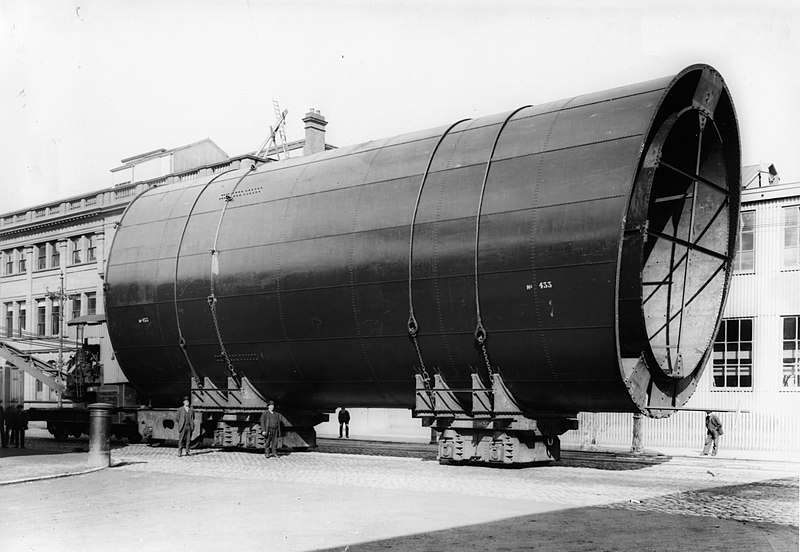
800px-Britannic_Funnel_in_transport
One of Britannic’s funnels, in transit to the ship

That last name was quietly changed following the Titanic disaster and, on December 12, 1915, the newly christened Britannic was ready for service.

Two years later, the world was at war. Nurse Jessop was working aboard HMHS (His Majesty’s Hospital Ship) Britannic. On November 21, 1916, HMHS Britannic was on station near Kea in the Aegean Sea when she was struck by a German mine, or torpedo. Violet Jessop calmly made her way to her cabin, She’d been here, before. There she collected a ring, a clock and a prayer book, and even helped another nurse collect her composure.

maxresdefault

After the Carpathia rescue, Jessop complained to friends and family that she missed her toothbrush. Her wisecracking brother Patrick had quipped next time you wreck, “look after your toothbrush”.

This time, she didn’t forget her toothbrush.

Britannic should have survived even with five watertight compartments filled, but nurses defied orders and opened the windows, to ventilate the wards.   In fifty-five minutes, HMHS Britannic replaced her sister ship Titanic, as the largest vessel on the bottom of the sea.

Fortunately, daytime hours combined with warmer weather and more numerous lifeboats, to lessen the cost in lives.  1,035 were safely evacuated from the sinking vessel, keeping the death toll in the Britannic wreck, to thirty.

Violet Jessop survived three of the most famous shipwrecks of her age, and never tired of working at sea. She returned to work as stewardess aboard RMS Olympic after the war, before retiring to private life and passing away, in 1971.

John Maxtone-Graham, editor of “Titanic Survivor”, the story of Jessop’s life, remembers one last story about “Miss Unsinkable”. Fifty-nine years after the wreck, the phone rang late one night, during a violent thunderstorm. A woman’s voice at the other end asked “Is this the Violet Jessop who was a stewardess on the Titanic and rescued a baby?” “Yes” came the reply, “who is this?” The woman laughed: “I was that baby.”

November 20, 1820 Call me Ishmael

Never in the history of the whale fishery had a whale been known to attack a ship unprovoked. What was happening now was unmistakable.


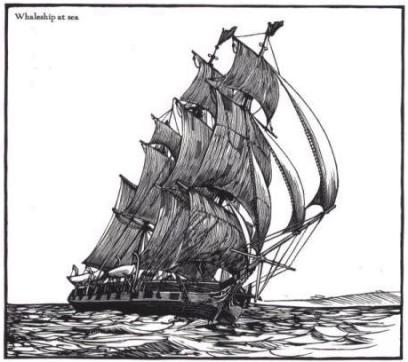
The whaleship Essex set sail from Nantucket in August 1819, the month Herman Melville was born.  The 21-man crew expected to spend 2-3 years hunting sperm whales, filling the ship’s hold with oil before returning to split the profits of the voyage.

Whaleship at sea

Essex sailed down the coast of South America, rounding the Horn and entering the Pacific Ocean.  There they heard that the whaling grounds near Chile and Peru were exhausted so they sailed for the “offshore grounds”, almost 2,000 miles from the nearest land.

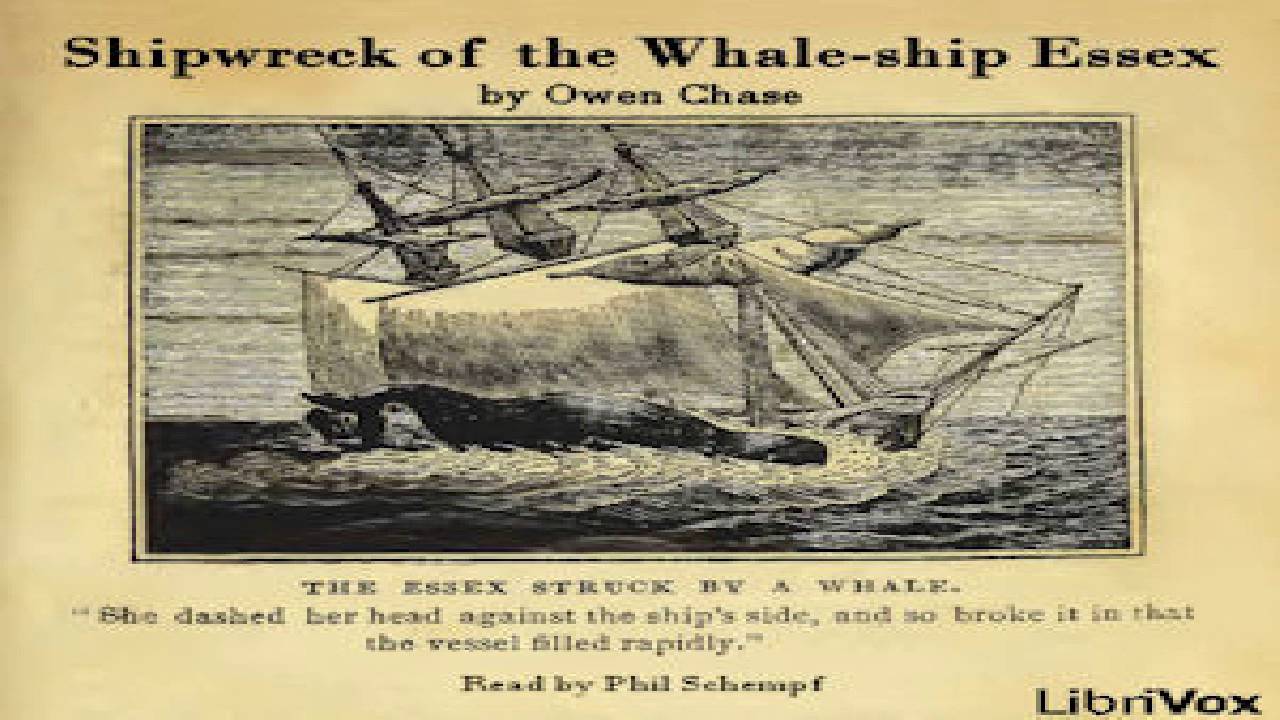
That’s exactly where they were there on November 20, 1820, with two of Essex’ three boats out hunting whales.  The lookout spotted a huge bull sperm whale, behaving oddly, lying motionless on the surface with his head facing the ship. He was a large animal, much larger than most, estimated at 85 feet long and 80 tons.  In moments, he began to move. Picking up speed it soon became clear, this beast was charging the ship.   

The powerful tail churned the water to froth as the great beast closed the distance, striking the port side so hard, it shook the ship.

Wreck of the whale ship Essex

Never in the history of the whale fishery had a whale been known to attack a ship unprovoked. What was happening now was unmistakable.

The huge animal seemed dazed at first by the impact, floating to the surface and resting near the ship’s side.  He then turned and swam away for several hundred yards before turning to resume the attack.  He came in at the great speed of 24 knots according to First Mate Owen Chase, ramming the port bow and driving the stern into the water.  Oak planking cracked and splintered as the whale worked his tail up and down, driving the 238-ton vessel backward.  Essex had already started to go down when the whale broke off his attack, diving below the surface, never to return.

Essex_photo

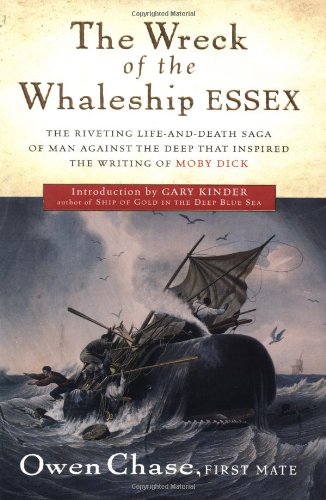
Captain George Pollard’s boat was the first to make it back. Staring in disbelief, Pollard asked “My God, Mr. Chase, what is the matter?” The first mate replied:   “We have been stove by a whale”.

The whale ship Essex was dying. No force on earth could save her. The crew divided into groups of seven and boarded the three boats.  It wasn’t long before Essex sank out of sight. 21 men now alone, stranded in 28-foot open boats, about as far from land as it was mathematically possible to be.

The whalers believed that cannibals inhabited the Marquesa islands, 1,200 miles to the west. So they headed south, parallel to the coast of South America.  Before the ordeal was over, they themselves were destined to become the cannibals.

With good winds, they might reach the coast of Chile in 56 days.  There were enough rations to last 60 provided they were distributed at starvation levels, but much of it turned out to be ruined, by salt water.  There was a brief reprieve in December, when the three small boats landed on a small island in the Pitcairn chain.  There they were able to get their fill of birds, eggs, crabs, and peppergrass. Within a week the island was stripped clean.  The men decided to move on save for three who refused to get back in the boats and were left behind.
Essex

None of them knew it but this was Henderson Island, only 104 miles from Pitcairn Island where survivors from the 1789 Mutiny on HMS Bounty had managed to survive for the past 36 years.

After two months at sea, the boats had long separated from one another.  Starving men were beginning to die and the survivors came to an unthinkable conclusion.  They would have to eat their own dead.

When those were gone, the survivors drew lots to see who would die, that the others might live.  Captain Pollard’s 17-year-old cousin Owen Coffin, whom he had sworn to protect, drew the black spot.   Pollard protested, offering to take his place, but the boy declined. “No”, he said, “I like my lot as well as any other.”  Again, lots were drawn to see who would be Coffin’s executioner.  Owen’s friend, Charles Ramsdell, drew the black spot.

On February 18, the British whaleship Indian spotted a boat containing Owen Chase, Benjamin Lawrence and Thomas Nickerson.  It was 90 days sink Essex sank out of sight.  Five days later, the Nantucket whaleship Dauphin pulled alongside another boat, to find Captain Pollard and Charles Ramsdell inside.  The pair was so far gone they didn’t even notice at first, gnawing on the bones of their comrades.

The three left on Henderson Island were later rescued.  The third whaleboat was found beached on a Pacific island several years later, with four skeletons on board.

The Essex was the first ship recorded to have been sunk by a whale, though she would not be the last.  The Pusie Hall was attacked in 1835. The Lydia and the Two Generals were both attacked by whales a year later. The Pocahontas and the Ann Alexander were sunk by whales in 1850 and 1851.

31 years after the Essex’ sinking a sailor turned novelist published his sixth work, beginning with these words: “Call me Ishmael”.

November 19, 1904 The Hunted

We rarely hear about the work of the spy or the saboteur in times of war. These are the Heroes who work behind enemy lines, with little to protect them but their own guts and cleverness. We rarely know their names and yet, there are times when the lives of millions hang in the balance.
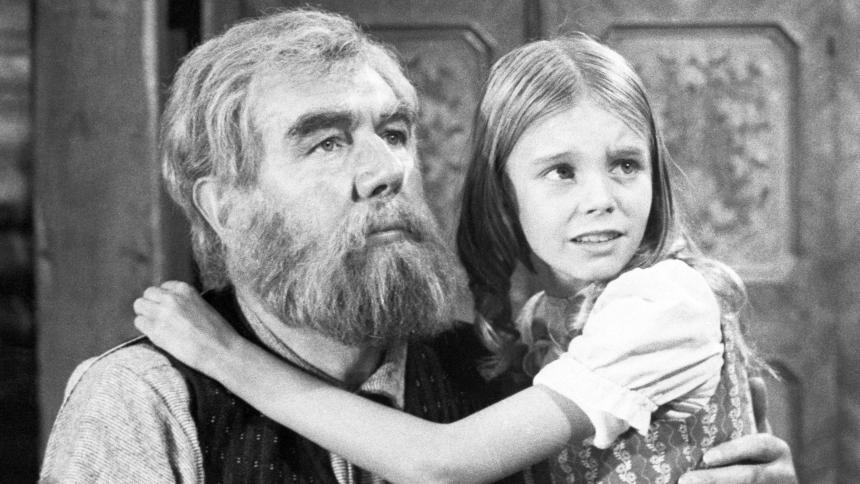
We rarely hear about the work of the spy or the saboteur in times of war. These are the Heroes who work behind enemy lines, with little to protect them but their own guts and cleverness. We rarely know their names and yet, there are times when the lives of millions hang in the balance.
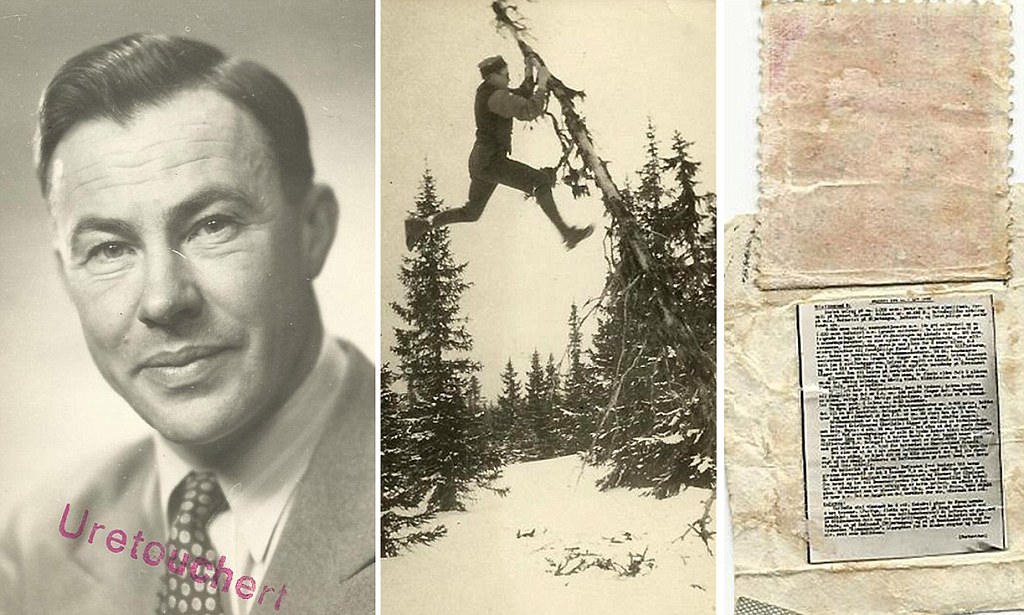
Sven Somme

One such was Iacob Sømme, a Norwegian who was caught, tortured and executed by the Gestapo, for his role in sabotaging the Nazi heavy water plant in Telemark, in 1943.

But for the work of men such as this, we are left only to imagine a world in which the Nazi Swastika was painted on the sides of “Little boy” and “Fat Man”. We may thank the likes of Iacob Sømme that such a world remains merely one of nightmare imagination.

Another such man was Iacob’s brother Sven, born this day, November 19, 1904.

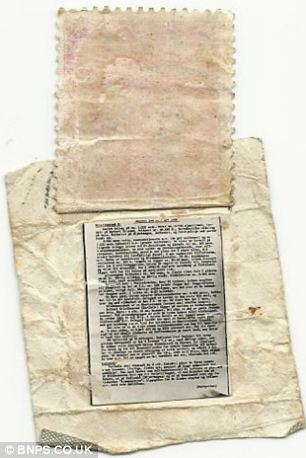
Like his brother, Sven Sømme joined the Norwegian Resistance to fight the Nazis who had occupied his country since 1940. A scientist and fisheries officer, Somme joined the Resistance. He would photograph strategic German military bases using a miniature camera, sending covert maps, photographs and intelligence reports to the Allies hidden under the postage stamps, on letters.

In 1944, guards saw the sun glint off a camera’s lens, and came running. Sømme had been caught, taking pictures of a German U-boat base on Otteroy island. Sven tried hiding the tiny camera under a rock, but the Germans quickly found it. He was put in cuffs.

The penalty for what he was doing, was the firing squad. He would be lucky not to be tortured to death.

That night, Sømme managed to slip his handcuffs and creep past his sleeping guard. What followed was a nightmare race to freedom. A relentless hunt two months in duration, across 200 miles of snow covered mountains.

The Norwegian had barely an hour’s head start. The Nazis couldn’t let this man escape. He knew too much. Pursued by 900 troops and a pack of bloodhounds, Sømme worked his way through icy streams and across ravines moving ever higher, into the mountains.

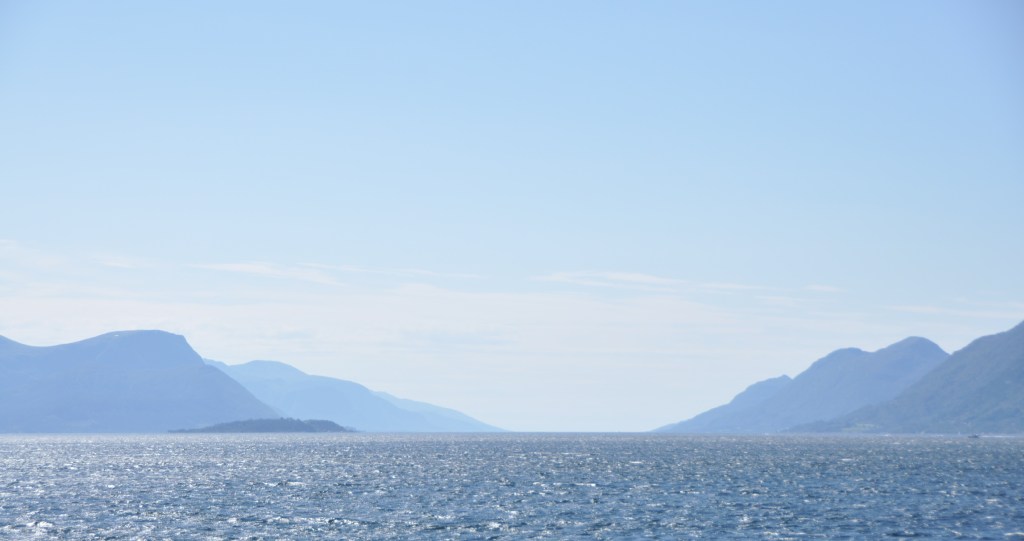
Otrøya island (right) where Sømme photographed the torpedo base, at Midfjorden. H/T Wikipedia

He wore a pair of beat up dress shoes and certainly would have succumbed to frostbite in the mountains, had he not been taken in for a time by a friendly family. He couldn’t stay for long, but the family’s 19-year-old son Andre gave him the pair of mountain boots.

Sven Somme, tree

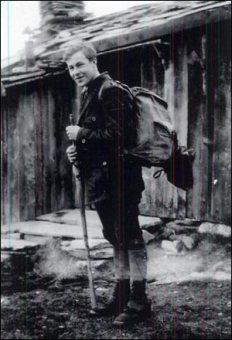
Sømme would wade through icy streams to avoid leaving tracks in the snow, or leap from one tree to another, a game he‘d once learned, as a kid. He trekked 200 miles through the mountains in this manner dodging bears and wolves. That baying horde was never far from his heels.

At last he made it to neutral Sweden, where he was taken to England. There he met the exiled King of Norway, and the woman who would one day become his wife and mother of his three daughters, an English woman named Primrose.

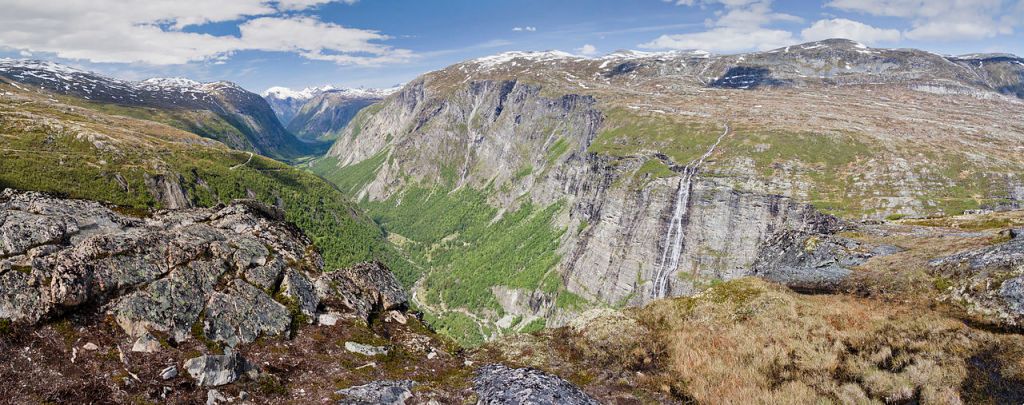
Mountaineer Arne Randers Heen guided Sømme through the steep mountains from Isfjord to Eikesdalen (photo) and locals in Eikesdal helped him through the difficult terrain in from Eikesdal to Aursjøen lake. From there he walked across Norway to Sweden. H/T Wikipedia

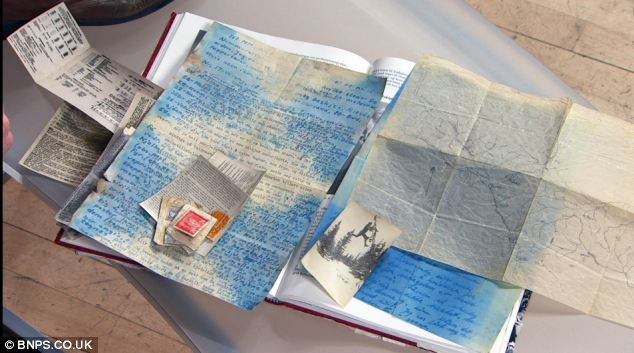
Sven Sømme passed away in 1961 following a battle with cancer. Primrose died not long after. It was only in going through her things after she passed, that the three girls discovered their father’s history. The photographs, the letters, even an arrest warrant, written out in German and Norwegian.

Documents: His daughter has now found an incredible archive of secret documents he collected while working as a spy” H/T UK Daily Mail

Sømme had written a memoir about his escape. He called it “Another Man’s Shoes”. In 2004, his daughters used the book to retrace their father’s epic flight across the mountains. They even met the family who had sheltered him and, to their amazement, they still had his old shoes. The book is still in print as far as I know. It has a forward by his daughter Ellie, describing their emotional meeting with the family who had sheltered her father.

It must be one hell of a story.

November 18, 1863 The Gettysburg Address

Oddly, we don’t know the precise form in which the President delivered his address. Lincoln wrote his own speeches, lining out words and writing into margins as he developed his thought process. That working copy is lost.

Have you ever crossed that field at Gettysburg? The site of the final assault on the third day? You can feel the sense of history, stepping off Seminary Ridge. Only a mile to go. You are awe struck at the mental image of thousands of blue clad soldiers, awaiting your advance. Halfway across and just coming into small arms range, you enter a low spot on what seemed like a flat plain. It’s almost imperceptible but the “copse of trees”, drops out of sight. You can’t help a sense of relief as you cross the draw. If you can’t see them they can’t shoot you. Right?

Then you look to your right and realize. Cannon would have been firing down the length of your lines that day, from Little Round Top. From your left, the guns of Cemetery Hill tear into your lines. Rising out of the draw you are now in full sight of Union infantry. You quicken your pace as your lines are torn apart from the front and sides. Fences hold in some spots along the Emmitsburg Road. Hundreds of your comrades are shot down in the attempt to climb over.

Finally you are over and now it’s a dead run. There’s a savage struggle to possess an angle in a stone wall, but it is not enough. The Bloody Angle. You have reached the “high water mark of the Confederacy”. The shattered remains of that splendid Multitude you joined only moments before, retreat. It is over.

The hill from which the Union center repulsed Longstreet’s assault of the third day was selected for a national cemetery, within the four months following the battle of Gettysburg. Work began to re-inter the dead from the carnage of July, on October 27.

Three weeks later, Abraham Lincoln boarded a train in Washington.  He’d been asked to make “a few dedicatory remarks” on the following day, consecrating the new National Cemetery at Gettysburg where, even now on this day in 1863, workmen yet labored.

Lincoln was the President of a country torn by Civil War, a war so terrible that, before it was over, would kill more Americans than all the wars from the Declaration of Independence to the Global War on Terror, combined.

November 18, 1863. President Lincoln takes a break at the Hanover junction Station (PA), waiting to be joined by Pennsylvania Governor Andrew Curtin. Curtin’s train was late and the President moved on, without him. The Governor would have to find find another route to join the President, the following day.

Lincoln had been feeling poorly the day of the train ride, telling his secretary John Hay, he was feeling weak.  He would feel worse before that day was over. Hay noted that Lincoln’s face was ‘a ghastly color’, the day of the address.  No one knew it at the time. The President had entered the first stages, of smallpox.

His was not the keynote address.  That would be a 13,607 word, two-hour oration delivered by Boston politician Edward Everett.

gtsburgaddress2
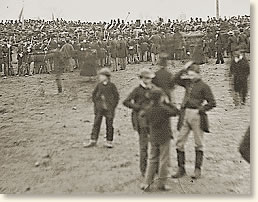
“A rare photo of the ceremonies. A group of boys stand at the fringe of a crowd. In the distance, several men wearing sashes can be seen standing on the speakers’ platform. Analysis of an enlargement of this photo reveals the image of Lincoln sitting to the left of these men”. Tip of the hat to http://www.eyewitnesstohistory.com, for this image

After Everett’s speech, photographers began the careful preparation and setting, of glass plates. Each an thought he had all the time in the world. He did not.

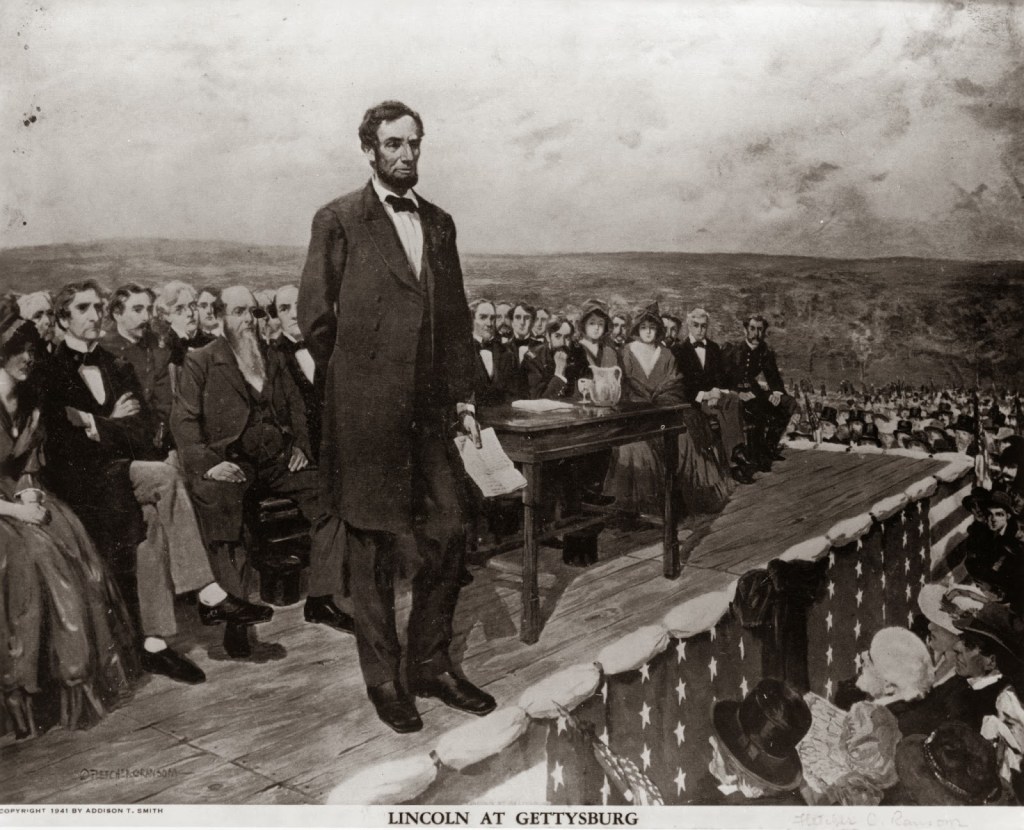
There is no photograph of President Lincoln delivering the Gettysburg address.

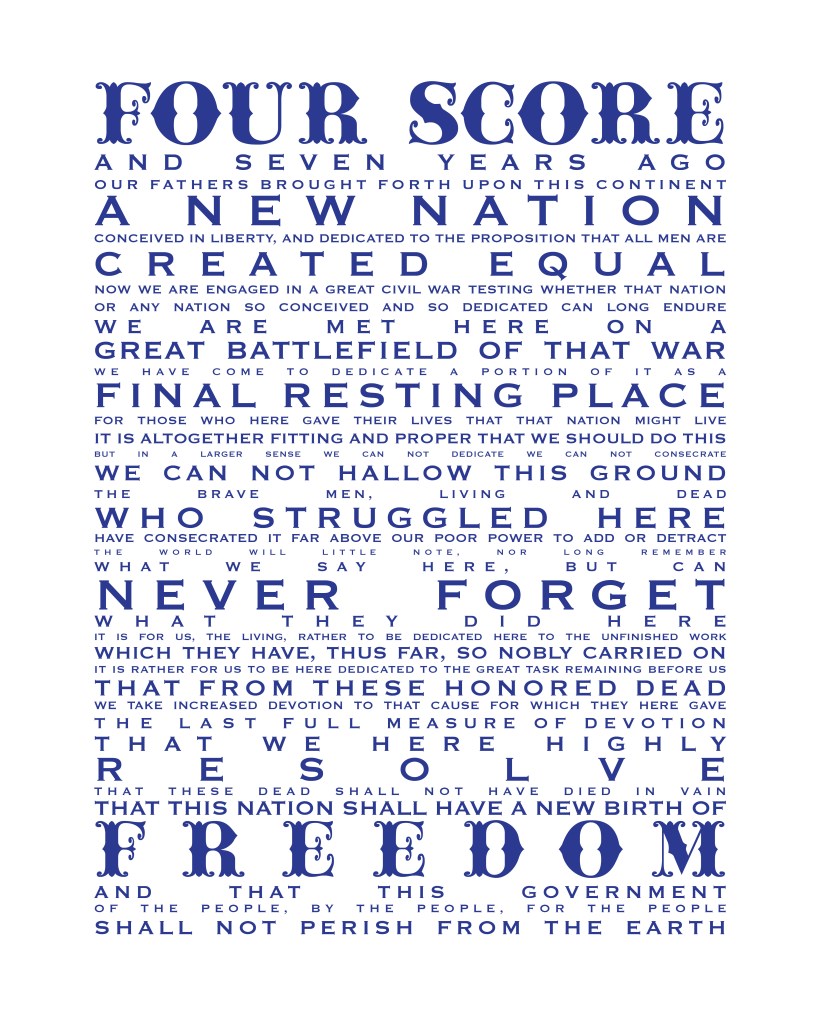
The 16th President of the United States stepped to the rostrum and delivered 271 words, in ten sentences.  In just over two minutes, Lincoln captured an entire vision of where the country was at that moment in time, where it had been, and where it was going.

Lincoln himself thought his speech a flop, but Everett later wrote to him, saying “I wish that I could flatter myself that I had come as near to the central idea of the occasion in two hours as you did in two minutes.”

Then as now there were haters, a peanut gallery firing spitballs, from secure positions on the sidelines.  The Chicago Times described Lincoln’s remarks as “silly, flat and dish-watery utterances”. It all came out in the end.  Lincoln’s address is remembered as one of the finest English language orations since Henry V’s St. Crispin’s Day speech, at Agincourt.  The names of those croaking tree frogs at the Chicago Times, are all but forgotten.

Oddly, we don’t know the precise form in which the President delivered his address.  Lincoln wrote his own speeches, lining out words and writing into margins as he developed his thought process.  That working copy is lost.

objectathand_dec08_631
“The only known image of Abraham Lincoln at Gettysburg was uncovered in 1952 at the National Archives. It was taken by photographer Mathew Brady. (Library of Congress)” H/T Smithsonian.com, for this image

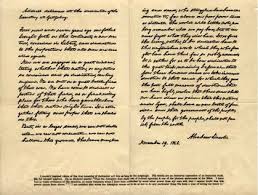
There are five known copies of the Gettysburg address, written in Lincoln’s own hand. Each varies slightly in wording and punctuation.  He wrote two after the address, giving them to his two personal secretaries, John Hay and John Nicolay.  He sent one to Edward Everett early in 1864 and another to George Bancroft, the former Secretary of the Navy turned historian.  Lincoln wrote a fifth copy in February known as the Bliss copy, for Colonel Alexander Bliss, upon learning the Bancroft version was unsuitable for publication. Preproduction technologies were unsuitable at that time, for documents written on both sides of the same page.

images (11)

Lincoln signed, dated and titled the Bliss copy.  This is the version inscribed on the South wall of the Lincoln Memorial.

One of my stranger childhood notions, was the idea that sounds never disappeared. They only diminished as they spread outward, like ripples on a pond.  If that was true (thought my nine-year-old self), could we not somehow capture and listen to the Gettysburg address, as it was actually delivered?

It’s a funny thing how some ideas, even the goofy ones, never completely die away.

November 17, 1968 The Heidi Bowl

Sportswriter Jack Clary quipped, “The football fans were indignant when they saw what they had missed. The Heidi audience was peeved at having an ambulatory football score intrude on one of the story’s more touching moments. Short of pre-empting Heidi for a skin flick, NBC could not have managed to alienate more viewers that evening.”


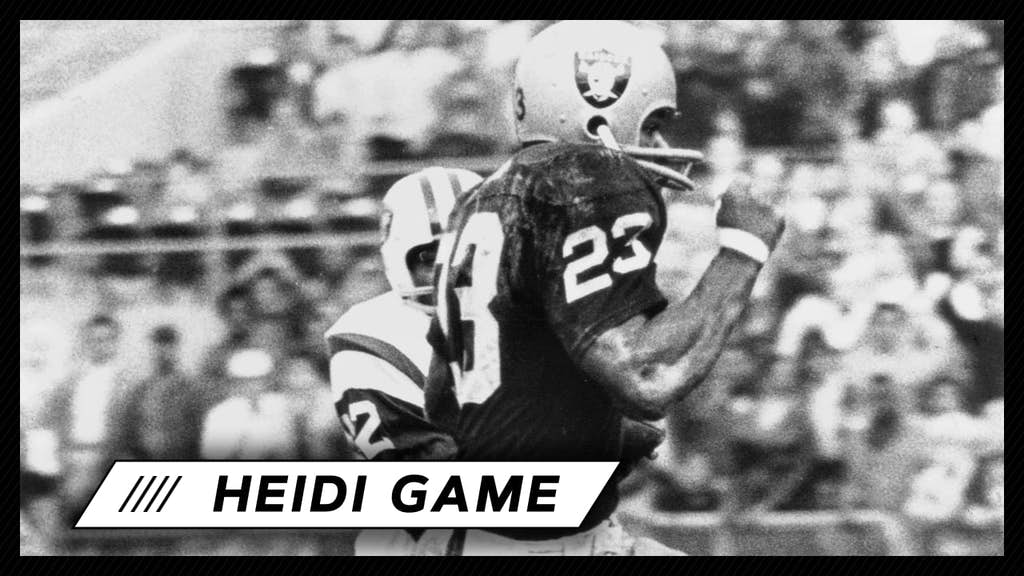
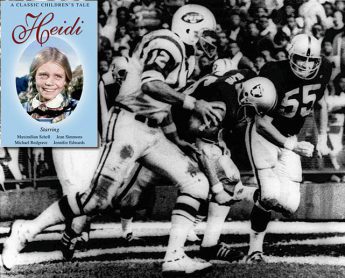
For football fans, November 17, 1968 was shaping up to be one hell of a game.  The second-best team in the world Oakland Raiders if the results of Super Bowl II were any indication, against the future American Football League champion and Super Bowl III winner, New York Jets.

raiders-jets-heidi-bowl

NBC executives were thrilled.  The AFL was only eight years old in 1968 and as yet unproven, compared with the older league. The NFL/AFL merger was still two years in the future. 

This game was expected to keep viewers in their seats, adding to the already large audience anticipated for the 7:00pm presentation of Heidi, a modern remake of the children’s classic story from 1880.

In those days, most pro football games were played in 2½ hours. Network executives scheduled this one, for three.  The contract with Heidi prime sponsor Timex specified a 7:00 start. And so the order went down, to network affiliates.  There will be no delays.

The game didn’t disappoint, In fact it was voted among the ten most memorable games in professional football history in 1997, and the most memorable regular season contest, ever.  The rivalry between the two clubs was intense, a high-scoring game where the lead changed, no fewer than eight times.  

image-952333-860_poster_16x9-yegb-952333

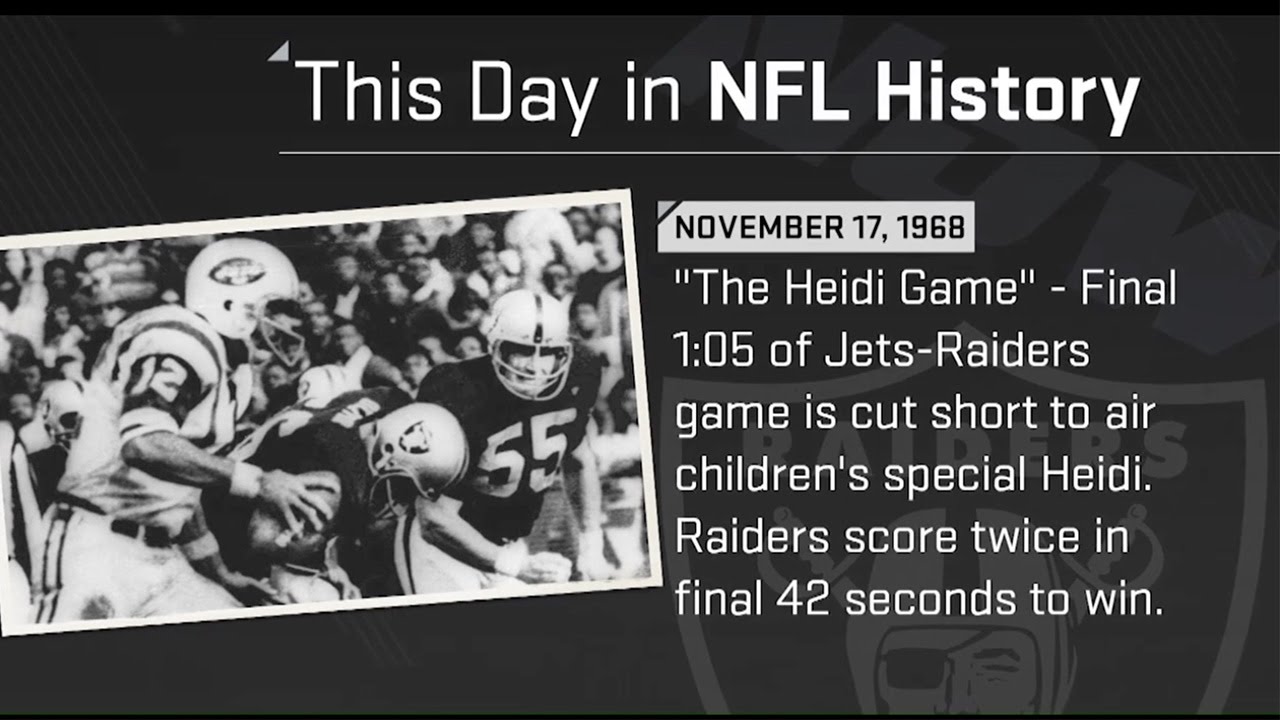
As early as 6:20, network brass began to worry that the game wouldn’t end on time.  7:00 arrived with a minute & five seconds left to play. The Jets were ahead, 32-29. 

Network and affiliate switchboards began to light up, with fans demanding the game be broadcast in its entirety. Others wanted to know if Heidi would begin, on time.  

NBC Sports executive producer Don “Scotty” Connal and network president Julian Goodman had by this time agreed to “slide the network”, to begin Heidi as soon as Curt Gowdy signed off from the game.

All well and good but by this time, phone switchboards were jammed. Solid.  NBC’s CIrcle-7 phone exchange blew twenty-six fuses, in one hour.  NYPD switchboards, broke down. Broadcast Operations Control (BOC) supervisor Dick Cline nervously watched the clock as Connal frantically redialed, but couldn’t get through.

The television audience watched Oakland running back Charlie Smith return the kickoff from the end zone to the Oakland 22-yard line with 1:01 remaining on the clock. And then the feed was broken.

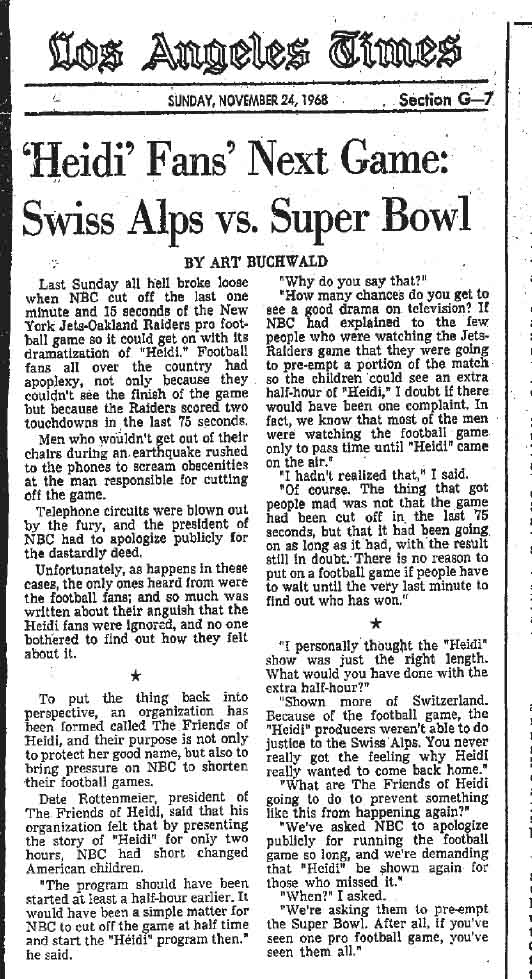
Heads exploded across the nation as callers reached out to newspapers and television stations, even local police departments, to demand the score.  And Loooord, did they bitch.   Humorist Art Buchwald wrote “Men who wouldn’t get out of their chairs in an earthquake rushed to the phone to scream obscenities [at the network].”

Meanwhile, the Oakland Raiders staged the most amazing come-from-behind rally in the history of sports, scoring two touchdowns in 42 seconds.  Gamblers were apoplectic on learning the news, that the Raiders had beat the 7½ point spread.

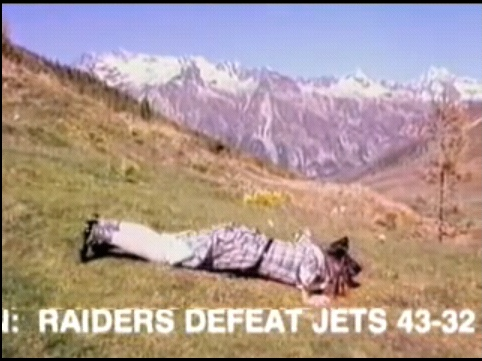
The film was just reaching a most tear-jerking moment as Heidi’s paralyzed cousin Clara was taking her first halting steps, as NBC broke in: “SPORTS BULLETIN: RAIDERS DEFEAT JETS 43-32”.

If half the nation hated NBC at that moment, now the other half did, as well. Sportswriter Jack Clary quipped, “The football fans were indignant when they saw what they had missed. The Heidi audience was peeved at having an ambulatory football score intrude on one of the story’s more touching moments. Short of pre-empting Heidi for a skin flick, NBC could not have managed to alienate more viewers that evening.”

The “Heidi Bowl” was prime time news the following night, on all three networks. NBC’s Huntley-Brinkley Report aired the last sixty seconds. ABC Evening News anchor Frank Reynolds read excerpts from the movie, with clips of the Raiders’ two touchdowns cut in. CBS Evening News’ Harry Reasoner announced the “result” of the game: “Heidi married the goat-herder“.

NBC had no option but self-mockery, to redeem itself from the fiasco. One testimonial read “I didn’t get a chance to see it, but I hear it was great”. It was signed by Joe Namath.

A special “Heidi phone” was installed in the BOC, to prevent future such disasters. In 2005, TV Guide listed the Heidi Bowl at #6 of the “100 Most Unexpected TV Moments” in television history.

Actress Jennifer Edwards in the title role of the film, may have the final word in this story: “My gravestone is gonna say, ‘She was a great moment in sports’”.

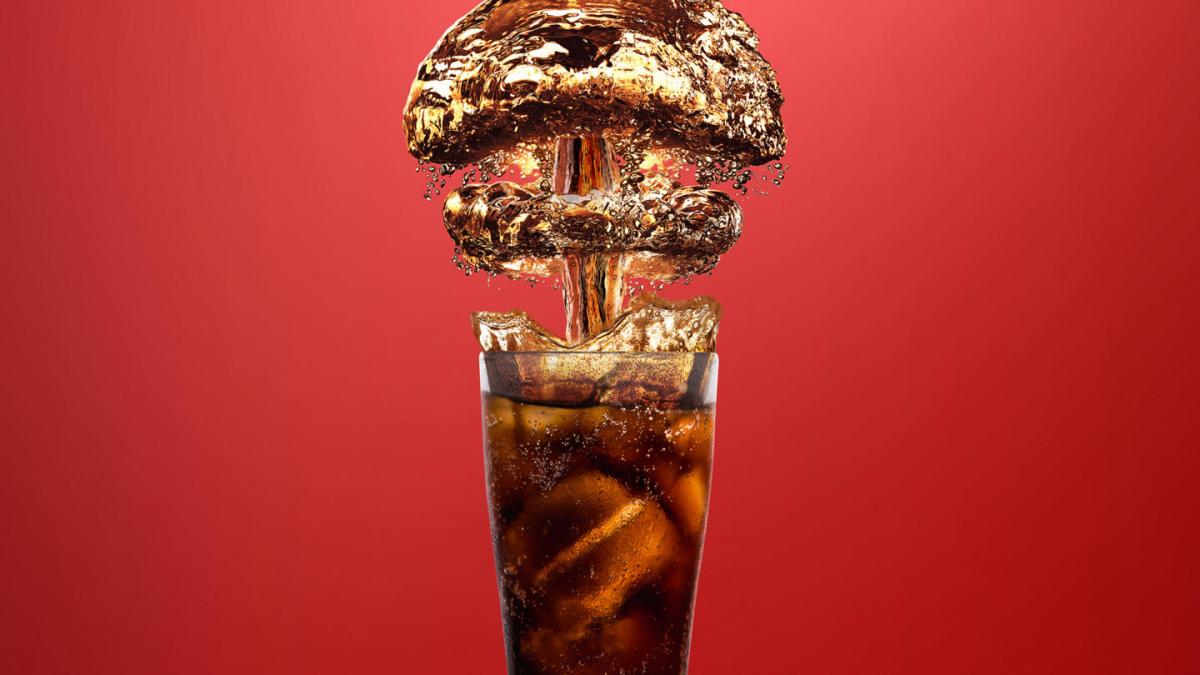
maxresdefault (18)

November 16, 1959 Pepsi’s Navy

Coca Cola’s 1985 introduction of “New Coke” has been described as the “marketing blunder of the ages” but, what really turned business rivalry to blood feud, was when Pepsi bought it’s own navy.

Coca-Cola was first introduced in 1886. Pepsi appeared seven years later, in 1893. The most famous rivalry in the soft drink business really heated up in the 1930s, when Pepsi offered a 12-oz. bottle for the same 5¢ as Coca Cola’s six ounces.

The Coca Cola Company’s flagship brand had a 60% share by the end of WWII, but that declined to less than 24% by the early 80s. Most of the difference was lost to Pepsi and their “Pepsi challenge” blind taste test promotions, of the late 1970s.

Coca Cola’s 1985 introduction of “New Coke” has been described as the “marketing blunder of the ages” but, what really turned business rivalry to blood feud, was when Pepsi bought it’s own navy.

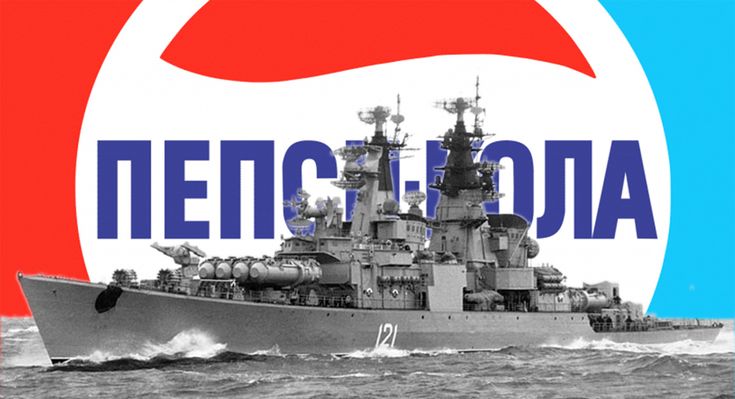
Alright, it didn’t happen quite that way but, still. The company did have its own navy. Not a little one, either. In 1990, Pepsi owned the 6th largest navy, in the world.

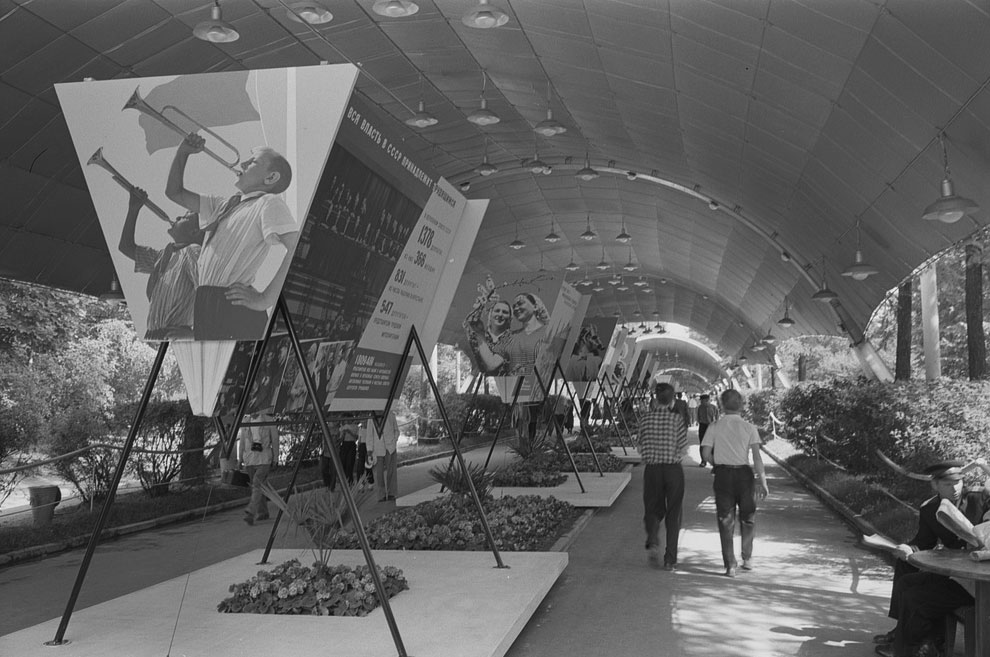
Permit me to rewind, just a bit. The “Cold War” experienced a period of thaw in 1959. Chairman of the Council of Ministers Nikita Kruschev came to visit President Eisenhower in the White house, and the two agreed on a bit of cultural exchange. A display of each civilization for the benefit of the other’s citizens.

So it was the American National Exhibition came to Moscow in the summer of 1959 followed by a Soviet display, in New York.

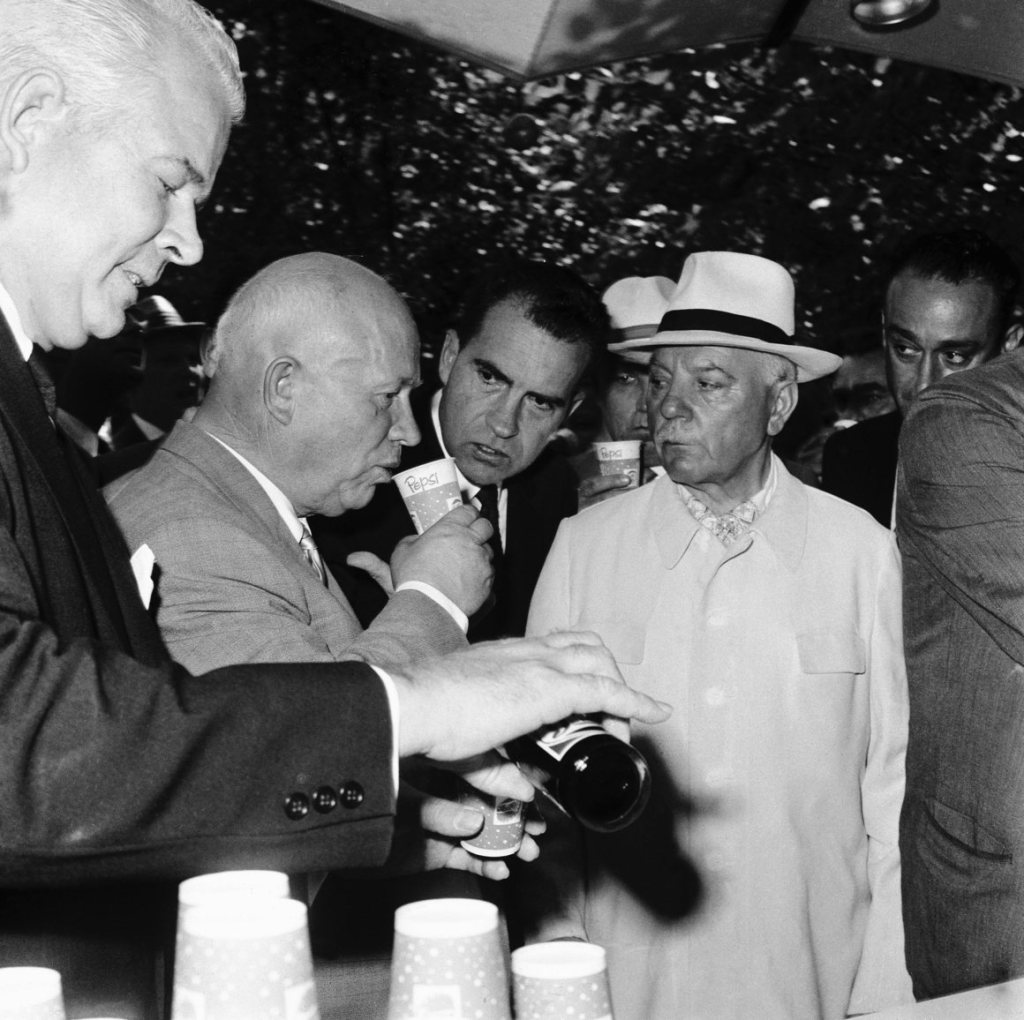
An argument broke out between Vice President Richard Nixon and Leader Kruschev, over the benefits of Capitalism vs Communism. A heated debate really, it was July, and the Soviet leader looked thirsty.

Pepsi Cola VP Donald McIntosh Kendall thought it was a swell idea, to offer the man a Pepsi. That’s Kendall, pouring, below. That drink was a propaganda coup, the image itself a victory, so much so that on this day in 1959…nothing happened. The “Sound of Music” opened on Broadway. I don’t know, maybe they were all distracted, but one thing is certain. Nikita Kruschev loved him a Pepsi

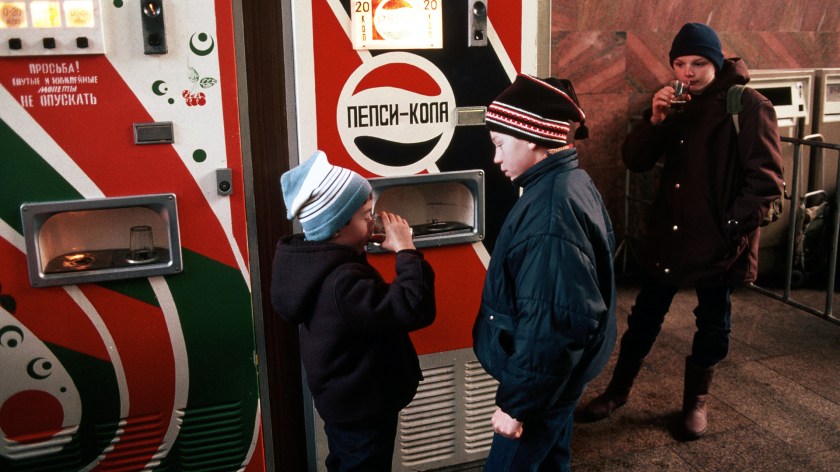
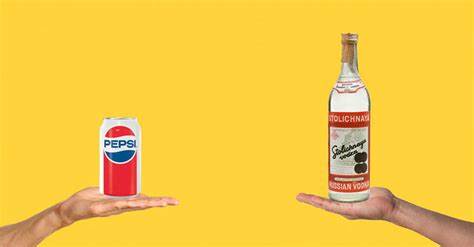
The exhibition opened the way to the Soviet market for several American companies including IBM, Dixie-cup, Disney and…you got it…Pepsi. That image was a coup for Kendall as well. Within a few years he was CEO and, in 1972 Pepsi negotiated an exclusive marketing agreement, for the Soviet consumer. Coke was out. Pepsi was in. It was the first popular consumer product to make its way to the soviet consumer, a market which would come to be worth $3 Billion, with a capital “B”.

There was a problem however, in the form of payment. The Ruble was no good on the international currency exchange. There had to be a more…umm…liquid form of transfer.

Vodka.

The Russians had tons of the stuff, and so it was agreed. Pepsi would be transferred in exchange for…Vodka.

The system worked so nicely that “Stoli’s” become a household word but, by the late 80s, it was time to renegotiate. Pepsi had 20 bottling plants on Soviet soil. Vodka wasn’t about to pay for all that. Did I mention the USSR was a $3 Billion market for sugary, bubbly water?

It happened by this time, the Soviet Union was looking to get rid of surplus equipment from the Cold War, including a Destroyer, a Cruiser, 17 Submarines and a Frigate.

So it was, at least for a time, Pepsi became owner of the 6th largest navy, on the planet.

Lucky for Coke, the Cola Wars were destined to remain cold. Ice cold. The Pepsi Fleet was sold to a Swedish outfit, for $3 Billion worth of scrap. Donald Kendall left this world on September 19 of this year but we must give him the last word, in this story.

According to his New York Times obituary Kendall once quipped to Brent Scowcroft, National Security Advisor to President George H. W. Bush: “We’re disarming the Soviet Union faster than you are”.

November 15, 1873 The Love of a Dog

When it comes to loyalty, it’s hard to beat the love of a dog.

According to National Geographic, “Wolves were the first animal to be domesticated, sometime between 33,000 and 11,000 years ago“. The first wolf may have approached some campfire, looking for a morsel.  Maybe someone took in a sick or injured pup. Wolf packs may have shadowed human hunting parties, the two groups learning to work together for their mutual benefit. The facts are lost to history, but one thing is certain. When it comes to loyalty, it’s hard to beat the love of a dog.

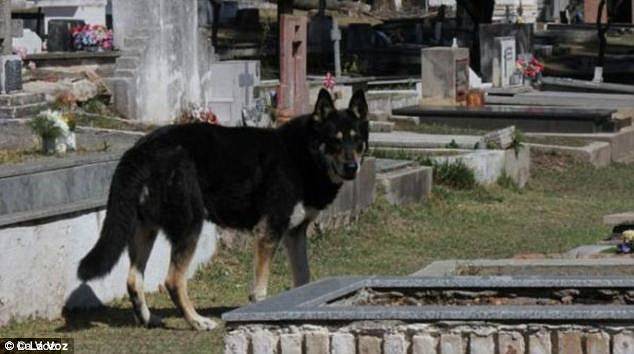
Miguel Guzmán of Cordoba Argentina, died in 2006. The following day Capitán, the family’s German Shepherd, disappeared. Mrs. Guzmán and the couple’s son searched all day, until the dog arrived at the cemetery. Forty-five minutes away. No one knows how he got there. The family claims they didn’t bring him. Cemetery director Hector Baccega remembers when he first saw the dog: ‘He turned up here one day, all on his own, and started wandering all around the cemetery until he eventually found the tomb of his master”.

434B6A2000000578-0-image-a-116_1502877093313
Capitan. H/T Guardian, for this image

Capitán was brought home but he was back, the following day. Baccega describes what has since become, routine: “During the day he sometimes has a walk around the cemetery, but always rushes back to the grave. And every day, at six o’clock sharp, he lies down on top of the grave [and] stays there all night”.

Capitán lived to fifteen or sixteen, old for a large breed, and died in February 2018, in the cemetery in which he had lived. He was crippled and mostly blind when he went to join his “Dad”.  Who knows. I certainly don’t. Maybe they really Are together again.

200365253-114256-400

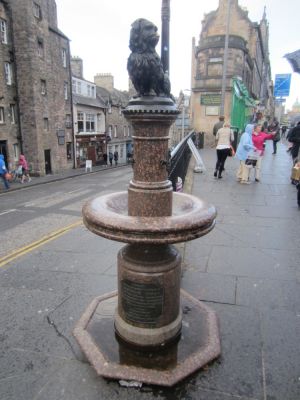
“Greyfriar’s Bobby” was a Skye Terrier in 19th-century Edinburgh, who waited 14 years by the grave of his owner, Police nightwatchman, John Gray.  He died there in 1872 and was buried in the Greyfriars Kirkyard, not far from where his master lay.

Artist William Brodie created a life-sized likeness atop the Greyfriars Bobby Fountain in Edinburgh. Paid for by local aristocrat Baroness Burdett-Coutts, the memorial was dedicated on this day, in 1873

Hachikō, an Akita known to Japanese children as chūken Hachikō (“faithful dog Hachikō”), used to tag along with his owner Hidesaburō Ueno, a professor of agriculture at Tokyo University. Ueno would commute to work and every evening, Hachikō would wait at the Shibuya Station, for the professor’s return. Hidesaburō stopped coming home in May 1925, when a cerebral hemorrhage took him away, while delivering a lecture. Every day for nine years, nine months and fifteen days, the golden colored Akita appeared at Shibuya Station, precisely on time for that evening train.

Feeling Ruswarp Statue

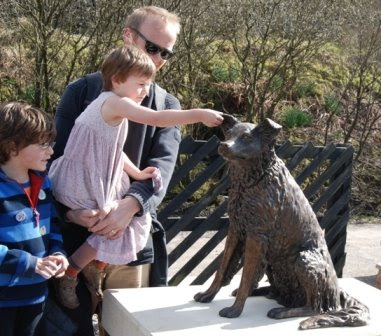
Ruswarp was a fourteen-year old Border Collie who went hiking with Graham Nuttall on January 20, 1990 in the Welsh Mountains, near Llandrindod. On April 7, a hiker discovered Nuttall’s body near a mountain stream. The dog had been standing guard, for eleven weeks.  Ruswarp was so weak he had to be carried off the mountain and died, shortly thereafter.  Today there’s a small monument in his memory, on a platform near the Garsdale railway station.

In the early morning hours of August 6, 2011, 30 American military service members including 22 US Navy SEALs were killed along with eight Afghans, SEAL Team 6 handler John “Jet Li” Douangdara and his Military Working Dog (MWD) “Bart”. The Chinook helicopter in which they were riding, was shot down by a rocket-propelled grenade in the Kunar Province, of Afghanistan.

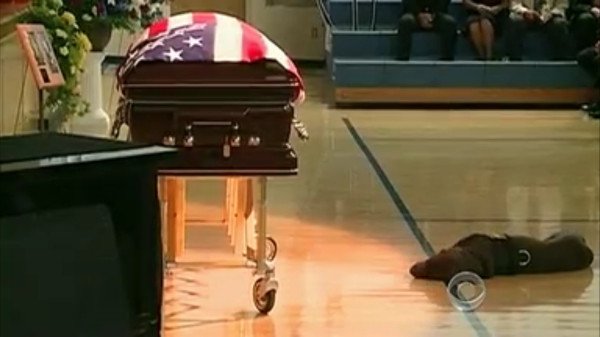
To anyone around at that time, the images of “Hawkeye”, together for the last time with slain Navy SEAL Jon Tumilson,  are hard to forget.

Hawkeye-and-Tumilson

In 1936 there was a sheep dog called “Shep” belonging to a herder whose name is lost to history. It was near Fort Benton, in Montana.

The man fell ill and was taken, to a local hospital. For over a week, Shep waited at the hospital, for his master to return. On the 11th day the man died, his casket taken to the local train station and placed in the cargo hold, to be returned home for burial.

Shep was there throughout and watched the train chug away with the body of his “Dad”. He’d return to that hospital door where a kindly nun would feed him a scrap, but every time he heard that train whistle, there was a sheepdog waiting at the station.

In those days, there were four trains a day. For nearly six years, Shep returned to the station, every time he heard that whistle. He even dug a den for himself, near the track.

Passengers took the Havre to Great Falls rail line just to see the dog. Shep received so much fan mail, the Great Northern Railroad assigned a secretary to write responses.

In time, the dog wasn’t quite so fast as he used to be, his hearing not so good.  On January 12, 1942, “Forever Faithful” Shep was struck and killed on the tracks, waiting for a man who could never return.

Stories such as these are enough to fill a book, if not a library.  I see a bumper sticker sometimes, in traffic.  I’m not a big one for those things but, if I were.  This would be my first:  “Lord, make me half the man my dog thinks I am“.

November 14, 1902 Silly Old Bear

The piece went on to describe the medical afflictions, common to Brunus Edwardii. Clearly satire, the Veterinary Association’s article was overwhelmingly popular, save for the usual curmudgeonly contingent who seem to experience life as one never-ending complaint, in search of a target.

Theodore Roosevelt was in Mississippi in November 1902, helping local authorities settle a border dispute with Louisiana. There was some downtime on the 14th, and Governor Andrew Longino invited the President and a few dignitaries on a bear hunt.

holtcollier
Holt Collier

The hunt was a high profile affair, attended by a number of reporters and led by a former slave and Confederate Cavalryman, the famous bear tracker Holt Collier:  a man who had killed more bears than Davy Crockett and Daniel Boone, combined.

Real history is so much more interesting than the political and pop culture varieties, isn’t it?.

Late that afternoon, Collier and his tracking dogs cornered a large female black bear. Roosevelt hadn’t “bagged” one yet, and Collier bugled for the President to join him. He would have ordinarily shot the bear when it killed one of his dogs, but Collier wanted the president to get this one. He busted the bear over the head with his rifle, hard enough to bend the barrel, and tied the poor beast to a willow tree.

TR-teddy_ear

Roosevelt declined to shoot the beast. He said it was “unsportsmanlike” to shoot a bound and wounded animal. Instead, he ordered the bear put down, putting an end to its pain.

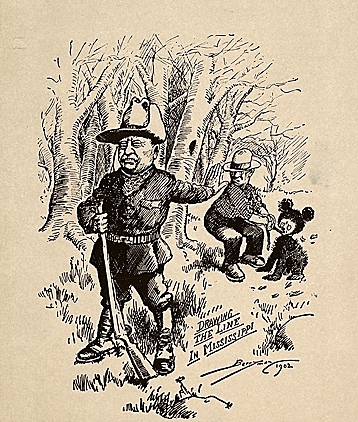
The Washington Post ran an editorial cartoon by Clifford K. Berryman. “Drawing the Line in Mississippi” depicted both the state line dispute and the hunting incident. Berryman first drew the animal as a large, fierce killer, but later redrew the bear, turning the creature into a cute, cuddly little cub bear.

Morris Michtom owned a small novelty and candy store in Brooklyn, New York at that time. Michtom’s wife Rose had been making toy bears for sale in their store, when Morris sent one of them to Roosevelt, asking permission to call it “Teddy’s Bear”. Roosevelt detested that nickname, but he said yes. Michtom’s bear became so popular that he went on to start what would become the Ideal Toy Company.

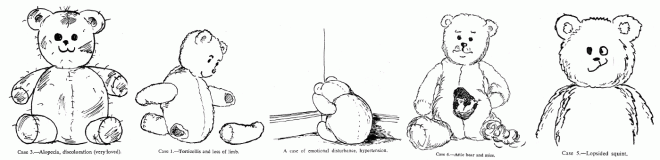
In 1972, the weekly journal of the British veterinary profession, the Veterinary Record, ran an article in their April 1st edition. The piece described the diseases common to “Brunus Edwardii”, a species “commonly kept in homes in the United Kingdom and other countries in Europe and North America”. The article reported that “Pet ownership surveys have shown that 63.8% of households are inhabited by one or more of these animals, and there is a statistically significant relationship between their population and the number of children in a household”.

Brunus Edwardii

The piece went on to describe the medical afflictions, common to Brunus Edwardii.  Clearly satire, the Veterinary Association’s article was overwhelmingly popular, save for the usual curmudgeonly contingent who seem to experience life as one never-ending complaint, in search of a target.

Did I mention, the thing was published on April Fool’s Day?

One such curmudgeon was the humorless A. Noel Smith, a zany funster if there ever was one to be sure, who sniffed, “I have been practising veterinary medicine for the past 12 years or more “across the pond” and my Veterinary Records arrive a month or more late. However, I still open them with interest and read what is going on “at home”. April 1st’s edition thoroughly soured my interest. How three members holding sets of impressive degrees can waste their time writing such garbage in a journal that is the official publication of the B.V.A. is beyond my comprehension, as is your effrontery to publish it under “Clinical Papers”.

I bet that guy would be a hoot to have a beer with.

November 14, 1902 Teddy Bear

For the record,”Brunus Edwardii”, is latin for Edward Brown. The internet dictionary etymologyonline.com explains the origins of “Brown” as, among other things, Dutch, for  “Bruin”.

Edward Bruin. Hmmm. Edward Bear.  Author A.A. Milne’s proper name, for Winnie-the-Pooh. That silly old bear.

November 13, 1982 A Wall of Faces

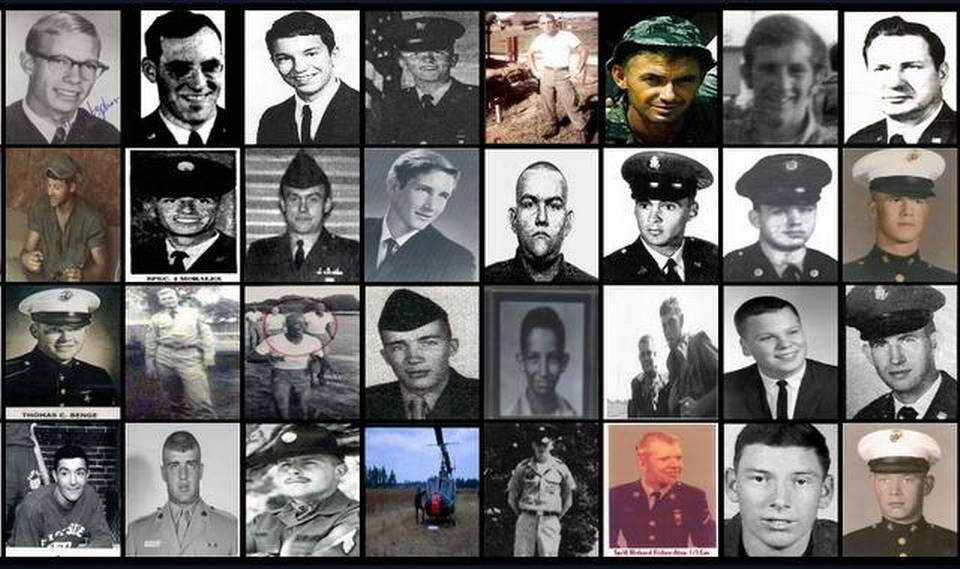
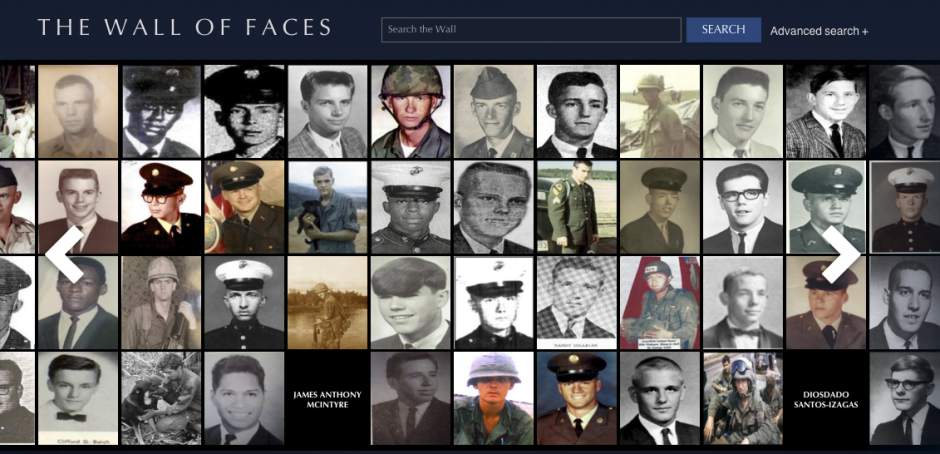
Ten years ago, the Vietnam Veterans Memorial Fund, www.vvmf.org began work on a virtual “Wall of Faces”, where each name is remembered with a picture, and a story to go with it.  In 2017, the organization was still looking for 6,000+ photographs. As I write this, only 230 remain to be found.

Check it out. Pass it around. You might be able to help.


Begun on November 1, 1955, the American war in Southeast Asia lasted 19 years, 5 months and a day. On March 29, 1973, two months after signing the Paris Peace accords, the last US combat troops left South Vietnam as Hanoi freed the remaining POWs held in North Vietnam.

It was the longest war in American history, until Afghanistan.

Jan Scruggs served in that war. Two tours, returning home with a Purple Heart and three army commendation medals as well as a medal for valor. Theirs was an unpopular war and like many, Scruggs found readjustment to civilian life, difficult.

AP_967246486244-840x1256

In 1979, he and Becky, his wife of five years, went to see a movie. The Deer Hunter. The film seemed to bring it all back. The RPG that had left him so grievously wounded. The accidental explosion of those mortar rounds that had killed his buddies. Twelve of them.

That night passed without sleep, a waking nightmare of flashbacks and alcohol. By dawn he’d envisioned a memorial. With names on it. Maybe an obelisk. On the Mall, in Washington DC. Becky feared he might be losing his mind.

Scruggs was working for the department of labor at that time when he took a week off, to pursue the project.

The idea received little support. The project was impractical it was said, and besides, the project would distract veterans organizations from more important work. Undaunted, Scruggs soon left his job to pursue the project, full time.

It was tough going. Becky was now the sole breadwinner. In two months the project raised a scant $144.50.

Always a sign of the contemptible times in which we live, the CBS Evening News ridiculed the project. Late night “comedians” joined in the mockery and yet, that CBS report attracted the attention of powerful allies. Thousands of dollars came in, mostly in $5 and $10 denominations.

Chuck Hagel, then deputy administrator for the United States Department of Veterans Affairs, took interest. Likewise John Wheeler, the fellow Vietnam vet – turned attorney who’d spearheaded the effort to erect the Southeast Asia Memorial on the military academy, at West Point.

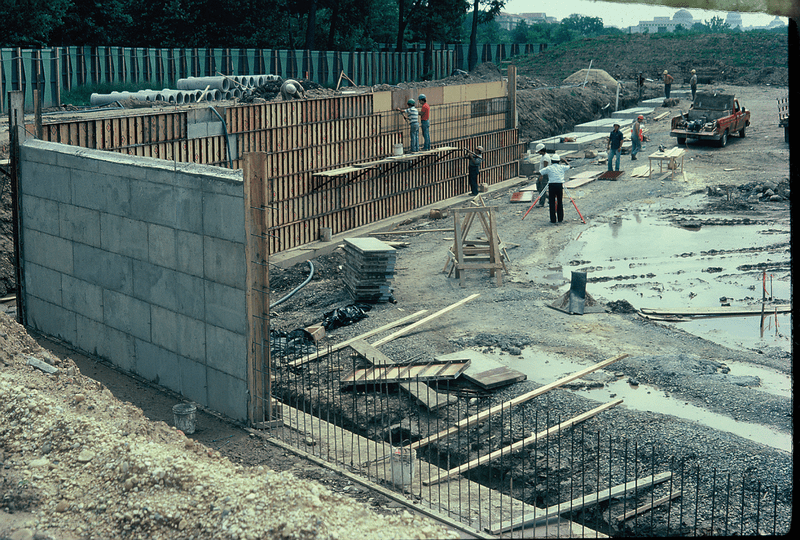
$8 million came in over the next two years and then came the competition. The actual design. There were 1,422 submissions, so many that selections were performed in an aircraft hangar.

Much to her surprise, the winner was 1st-generation American of Chinese ancestry Maya Lin, then an undergraduate studying architecture, at Yale University.

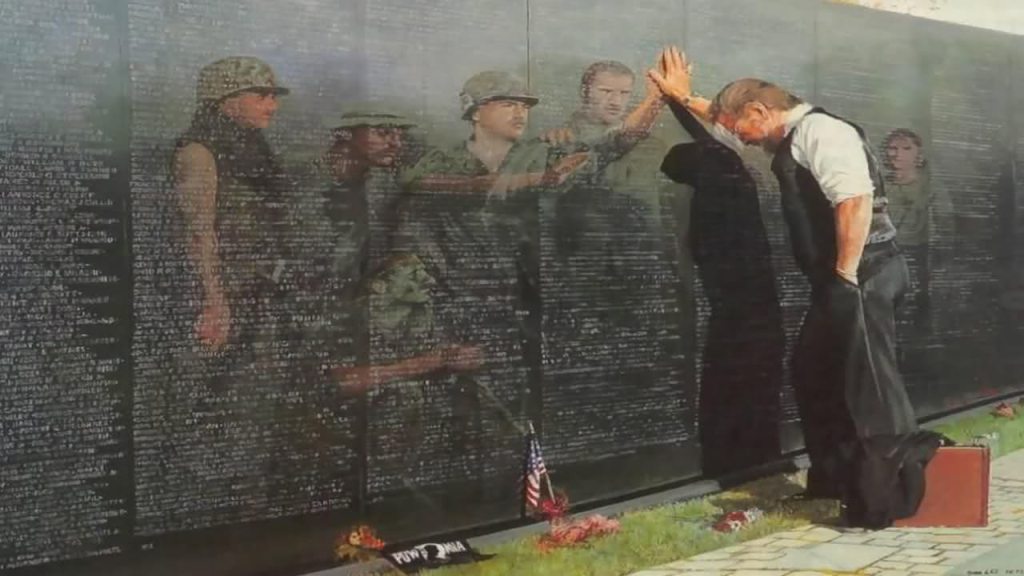
“The Wall” was dedicated on this day. November 13, 1982.

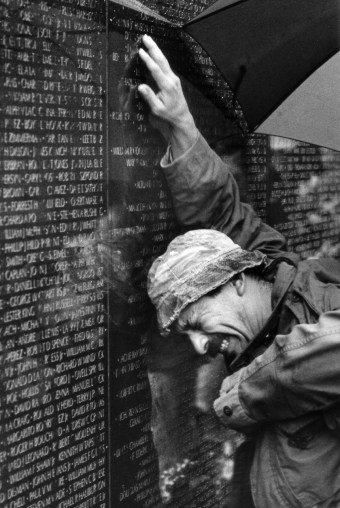
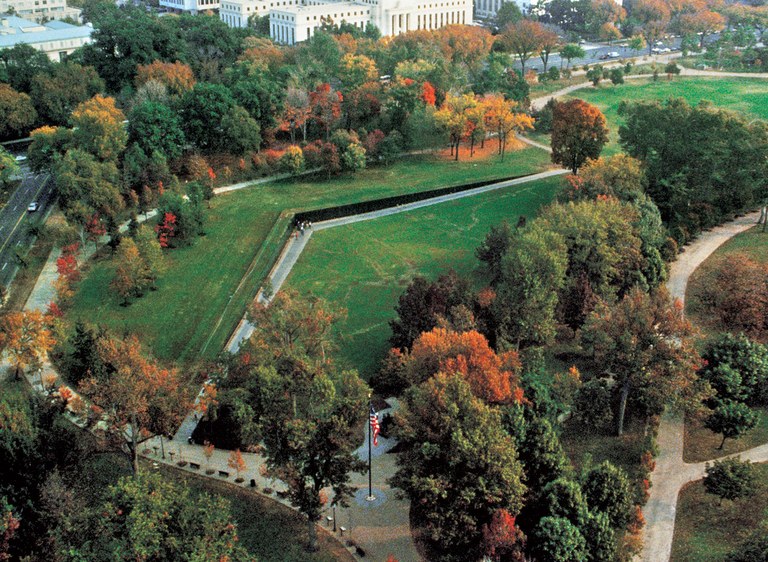
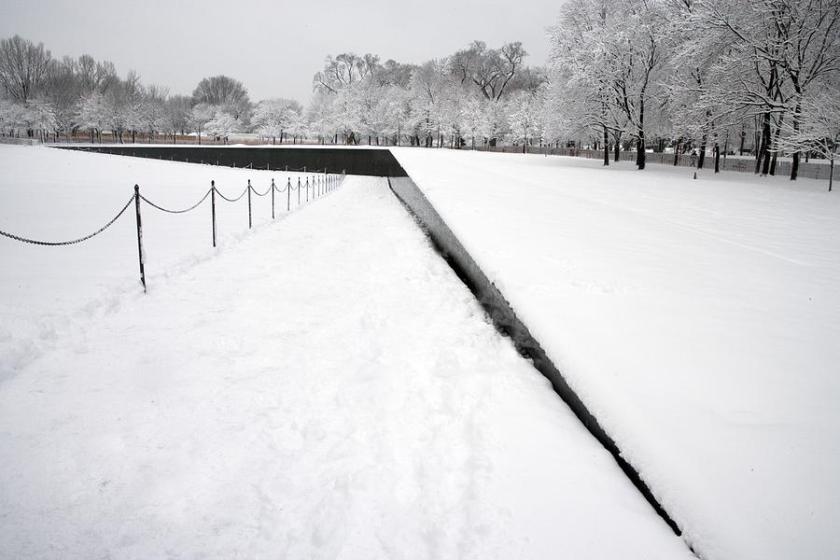
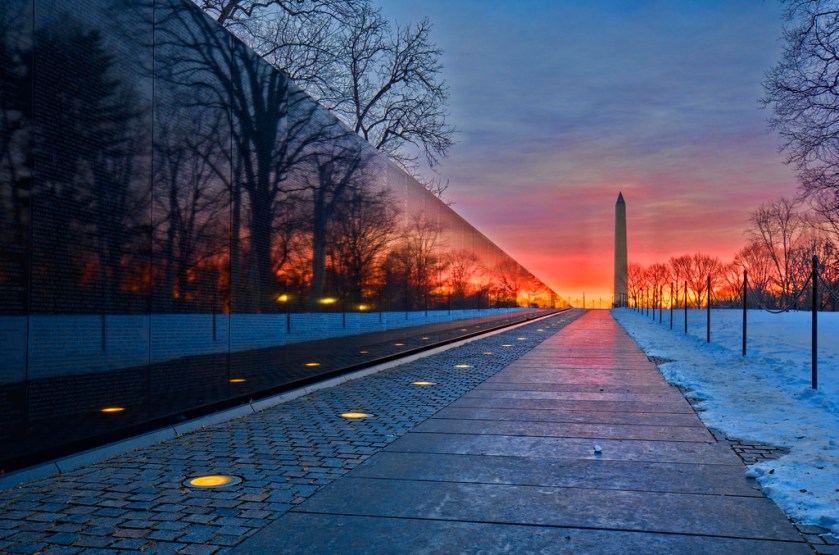
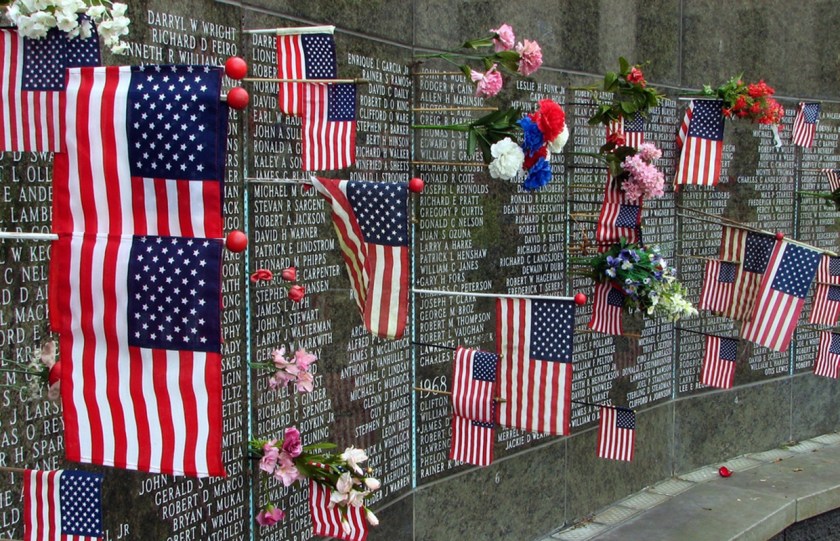
Lin’s design is a black granite wall, 493½-feet long and 10-feet, 3-inches high at its peak, laid out in a great wedge of stone which seems to rise from the earth and return to it. The name of every person lost in the war in Vietnam is sandblasted onto the stone, appearing in the order in which they were lost.

image (4)

Go to the highest point on the memorial, panel 1E, the very first name is that of Air Force Tech Sgt. Richard B. Fitzgibbon, Jr. of Stoneham, Massachusetts, killed on June 8, 1956. Some distance to his right you will find the name of Marine Corps Lance Cpl. Richard B. Fitzgibbon III, killed on Sept. 7, 1965. The Fitzgibbons are one of three Father/Son pairs, so memorialized.

The names begin at the center and move outward, the east wing ending on May 25, 1968. The same day continues at the far end of the west wing, moving back toward the center at panel 1W. The last name on the wall, the last person killed in the war, meets the first.  The circle is closed.

vietnam-veterans-memorial-wall-designed-everett

There, you will find the name of Kelton Rena Turner of Los Angeles, an 18-year old Marine, killed in action on May 15, 1975 during the “Mayaguez incident”, two weeks after the evacuation of Saigon.

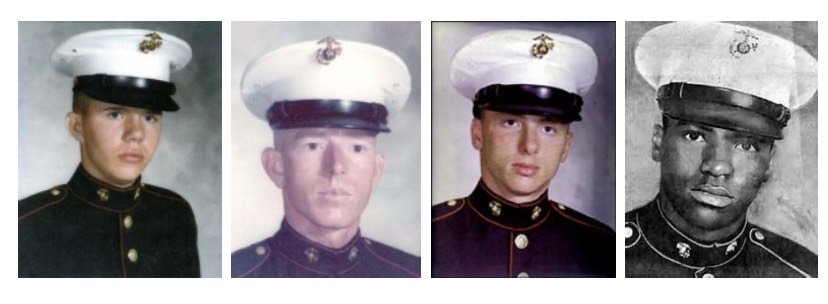
Most sources list Gary L. Hall, Joseph N. Hargrove and Danny G. Marshall as the last to die in Vietnam, though their fate remains, unknown. These three were United States Marines, an M-60 machine gun squad, mistakenly left behind while covering the evacuation of their comrades, from the beaches of Koh Tang Island. Their names appear along with Turner’s, on panel 1W, lines 130-131.

There were 57,939 names inscribed on the Memorial when it opened in 1982. 39,996 died at age 22 or younger.  8,283 were 19 years old. The 18-year-olds are the largest age group, with 33,103. Twelve of them were 17. Five were 16. There is one name on panel 23W, line 096, that of PFC Dan Bullock, United States Marine Corps.  He was 15 years old on June 7, 1969.  The day he died.

Left to right:  PFC Gary Hall, KIA age 19, LCPL Joseph Hargrove, KIA on his 24th birthday, Pvt Danny Marshall, KIA age 19, PFC Dan Bullock, KIA age 15

Eight names belong to women, killed while nursing the wounded. 997 soldiers were killed on their first day in Vietnam.   1,448 died on their last. There are 31 pairs of brothers on the Wall. 62 parents who had to endure the loss of two sons.

16722980372_b210acb1a3_b

As of Memorial Day 2015, there are 58,307, as the names of military personnel who succumbed to wounds sustained during the war, were added to the wall.

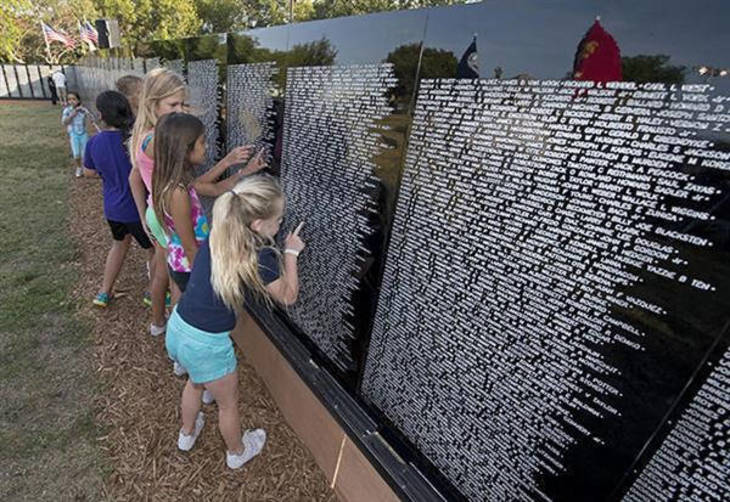
Over the years, the Wall has inspired a number of tributes, including a traveling 3/5ths scale model of the original and countless smaller ones, bringing the grandeur of Lin’s design to untold numbers without the means or the opportunity, to travel to the nation’s capital.

best_crop_ab22a934fd024b8b443c_unnamed-221@2x

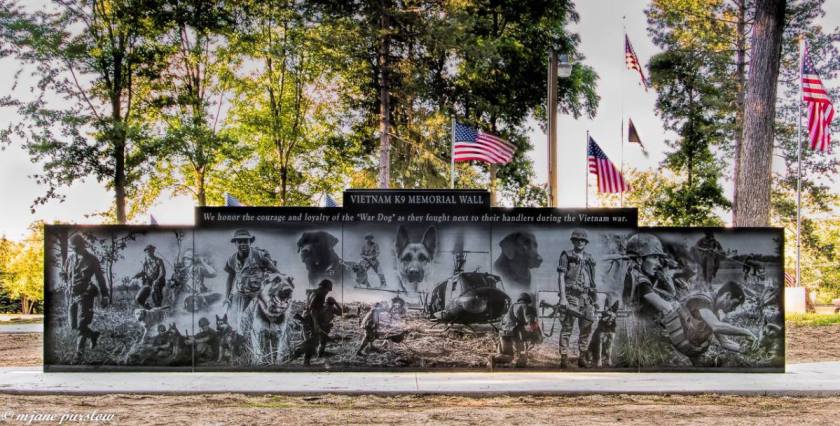
In South Lyons Michigan, the black marble Michigan War Dog Memorial pays tribute to the names and tattoo numbers of 4,234 “War Dogs” who served in Southeast Asia, the vast majority of whom were left behind as “surplus equipment”.

War dog wall

There is even a Vietnam Veterans Dog Tag Memorial, at the Harold Washington Library, in Chicago.

above-and-beyond-vietnam-dog-tag-910

Ten years ago, the Vietnam Veterans Memorial Fund, www.vvmf.org began work on a virtual “Wall of Faces”, where each name is remembered with a face, and a story to go with it.  In 2017, the organization was still looking for 6,000+ photographs. As I write this, there remains only 230 yet to be discovered.

Check it out. Pass it around. You might be able to help.

I was nine years old in May 1968, the single deadliest month of that war, with 2,415 killed. Fifty years later, I still remember the way so many disgraced themselves, by the way they treated those returning home from that place.

vietnam-memorial (1)

I can only hope that today, veterans of the war in Vietnam have some sense of the appreciation that is their due, the recognition too often denied them, those many years ago.  And I trust my countrymen to remember. If they ever have an issue with United States war policy, they need to take it up with a politician. Not the Armed Services member who is doing what his country asked him to do.