October 28, 1944 Mascot

The “war to end wars” had Jackie the Baboon and Whiskey & Soda, the lion cub mascots of the Lafayette flying corps. World War II and Wild Bill Crump had Jeep, the only four-legged co-pilot to serve in the war to retake Europe.

John William “Wild Bill” Crump was born in 1924 in the village of Opportunity, Washington. From the age of 5 he seemed destined for the air, his first flight with his father at the stick.

The world was at war in 1944, and badly in need of pilots. Wild Bill Crump arrived at Harding Field, Nebraska at the age of 20 to complete pilot training.

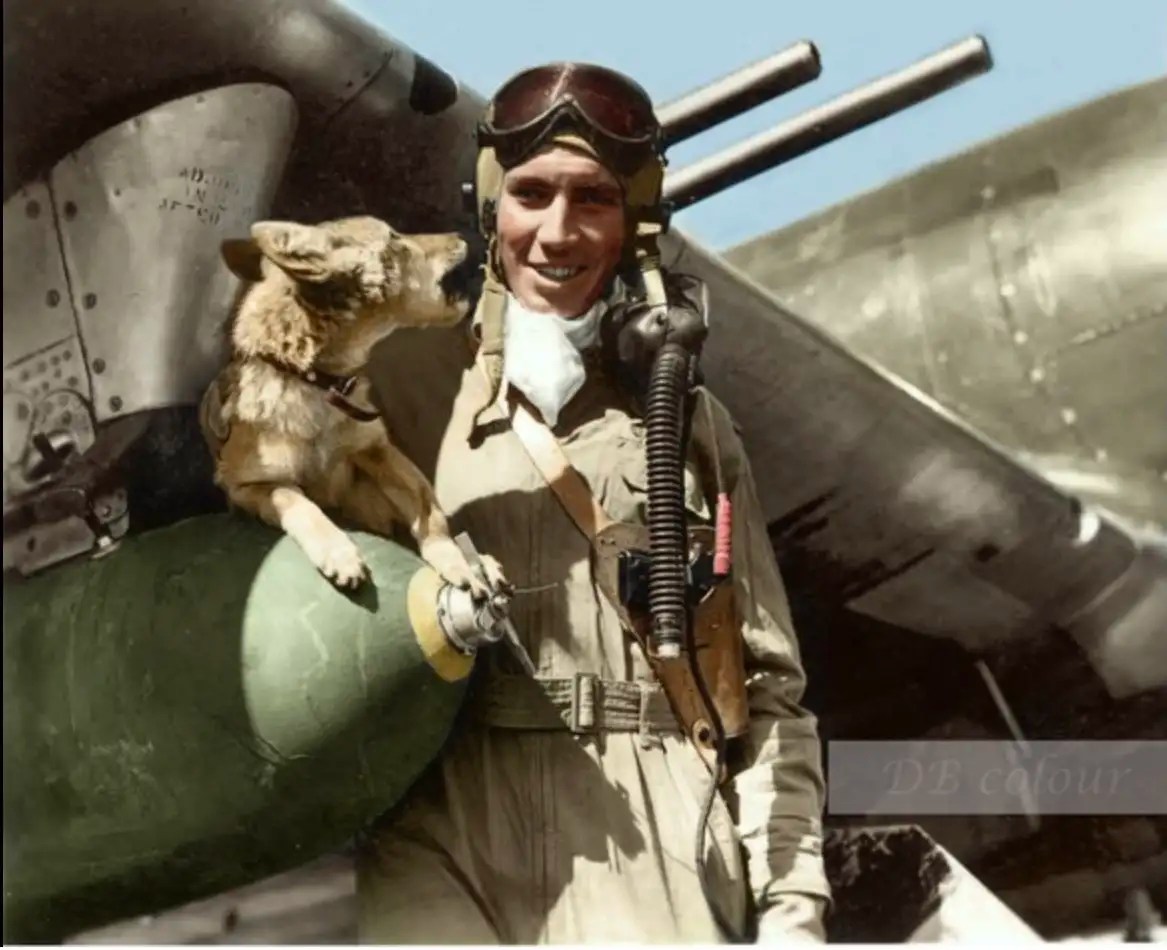
He came upon the most unlikely of co-pilots while earning his wings. Abandoned and alone, it was a two-week-old puppy. A young coyote in need of a home.

“Eugene the Jeep” came to public attention some eight years before that, part of the Popeye cartoon strip by E.C. Segar (rhymes with cigar).

Eugene was a dog-like of character with the magical power to go, just about anywhere. 

Popeye

In the early phase of World War II, military contractors labored to develop an off-road vehicle. It had to be capable of going anywhere, or close to it.  Like Popeye’s sidekick Eugene, the General Purpose GP (“Jeep”) was just the thing.  Eventually, the name stuck.

You see this coming, right? Crump named his new sidekick, “Jeep”.

Next came Baton Rouge. Training on the iconic P-47. The P-47 was a high-altitude fighter-bomber, the foremost ground attack aircraft of the American war effort in WW2.

P-47 cockpits were built for one, but regulations said nothing about a coyote.

So it was, there in Baton Rouge the pair learned to work together. When orders came for England, there was little question of what was next. The luxury liner RMS Queen Elizabeth was serving as a troop ship. No one would notice a little coyote pup smuggled on-board.

Next came RAF Martlesham Heath Airfield in Ipswich, England and the 360th fighter squadron, 359th fighter group.

Jeep became the unit mascot complete with his own “dog tags”, and vaccination records. He’d often entertain the airmen taking part in howling contests.

Curled up in the cockpit, Jeep came along on no fewer than five combat missions.  One time, a series of sharp barks warned the pilot of incoming flak.

Wild Bill Crump survived the war, reenlisting in a time for the Berlin airlift. He later piloted for Bob Hope and the Les Brown Band, entertaining the troops in Berlin. Sadly, his co-pilot and battle buddy did not. On October 28,1944, a group of children brought the animal to school. Left tied to a tree he slipped his bonds, attempting to return home. It was raining at the time. Visibility was poor. Jeep was hit and killed by a military vehicle while returning to base.

Crump went on to fly 77 missions aboard the P51 Mustang “Jackie,” named after his high school sweetheart.  The fuselage bore the image of a coyote in honor of his late co-pilot.

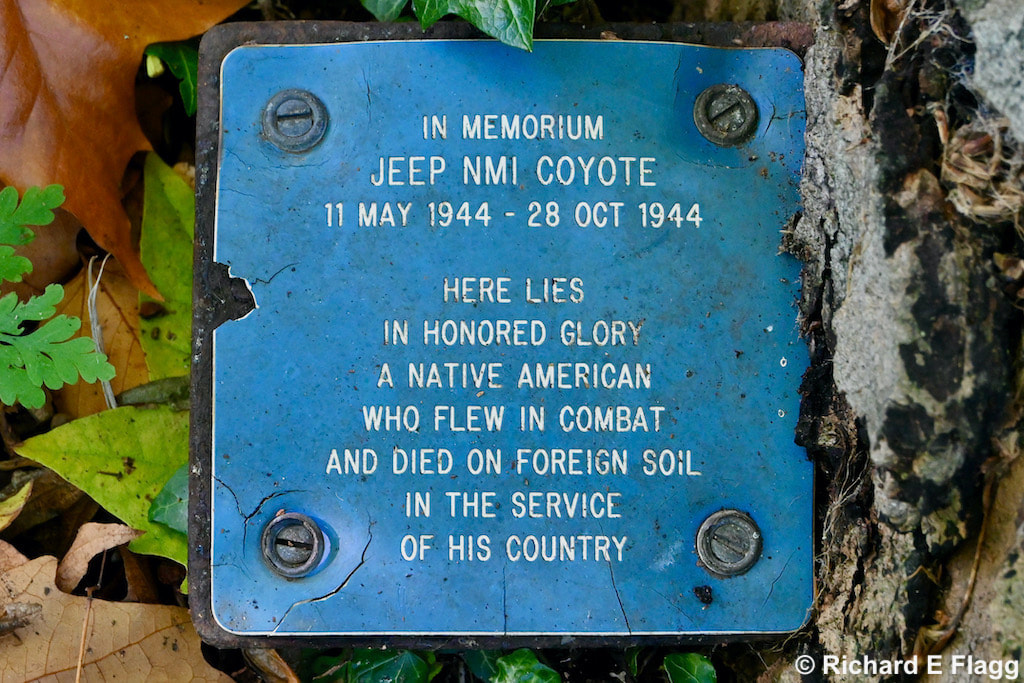
Jeep was buried with full military honors. A plaque marks his grave on the grounds of Playford Hall, an Elizabethan mansion dating back to 1590 and located in Ipswich, England.
As long as men have made war, animals have come along. And not just working animals. Archaeological evidence demonstrates that, when Norsemen went a’ Viking, they did so in the company of house cats. The idea may be amusing, but why not? Men at sea need food, and food attracts vermin. The Viking ship’s cat was literally a life saver.

Fun fact: The Norse goddess Freya traveled in a carriage drawn by cats.
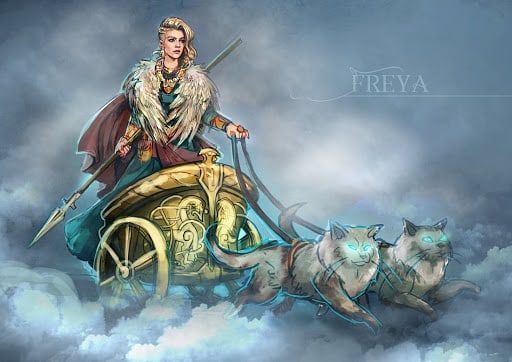
In ancient Skandinavian cultures, companion animals were laid to rest in elaborate burial mounds complete with favorite toys and treats. The Greeks and Romans of antiquity commissioned carved epitaphs expressing gratitude and deep sorrow over the loss of pets. Millions of animals did their part in the world wars. Jackie the Baboon helped fight the Great War as did Whiskey & Soda, the lion cub mascots of the Lafayette flying corps. “Vojtek” the Siberian brown bear accompanied Polish troops during World War 2.

Some 16 million Americans served in the Armed Services during World War 2. Nearly 300,000 were pilots. Only one of them, fighting to liberate Europe from the Nazi horde, was a coyote.

October 27, 1962 Archipov

Anyone alive on or after this day in 1962, probably owes their life to one man. I wonder how many remember his name.

Come join me for a moment, in a thought experiment.  A theater of the mind.

Imagine. Two nuclear superpowers, diametrically opposed, armed to the teeth and each deeply distrustful of the other. We’re talking here, about October 1962. The Cuban Missile Crisis. Now imagine at the height of the standoff, a misunderstanding leads some fool to push the button. The nuclear first strike is met with counterattack and response in a series of ever-escalating retaliatory launches.

You’ve seen enough of human nature. Counterattacks are all but inevitable, right? Like some nightmare shootout at the OK corral, only this one is fought with kiloton-sized weapons. Cities the world over evaporate in fireballs. Survivors are left to deal with a shattered, toxic countryside and nuclear winter, without end.

Are we talking about an extinction event? Possibly. Terrible as it is, it’s not so hard to imagine, is it?

In 1947, members of the Science and Security Board of the Bulletin of Atomic Scientists envisioned a “Doomsday Clock”. A symbolic clock face, dramatizing the threat of global nuclear catastrophe.  Initially set at seven minutes to midnight, the “time” has varied from seventeen minutes to two.

The Cuban Missile Crisis of October 1962 didn’t make it onto the doomsday clock. Those 13 days went by far too quickly to be properly assessed. And yet, the events of 62 years ago brought us closer to extinction than at any time before or since.

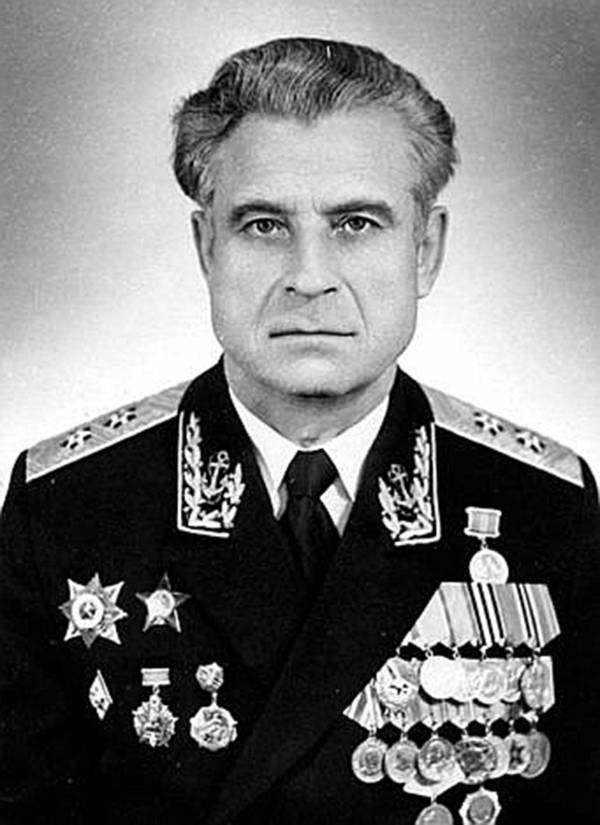
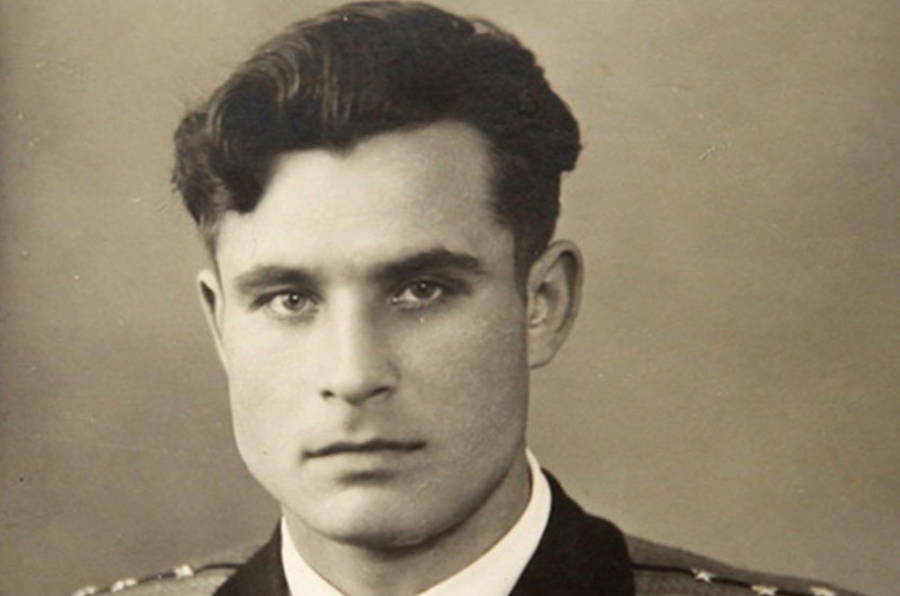
On this day in 1962, an unsuspecting world stood seconds away from the abyss. The fact that we’re here to talk about it came down to one man, Vasili Arkhipov. Many among us have never heard his name. Chances are very good that we can thank him for our lives.

As WW2 gave way to the nuclear age, Cold War military planners adopted a policy of “Deterrence”. “Mutually Assured Destruction” (MAD). Soviet nuclear facilities proliferated across the “Eastern Bloc”, while US nuclear weapons dispersed across the NATO alliance. By 1961 some 500 US nuclear warheads were installed in Europe, from West Germany to Turkey, Italy to Great Britain.

Judging President Kennedy weak and ineffective, communist leaders made their move in 1962, signing a secret arms agreement in July. Medium-range ballistic missiles with a range of 2,000 miles were headed to the Caribbean basin.

By mid- October, US reconnaissance aircraft revealed Soviet ballistic nuclear missile sites under construction Cuba. 90 miles from American shores. President John F. Kennedy warned of the “gravest consequences”, ordering a blockade of the island nation. Relations turned to ice as Soviet military vessels joined the standoff.

Tensions dialed up to 11 on October 27, when USAF Major Rudolph Anderson’s U-2 reconnaissance aircraft was shot down over the village of Veguitas. His body still stapped into his ejection seat.

Wreckage of Major Rudolf Anderson Jr.’s U2 at the Museo del Aire, Havana, Cuba H/T theaviationgeekclub.com

The US Navy practiced a submarine attack protocol at that time, called “hunt to exhaustion”. Anatoly Andreev described what it was like to be on the receiving end:

“For the last four days, they didn’t even let us come up to the periscope depth … My head is bursting from the stuffy air. … Today three sailors fainted from overheating again … The regeneration of air works poorly, the carbon dioxide content [is] rising, and the electric power reserves are dropping. Those who are free from their shifts, are sitting immobile, staring at one spot. … Temperature in the sections is above 50 [122ºF].”

I’m not sure I could think straight under conditions like that.

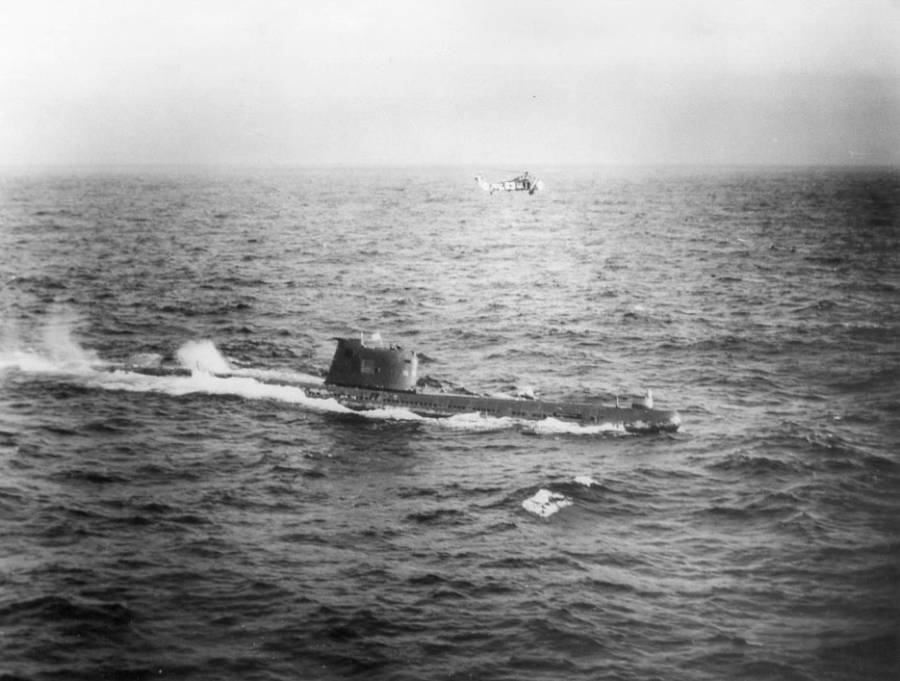
On the 27th, US Navy destroyers began to drop depth charges. This was not a lethal attack, intending only to bring the sub to the surface. Deep under the water, captain and crew had no way of knowing that. B-59 had not been in contact with Moscow for several days. Now depth charges were exploding to the left and right. Captain Valentin Savitsky made his decision. Convinced that war had begun, the time had come for the “special weapon”. “We’re gonna blast them now!,” he reportedly said. “We will die, but we will sink them all – we will not become the shame of the fleet.” Political officer Ivan Maslennikov concurred. Send it.

On most nuclear-armed Soviet submarines, two signatures were all that was needed. With Chief of (submarine fleet) Staff officer Vasili Archipov on board, the decision required approval by all three senior officers. To Archipov, this didn’t feel like a “real” attack. What if they’re only trying to get us to the surface?

Archipov said no.

Perhaps it was his role in averting disaster aboard the nuclear-powered submarine K-19, the year before. Maybe it was his calm, unflappable demeanor when Captain Savitsky had clearly “lost his temper”. Somehow, Archipov was able to keep his head together under unimaginable circumstances and convince the other two. B-59 came to the surface to learn that, no. World War III had not begun after all.

The submarine went quietly on its way. Kruschev announced the withdrawal of Soviet missiles the following day. The Cuban Missile Crisis was over.

Vasily Aleksandrovich Arkhipov

These events wouldn’t come to light for another 40 years.

B-59 crewmembers were criticized on returning to the Soviet Union. One admiral told them “It would have been better if you’d gone down with your ship.”

Vasily Aleksandrovich Arkhipov retired from the submarine service in 1988 and died, ten years later. Cause of death was kidney cancer, likely the result of radiation exposure sustained during the K-19 incident, back in 1961.

Lieutenant Vadim Orlov was an intelligence officer back in 1962, onboard the B-59. In 2002, then Commander Orlov (retired) gave Archipov full credit for averting nuclear war. Former U.S. Defense Secretary Robert McNamara said in 2002 “We came very, very close, closer than we knew at the time.” Historian Arthur Schlesinger Jr. was an advisor to President Kennedy. “This was not only the most dangerous moment of the Cold War”, he said. “It was the most dangerous moment in human history.”