
During the summer of 1921, 39-year-old Franklin Delano Roosevelt was enjoying family vacation time at Campobello Island off the Atlantic coast. On August 10, he complained of fever and chills and took to bed. The condition persisted for weeks. Four physicians attended the future president of the United States. The diagnosis, poliomyelitis.
Roosevelt spent the rest of his life in a wheelchair, able to stand only for brief and painful moments with the help of leg braces. For an unprecedented four terms in office, the press went to great lengths to deemphasize if not hide altogether the president’s disability.

On October 2, 1919, a near fatal stroke left President Woodrow Wilson incapacitated, unable to speak or to move. First Lady Edith Wilson jealously guarded her husband’s condition from the press and the president’s opponents, blocking access and screening presidential paperwork, sometimes even signing the president’s name without his knowledge or consent. Edith herself denied usurping the presidency, claiming only to be acting as “Steward”.
If you were around in 1978, you may remember the cringeworthy media coverage of Jimmy Carter’s hemorrhoids, raising the question of what’s in the legitimate public interest and what if any right does a president have to any sense of personal dignity, let alone privacy.
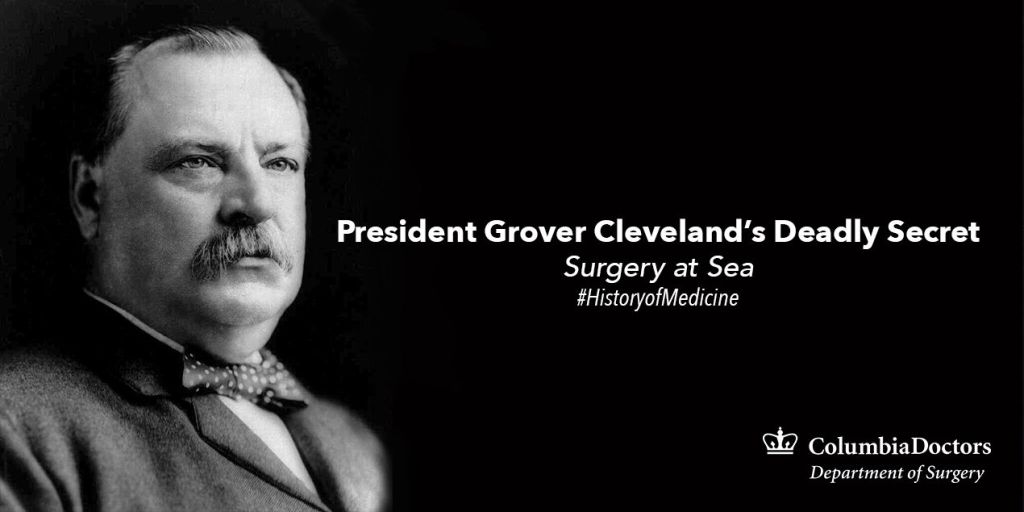
Fun fact: The only former executioner ever elected President of the United States, Stephen Grover Cleveland is remembered for being the only president before Donald John Trump, to serve non-consecutive terms. The 22nd and 24th president of the United States was also something of a medical miracle.
President Cleveland’s second inauguration took place during the Panic of 1893, the worst economic downturn in American history until the great depression. The nation suffered vast unemployment. Countless businesses closed their doors. The railroad industry was devastated. With the nation struggling, many looked to a new chief executive for hope and guidance.
Early in his second term, Cleveland noticed a bumpy patch on the roof of his mouth. The president’s personal physician, Joseph Bryant, took one look and pronounced “It’s a bad looking tenant… I would have it evicted immediately”.
The health of the famously rotund, cigar chomping president was already a matter of public concern. Cleveland feared a cancer diagnosis would set off a panic. The tumor would have to be removed and the procedure kept secret.

The only answer to the prying eyes of the press was to do it on the move, and to leave no scar. President Cleveland announced a four-day vacation aboard the private yacht Oneida, a cruise through Long Island Sound to Buzzard’s Bay and on to the President’s summer home Gray Gables, on Cape Cod.
What followed is enough to amaze an oral surgeon and to make the rest of us squirm. On July 1, 1893, the President was strapped to a chair and anesthetized with ether. The tumor extended through the hard palate and upper jaw extending nearly to the left eye socket. A surgical team of six removed nearly the entire left side of the upper jaw along with five teeth and the tumor as the yacht moved through calm seas in Long Island Sound.

The operation took ninety minutes. There was no external incision. It was all done through the president’s mouth. The trademark mustache remained undisturbed. Later on, Cleveland was fitted with a rubber prosthesis, restoring the president’s speech and hiding extensive facial disfigurement.
The procedure was carried out in strict secrecy but didn’t remain that way for long. On August 29, 1893, reporter Elisha Jay Edwards of the Philadelphia Press broke the story of a presidential surgery too bizarre to be true. White house staff denied the story, launching a coordinated smear campaign against the journalist. Even Oneida’s steward stuck to the story, declaring the president never missed a meal on his summer cruise. Other newspapers piled on, denouncing Edwards as a “liar” and a “disgrace to journalism”.
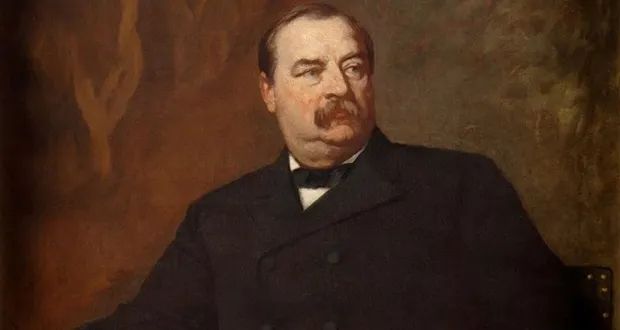
A medical miracle for its time, what had transpired onboard Oneida remained secret until 1917. Nine years after Cleveland’s death.
One of the foremost newspapermen of the age, Elisha Edwards was ruined, struggling just to find work over the next fifteen years. The newspaperman wouldn’t see his reputation restored for another 24 years.
To this day, there remains no clear standard as to what is in the public interest to know, and where lies the individual’s right, president or not, to a modicum of privacy.



 Historical Easter Eggs - Today in History
You must be logged in to post a comment.