In 2013, the New York Times conducted a linguistics survey of regional and vernacular speech in the US. An unexpected result related to the use of certain terms was that words and phrases predicted with uncanny accuracy, where the respondent had come from.
One such question yielded a surprising result: “What do you call the night before Halloween?”
For Graphics Editor Josh Katz, the answer was, ” Mischief Night.” Growing up in the Philadelphia suburbs, that’s what Everyone called it.
For my reprobate Framingham buddies and me, the answer is “Cabbage Night.”
For most Americans, this day bears no name, no significance beyond… October 30.
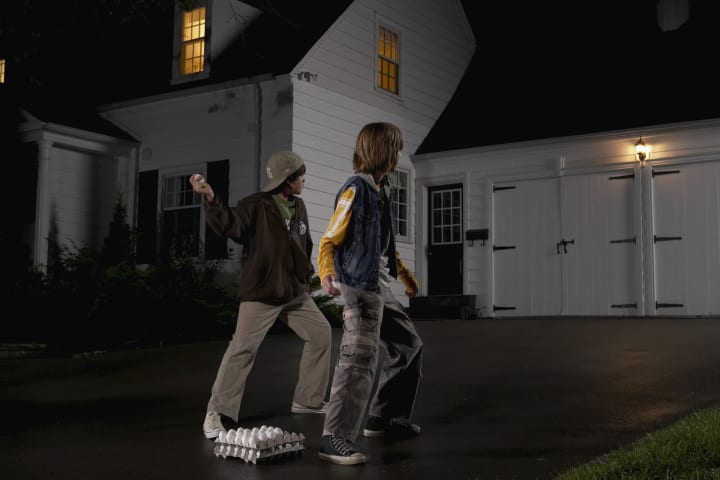
For some of us, this is (or was), a night for those aged out of trick-or-treating to engage in harmless (and sometimes not-so-harmless) mischief.
As early as 1583, the Puritan pamphleteer Phillip Stubbs decried the eve of May Day as “Mischief Night”.
In 1900s England, the event shifted to later in the year and became associated with Guy Fawkes Day, held on November 5. As All-Hallows Eve gained popularity in the US, “Mischief Night” moved to the eve of Halloween.
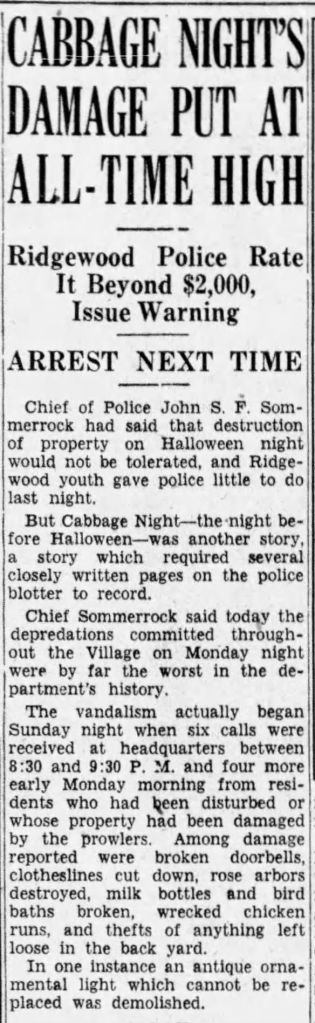
The pranks were mostly harmless – greased doorknobs or burning bags of dog-poo left on front steps, in hopes that the occupants would come stomp them out. Sometimes, things got out of control. In 1991, 160 fires were started in Camden New Jersey.
If you’re from Detroit, you’ll recognize October 30 as Devil’s Night. According to the Detroit Historical Society, Devil’s Night carryings-on were mostly “genteel”, until someone started lighting abandoned properties on fire. Over 800 such fires were ignited in 1984.
During the late 19th century, parts of western Massachusetts experienced bumper crops of certain vegetables, prompting local delinquents to pull rotten cabbages out of the ground and throw them at houses. On October 30, 1892, the Berkshire County Eagle lamented “…pent up devilry, accumulated in a year’s time, in the minds of a hundred boys, break[ing] forth on cabbage night in Dalton, and persons admiring safety stay in doors.”
According to the Dictionary of Regional American English (DARE), some parts of Pennsylvania recognize “Chalk Night” as a time to chalk fences and sidewalks and everything else that doesn’t run away, perpetrators sometimes adding a prank or two for good measure.
In parts of New Hampshire, October 30 is “Gate Night,” when livestock is let loose to roam, and a good time for the occasional apple fight.
Local revelers know October 30 as “Corn Night” in Nebraska, “Goosey Night” in parts of New Jersey, and “Beggar’s Night” in central Iowa. Cincinnati cuts right to the chase with “Damage Night”.
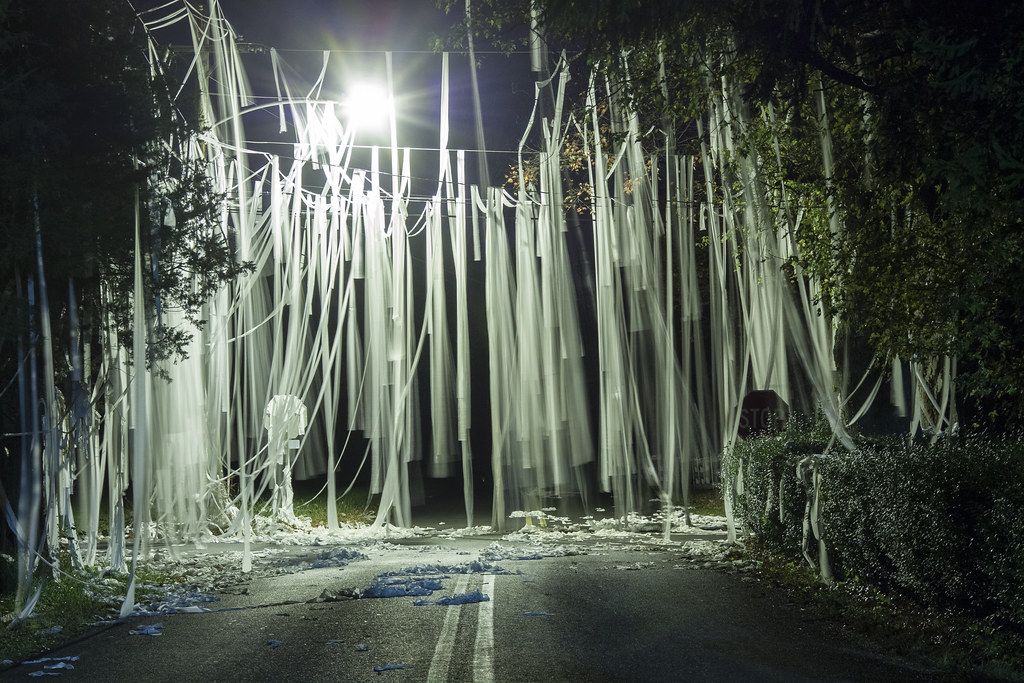
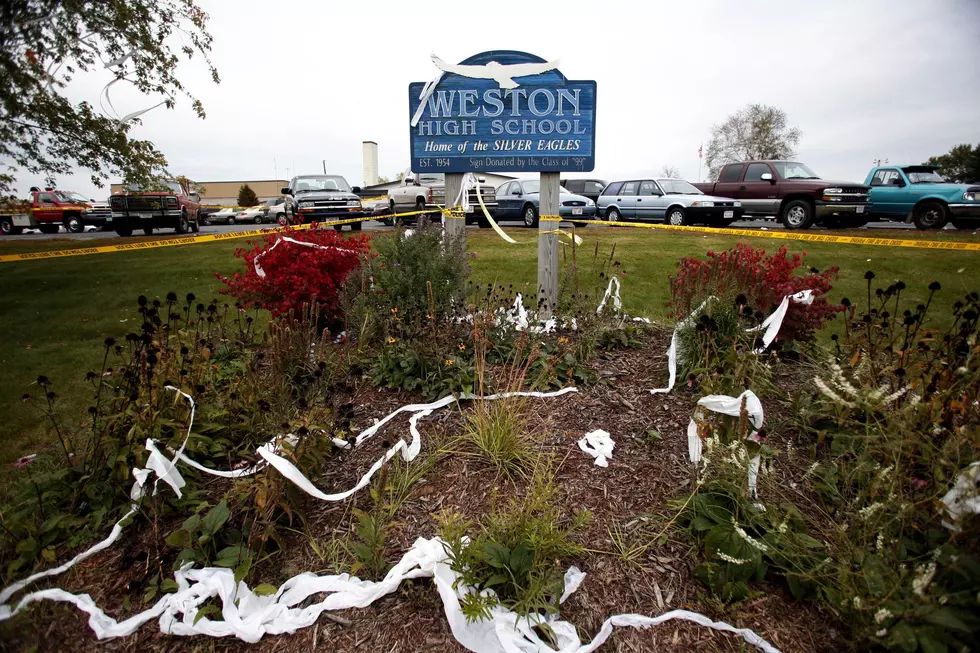
So, go ahead. Ring the neighbor’s doorbell and run like hell. Hang a roll of toilet paper on someone’s tree and go toss a cabbage or two. My buddies and I, we’re going to bed early. We’re all grandfathers now.
The outside world would not learn for decades how close it had come to the abyss.
Cold War. The English writer George Orwell coined the term in 1945, describing “two or three monstrous super-states, each possessed of a weapon by which millions of people can be wiped out in a few seconds.”
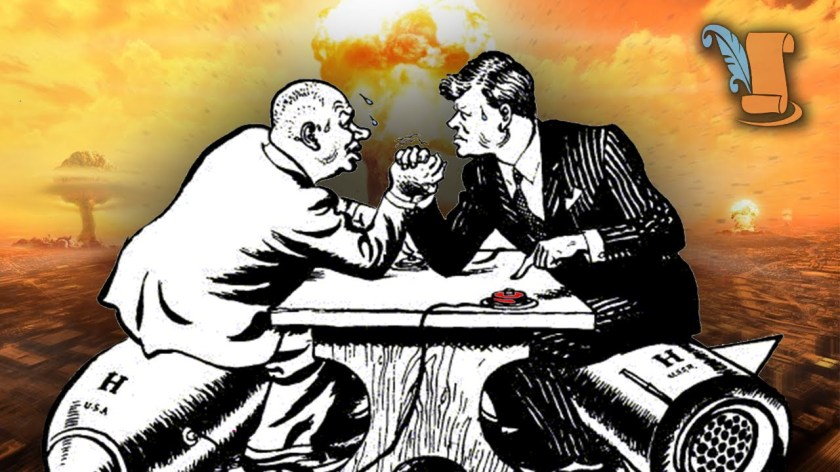
Two diametrically opposite governing philosophies, each capable of exterminating the other by the push of a button.
Never in the history of the Cold War was the world so close to nuclear annihilation than the Cuban Missile Crisis of October 1962. Speaking to staffer Arthur Shlesinger, President John F. Kennedy called those 13 days “the most dangerous moment in human history.”
On no single date was the world so close to the precipice as October 27.
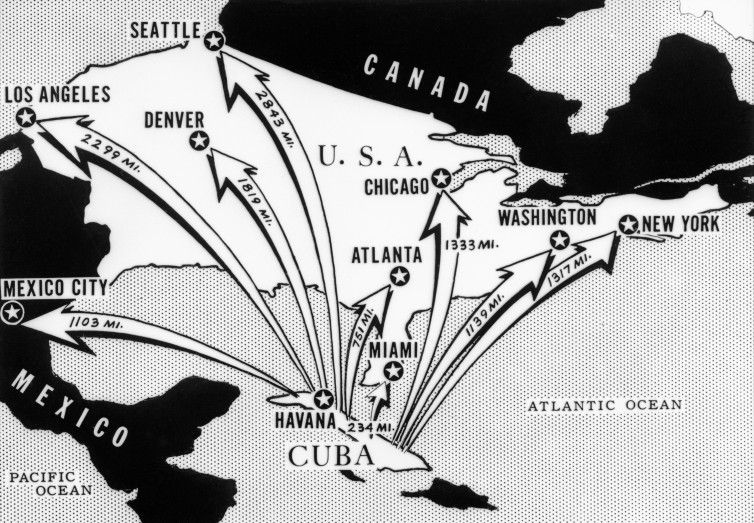
On October 14, ultra-high altitude Lockheed U–2R reconnaissance aircraft photographs revealed the presence of medium and intermediate range ballistic nuclear missile sites under construction in Cuba. Located only 90 miles from the US mainland, such a facility was capable of delivering a nuclear payload anywhere in the eastern United States.
President Kennedy warned of the “gravest consequences” resulting from the introduction of Soviet offensive weapons in Cuba, while Foreign Minister Andrei Gromyko insisted that Soviet aid was purely defensive. U-2 photographs gave lie to Gromyko’s protestations. Images taken on October 17 revealed the presence of 16-32 missiles.
The President warned “It shall be the policy of this nation to regard any nuclear missile launched from Cuba against any nation in the Western Hemisphere as an attack by the Soviet Union on the United States, requiring a full retaliatory response upon the Soviet Union.” There was no mistaking American intent.
Kruschev replied, “I hope that the United States Government will display wisdom and renounce the actions pursued by you, which may lead to catastrophic consequences for world peace…”
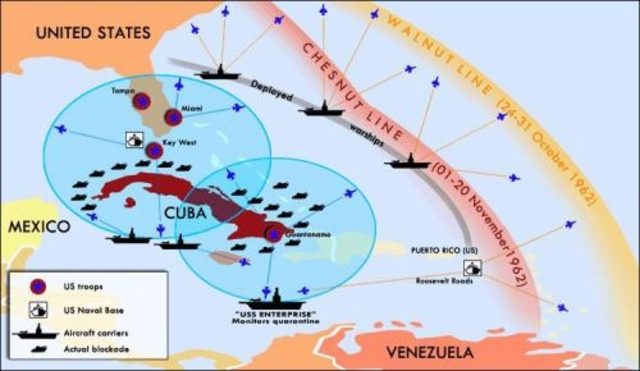
Soviet nuclear submarines moved in response to the quarantine as Cuban waters became the scene of a tense naval standoff.
U-2 photographs of the 25th & 26th showed accelerated construction on the island, with several silos approaching operational readiness. US air forces were placed at DEFCON 2. War involving Strategic Air Command, was now “imminent”.
Cuban President Fidel Castro publicly urged a Soviet nuclear first strike.
On day twelve of the standoff, October 27, an American U-2 was shot out of the sky by a Soviet supplied surface-to-air missile, killing pilot Major Rudolph Anderson Jr.
Meanwhile on the ocean below, events were spinning out of control.
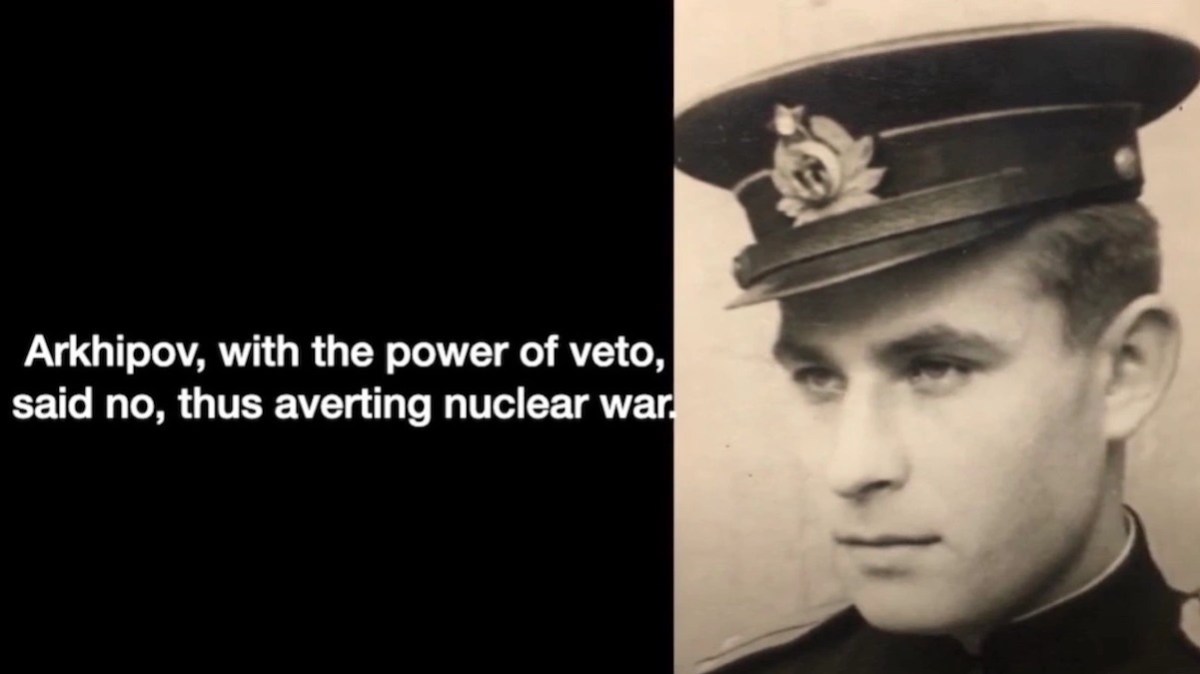
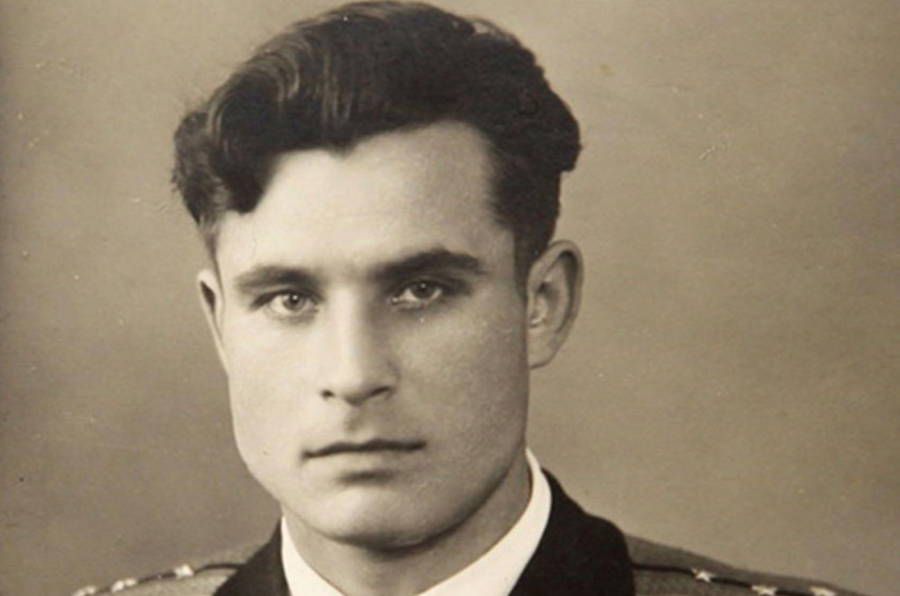
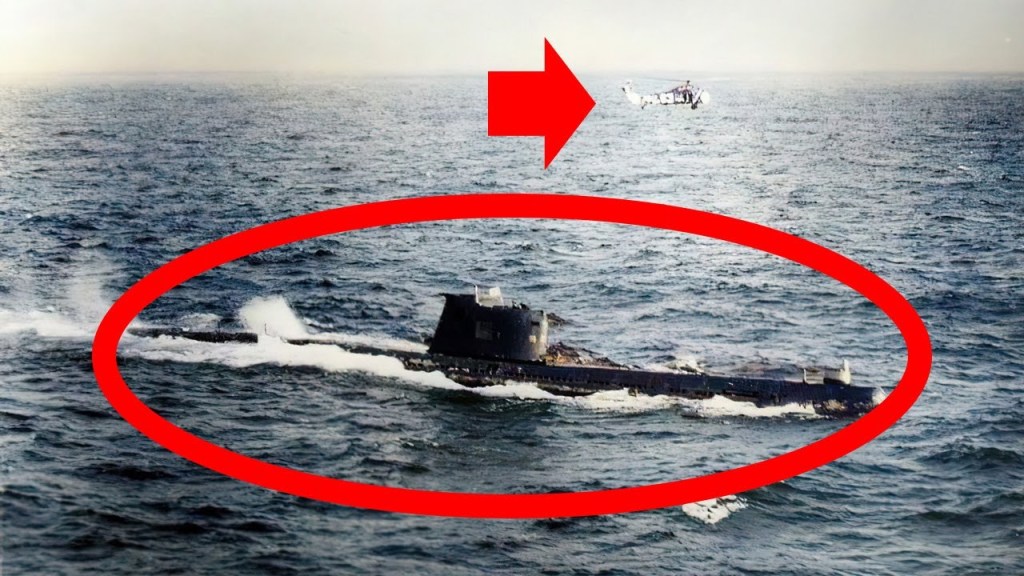
Soviet submarine B-59 was just outside the American blockade perimeter, with orders to monitor the situation. Vasili Arkhipov was 34 at the time, one of three officers in command of the nuclear armed sub.
Vasili Aleksandrovich Arkhipov
Diving deep to avoid detection, B59 was unable to communicate with Moscow when she came under attack from American surface vessels.
The depth charges being used were “non-lethal”, intended to force the submarine to the surface, but perception is reality, right? Isolated from the outside world with orders to launch a first strike in the event of war, B-59 found herself under attack.
Imagine yourself in this situation. B59 sailor Anatoly Andreev described the scene in his journal:
“For the last four days, they didn’t even let us come up to the periscope depth … My head is bursting from the stuffy air. … Today three sailors fainted from overheating again … The regeneration of air works poorly, the carbon dioxide content [is] rising, and the electric power reserves are dropping. Those who are free from their shifts, are sitting immobile, staring at one spot. … Temperature in the sections is above 50 [122ºF].”
This was the atmosphere onboard the submarine on October 27, as B59 shook with every depth charge. Captain Valentin Savitsky ordered the submarine’s nuclear weapon armed, a missile capable of striking deep into the American heartland. The missile was armed with a payload equal to the bomb dropped on Hiroshima.
“We’re gonna blast them now” Savitsky reportedly said, “We will die, but we will sink them all – we will not become the shame of the fleet.”
Cuban blockade, October 1962
Second captain Ivan Maslennikov agreed with Savitsky and approved the attack.
According to Soviet doctrine, such a decision needed to be unanimous among the three commanders. Such a strike was as sure as night follows day to provoke a counter attack, followed by retaliatory strikes. Deep under the Caribbean surface, Vasili Aleksandrovich Arkhipov was all that stood in the way of nuclear war.
How would you respond to such a situation?
Perhaps it was the K-19 incident from 2 years earlier. In July 1961, Arkhipov was executive officer of the nuclear submarine K-19, on patrol south of Greenland. Developing a severe leak in her cooling system, the submarine’s 7-man engineering section frantically labored to jury-rig a secondary cooling system, exposing themselves to hours of intense radiation. The effort was a success, but all seven men died inside of a month. 15 more died from the effects of radiation over the following two years. Every sailor onboard K-19 was destined to die of radiation poisoning including Arkhipov himself, but for now, the man carried the moral authority of a Hero of the Soviet state.
Be that as it may, Arkhipov persuaded the other two that the American attack was intended not to destroy them, but to bring them to the surface. B59 came to the surface restoring communications with the outside world. World War 3 had not begun, after all.
The Cuban Missile crisis effectively came to a close the following day, B59 going quietly on her way. The outside world would not learn for decades how close it had come to the abyss.
Vasili Arkhipov died in obscurity 1998. Four years later, Director of the U.S. National Security Archive Thomas S. Blanton described him as “the man who saved the world”.
When governments make war, it is the everyday men (and these days women), who pay the price. Vasili Arkhipov was a Russian patriot, doing his duty for his nation. In so doing, the man made for us a very different world from what could have been. Let it be said, then, that personal courage in the line of fire is worthy of our respect. No matter on which side such a man finds himself.
“Passerby, tell the Fatherland that we fought to the end, fulfilling our duty.”
In 480 BC, the Spartan King Leonidas led a Greek force of 7,000 against the hordes of the Persian King Xerxes, estimated at 70,000 to a quarter-million or more. Over three days of combat, the Greek line held. Even then, it took an act of betrayal to destroy the hoplite force. The place was a narrow pass known as the “Hot Gates.” Thermopylae.
Eighty-five years ago, 720 Polish conscripts squared off against Nazi Germany facing greater odds than Leonidas himself, near a place called Wizną.
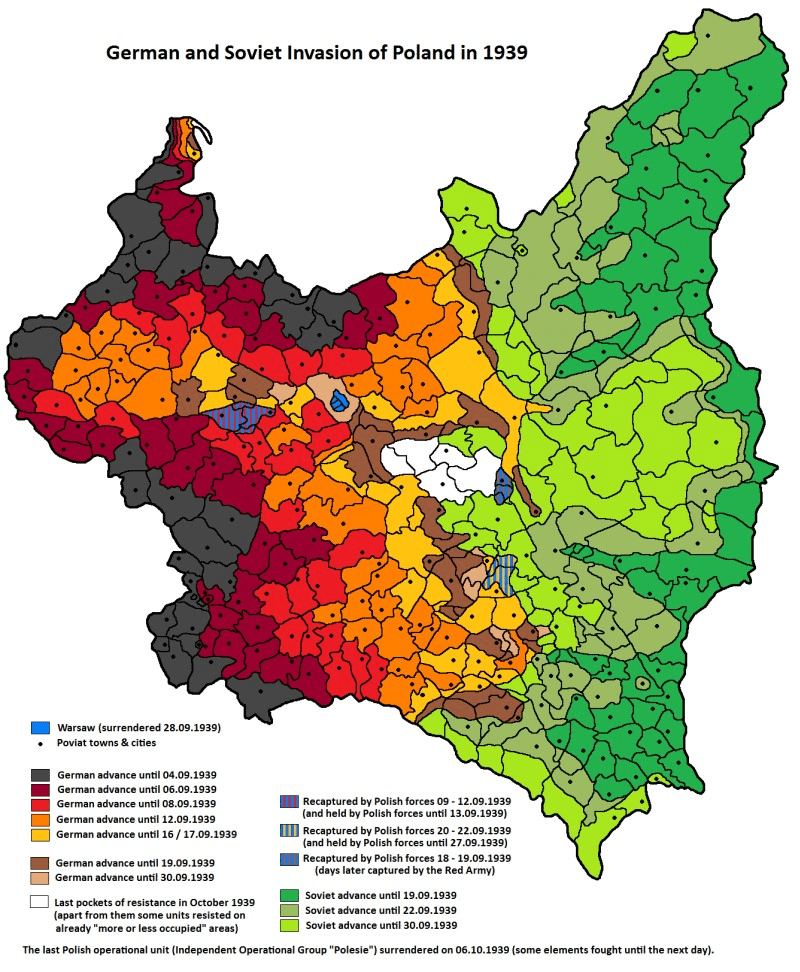
The Nazi invasion of Poland began with a massive bombardment in the early morning hours of September 1, 1939. Sixty-two divisions burst across the border led by some 1,300 bombing and strafing aircraft.
To the north, the village of Wizną formed a strategically important crossroads on the way to the Polish capital of Warsaw.
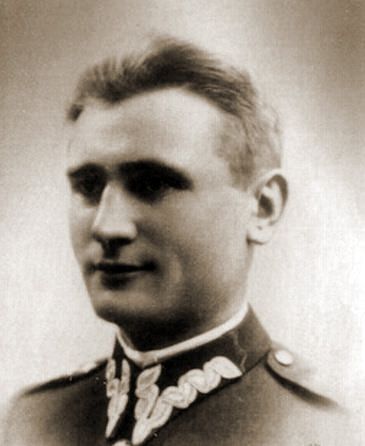
On September 2, Captain Władysław Raginis assumed command of yet-to-be completed fortifications outside of the village.
Captain Władysław Raginis
The Nazi invasion of Poland was an open secret in 1939, construction of fortifications beginning that April. By September 1, the Poles had built six heavy concrete bunkers plus two smaller ones, numerous anti-tank and anti-personnel barriers and eight machine gun pillboxes protected by earthworks.
It was a paltry force defending the 5½ line between the villages of Kołodzieje and Grądy-Woniecko, with Wizną in the center. Construction had begun on four more bunkers and never finished.
Manning these fortifications were a mostly conscript force, drafted into service that August and now, preparing to face the wrath of the Nazi war machine.
XIX Army Corps of Heeresgruppe Nord approached Wizną on September 7, part of the German 3rd Army under General Heinz Guderian. 42,200 troops, 350 tanks, 457 mortars, and 600 Luftwaffe aircraft faced 720 well dug-in defenders with a few hastily erected anti-tank defenses, six 7.6cm guns, a few dozen machine guns and only two anti-tank rifles.
German warplanes rained down leaflets from the sky, explaining that resistance was suicidal. From his command post in the center bunker, Captain Raginis vowed to do just that. Or die trying.
The ruins of a Polish defensive bunker is now a memorial site Wizną
Battle was joined on September 7, Polish forces easily yielding the strategically insignificant village itself and taking up fortified positions across the river.
Sparsely located as they were the Polish bunkers were massively built, nearly 5 feet of concrete protected by steel plates almost 8 inches thick. No gun available to the Wehrmacht at that time could pierce such a fortification.
The outcome was never in doubt. Even as Xerxes drew back and rained down arrows on the Greeks at Thermopylae, the forces of Heinz Guderian rained down bombs from the sky. Artillery fired on bunkers too widely spaced for mutual support.
A weird kind of standoff dragged on for three days and nights, while small arms fire kept German infantry from closing the distance. In the end, tanks provided covering fire while demolition teams isolated Polish positions and destroyed them, each in their turn.
By the morning of September 10, only the two center bunkers remained. Operating under flag of truce, a German envoy proposed a temporary cease fire at 11. With every one of his men wounded and ammunition all but used up, Władysław Raginis ordered those who remained to lay down their weapons. Himself grievously wounded, Captain Raginis took his own life with a live grenade, held against his neck.
According to eyewitness Seweryn Biegański he said his final farewell, urging his comrades to tell Poland they had fought to the end.
Monument to Władysław Raginis near Góra Strękowa H/T Militaryhistory.com
“Passerby, tell the Fatherland that we fought to the end, fulfilling our duty.”
Though severely weakened, even now Polish civil society was fully functional throughout the six principalities in the east. Children continued to go to school while the Polish military remained strong enough to hold off the Wehrmacht onslaught for many weeks or months.
Believing the Soviets to their eastern flank would in the least remain neutral, Polish military planners focused on the threat from the west. Some even held out hope for assistance, from a nation of fellow slavs.
What they did not know was the “secret protocol” of the Molotov–Ribbentrop Pact between Nazi Germany and the Soviet Union, dividing Poland into German and Soviet “spheres of influence”.
Once one of the great powers of europe, Poland was invaded and annexed again and again as no fewer than 6 empires vied for power. Now, she was to be partitioned. Absorbed, by force.
Seven Soviet field armies invaded Poland on the morning of September 17. Military operations continued for 20 days coming to a halt, on October 6.
Individual Polish patriots would fight on in some of the most heroic resistance of the second world war. Polish ex-patriots formed the single greatest non-British ethnic cohort to fight the Battle of Britain.
The nation they had loved was for all intents and purposes, no more. The “Fourth Partition of Poland” was complete.










 Historical Easter Eggs - Today in History
You must be logged in to post a comment.