
From Lord Stanley’s Cup to the Superbowl to the NBA’s Larry O’Brien Trophy, the world of professional sports has little to compare with the race for the pinnacle trophy. The championship contest when entire economies slow to a crawl and even casual sports fans are swept up in the spectacle.
For professional baseball, the “Fall Classic” began in 1903, a best-of-nine “World Series” played out between the Boston Braves and the Pittsburg Pirates. Boston won in eight games.
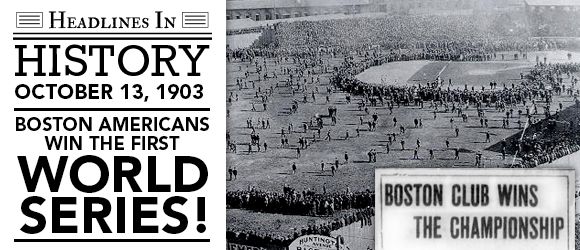
Excepting the boycott year of 1904 when there was no series, most World Series have been ‘best-of-seven”. That changed in 1919, when league owners agreed to play a nine-game series, to generate more revenue and increase the popularity of the sport.
Today, top players are paid sums equivalent to the gross domestic product of developing nations, but that wasn’t always the case. One hundred years ago, much of that revenue failed to find its way to the players. Even the best among them held second jobs.
Chicago White Sox owner Chuck Comiskey built one of the most powerful organizations in professional baseball around this time, despite a well-deserved reputation for stinginess.
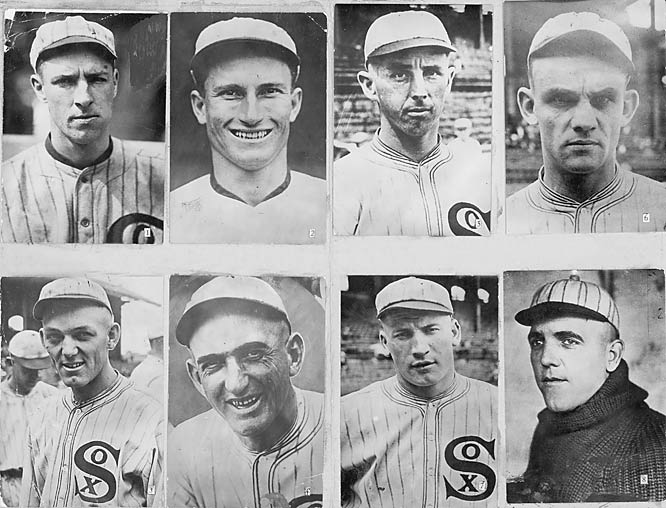
The scandal of the 1919 “Black Sox” began when Arnold “Chick” Gandil, the first baseman with ties to Chicago gangsters, convinced his buddy and professional gambler Joseph “Sport” Sullivan, that he could throw the World Series against the Cincinnati Reds. New York gangster Arnold Rothstein supplied the money through his own right-hand man, former featherweight boxing champion Abe Attell.
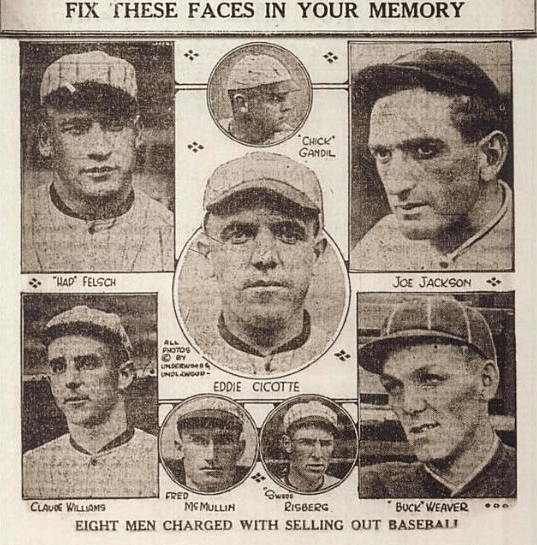
Pitchers Eddie Cicotte and Claude “Lefty” Williams were principally involved with throwing the series, along with outfielder Oscar “Hap” Felsch and shortstop Charles “Swede” Risberg.
Third baseman George “Buck” Weaver attended a meeting where the fix was talked about, but decided not to participate. Weaver produced some of his best statistics of the year during the 1919 post-season.
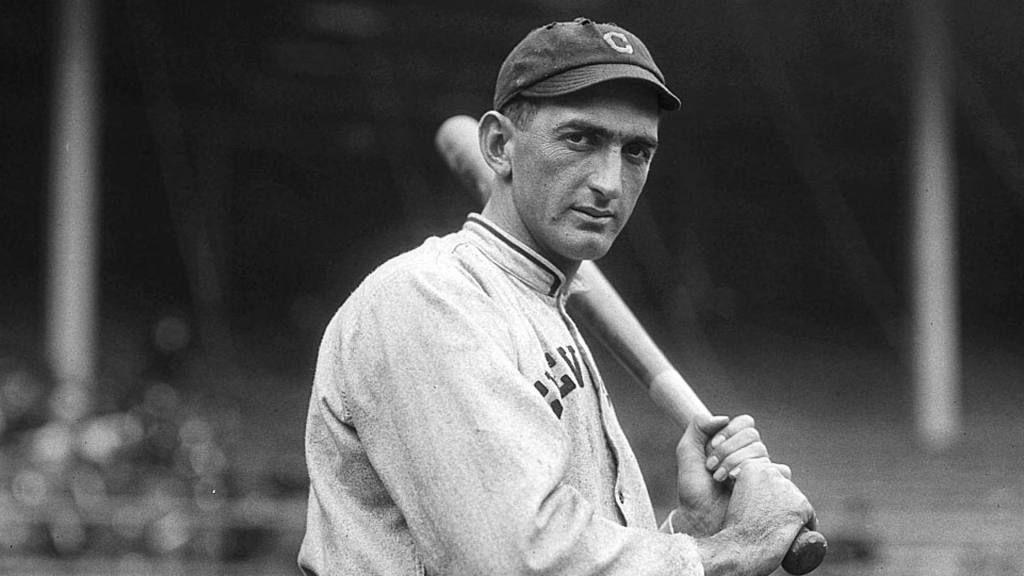
Star outfielder “Shoeless” Joe Jackson may have been a participant, though some dispute his involvement. Other players, it seems, may have used his name in order to give themselves credibility. Utility infielder Fred McMullin was never involved in the planning but threatened to report the others unless they cut him in on the payoff.
The more “straight arrow” players on the club knew nothing about the fix. Second baseman Eddie Collins, catcher Ray Schalk, and pitcher Red Faber had nothing to do with it, though the conspiracy received an unexpected boost when Faber came down with the flu.
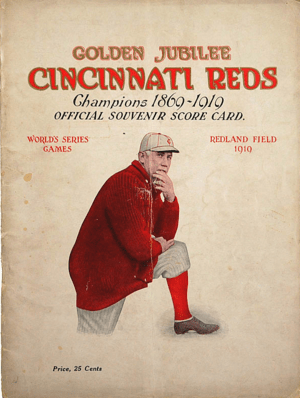
Rumors were already flying as the series began on October 2. Sports bookies placed so much cash on Cincinnati, the odds were dead even. Gamblers complained there was nothing left on the table. Cicotte, who had shrewdly collected his $10,000 the night before, struck leadoff hitter Morrie Rath with his second pitch, a prearranged signal that “the fix was in”.
The plot began to unravel that first night. Attell withheld the next installment of $20,000 to bet on the following game.
Game 2 starting pitcher Lefty Williams was still willing to go through with the fix, even though he hadn’t been paid. He’d go on to lose his three games in the best-of nine series, but by game 8, he wanted out.
The wheels came off in game three. Former Tigers pitcher and Rothstein intermediary Bill “Sleepy” Burns bet everything he had on Cincinnati, knowing the outcome in advance. Except, Rookie pitcher Dickie Kerr wasn’t in on the fix. He pitched a masterful game in game three, shutting Cincinnati out 3-0, and leaving Burns flat broke.
Cicotte became became enraged by game 7, thinking that gamblers were trying to renege on their deal. The knuckle baller bore down to a White Sox win and the series stood, 4-3.
Williams was back on the mound in game 8. By this time he wanted out of the deal, but gangsters threatened to hurt him and his family if he didn’t lose the game. Nothing but mediocre fastballs that game allowed four hits and three runs in the first inning alone. The White Sox went on to lose that game 10-5, ending the series in a 3 – 5 Cincinnati win.
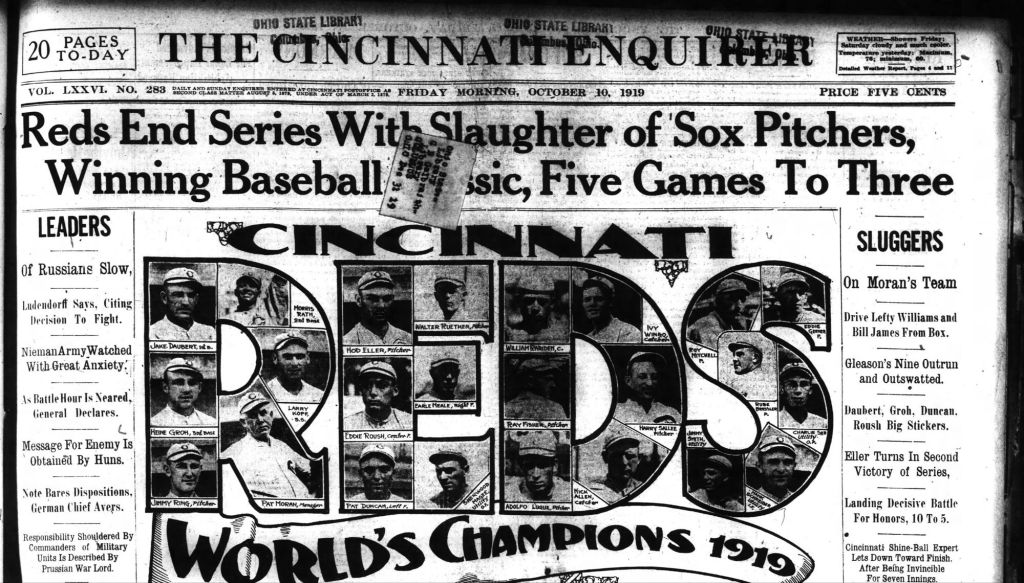
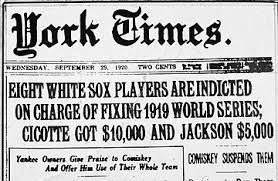
Rumors of the fix began immediately and dogged the team throughout the 1920 season. Chicago Herald & Examiner baseball writer Hugh Fullerton opined that there should never be another World Series. A grand jury was convened that September. Two players, Eddie Cicotte and Shoeless Joe Jackson, testified on September 28, both confessing to participating in the scheme. Despite being in a virtual tie for first at that time, Comiskey pulled the seven players then in the majors, Gandil being back in the minors by that time.
Professional baseball’s reputation had suffered a grievous blow. Franchise owners appointed a man with the best baseball name in history to help straighten out the mess, Major League Baseball’s first Commissioner. Federal judge Kenesaw Mountain Landis.
The “Black Sox” trial began in 1921 in the Cook County Criminal Court. Key evidence went missing before the trial, including both Cicotte’s and Jackson’s signed confessions. Both recanted, and, in the end, all players were acquitted.
The missing confessions reappeared several years later in the possession of Comiskey’s lawyer. It’s funny how that worked out.
According to legend, a young boy approached Shoeless Joe Jackson one afternoon as he came out of the courthouse. “Say it ain’t so, Joe”.
There was no response from the outfielder.
Irrespective of the trial’s outcome, the commissioner was unforgiving. The day after the acquittal, Landis issued the following statement: “Regardless of the verdict of juries, no player who throws a ball game, no player who undertakes or promises to throw a ball game, no player who sits in confidence with a bunch of crooked ballplayers and gamblers, where the ways and means of throwing a game are discussed and does not promptly tell his club about it, will ever play professional baseball”.
Everyone involved is long gone by now, but Commissioner Landis’ verdict stands. All eight of them remain banned from baseball from that day to this.
Ironically, the 1919 scandal lead the way to the “Curse of the Black Sox”, a World Series championship drought lasting 88 years and ending only in 2005, with a White Sox sweep of the Houston Astros. Exactly one year after the Boston Red Sox ended their own 86-year drought, the “Curse of the Bambino”.
The Philadelphia Bulletin newspaper published a poem back on opening day for the 1919 series. They would probably have taken it back. If only they could.
“Still, it really doesn’t matter, After all, who wins the flag.
Good clean sport is what we’re after, And we aim to make our brag.
To each near or distant nation, Whereon shines the sporting sun.
That of all our games gymnastic, Base ball is the cleanest one!”








 Historical Easter Eggs - Today in History
You must be logged in to post a comment.