November 5, 1605 Remember Remember, the 5th of November

The plan was to decapitate the English state, blowing up King James I along with much of the nation’s religious and political leadership. The Gunpowder Plot would end in failure, and a rhyme known to British school children, from that day to this.

The Tudor King Henry VIII began to take control of the English church in 1533, barely 16 years after Martin Luther is said to have nailed his 95 theses to the church door. The Protestant Reformation was barely underway. With life and eternal damnation at stake both sides would come to regard the other, as heretical.

Henry fell out with Pope Clement VII over the latter’s refusal to grant him an annulment from Catherine of Aragon. By 1540, the break between the Church of England and the Church of Rome was complete.

henryviii

English Catholics became increasingly marginalized for the remainder of Henry’s reign, and that of his daughter, Elizabeth I, who died in 1603 without issue. There were several assassination attempts against Protestant rulers in Europe and England, including a failed plot to poison Elizabeth I and the assassination of French King Henry III, who was stabbed to death by a Catholic fanatic, in 1589.

King James VI of Scotland succeeded the “Virgin Queen” in 1603, to the great disappointment of English Catholics. The moderates among them favored James’ and Elizabeth’s cousin Arbella Stuart, a woman believed to harbor Catholic sympathies. More radical Catholics looked to the infant daughter of Phillip II of Spain, the Infanta Isabella.

There were already at least two plots to remove the King from office, when James discovered that his wife, Queen Anne, had secretly received a rosary from the Pope. James responded by denouncing the Catholic Church, ordering Jesuit and all other Catholic priests to leave the country. He re-imposed “recusancy fees”, which had earlier been implemented by Elizabeth. The sum of such fines soon rose to £5,000 a year, equivalent to well over £10 million today.

Among those who believed that ‘faith need not be kept with heretics’, regicide seemed the only way out.

The “Gunpowder Plot”, also known as the “Jesuit Treason”, was inspired by Robert Catesby, a man of “ancient, historic and distinguished lineage”.

In league with about a dozen others, Catesby planned to blow up the House of Lords on November 5, 1605, killing King James and his Privy Council along with untold MPs and government records. The plan was to spark a popular revolt in the Midlands ending in the installation of James’ 9-year-old daughter, Princess Elizabeth, as Catholic head of state.
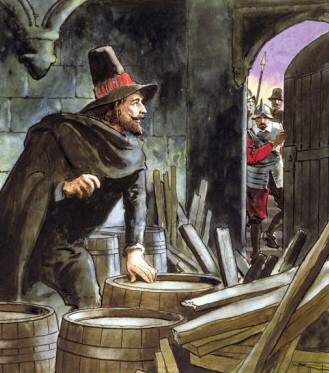
gfawkes

Guy Fawkes, who had 10 years of military experience fighting for the King of Spain in the Netherlands by this time, was placed in charge of the explosives.

In those days, goods of all kinds were transported in kegs. The movement of even a large number, was perfectly ordinary. Anticipating the State Opening of Parliament on July 28, 36 kegs of powder were moved to an undercroft on the 20th, a small room beneath the House of Lords. There was a metric ton of the stuff, enough to destroy the parliament building and everything around it, for a radius of 100 meters.

And then the plague reared its head and with it the fear, of gathering in large numbers. Parliament was postponed, until November 5.

Others were brought into the plot. That was probably it’s undoing. As the day approached an anonymous letter came to light, warning of the plot. Two separate searches on the evening of the 4th revealed the gunpowder barrels, hidden under sticks and coal. Guy Fawkes was discovered nearby carrying a length of slow burning fuse, called a match.

Fawkes was defiant at first saying there was enough powder, to “blow you Scotch beggars back to your native mountains“. Days of torture lay in wait, beginning with shackles and increasing in severity until finally, his body was “broken” on the rack. In January, all but two of the 13 conspirators were hanged, drawn and quartered for their treason. Those two had died in the attempt to flee and these, were dug up and decapitated. Fawkes himself, weakened by torture and weeks of confinement in the tower of London, even now managed to jump from the scaffold and break his neck, and thus to spare himself the ordeal of being emasculated and disemboweled before his own dying eyes.
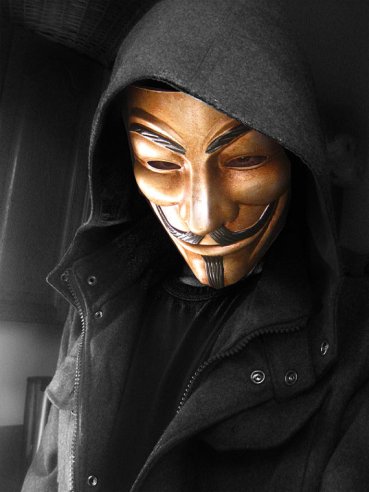
Guy Fawkes Mask

So it is that today, November 5th, is “Guy Fawkes Day”. People all over England will “remember, remember, the 5th of November, gunpowder, treason and plot.” Effigies of Guy Fawkes will be burned throughout the land.

A stylized version of the “Guy Fawkes Mask” came to be in the 1980s, with a comic book series and its later film adaptation, “V for Victory”. The story depicts a vigilante effort to destroy an authoritarian government in a dystopian future, Great Britain.

Since that time, groups ranging from the hacker/activist group Anonymous to Occupy, even radical Libertarians have used the Guy Fawkes mask. A symbol of protest against out of control, tyrannical government, political and banking institutions.

November 4, 1781 Divas

Händel himself was no slouch when it came to being the Temperamental Artist. He was lucky even to be alive following a furious argument in 1704 when a button was all that stood in the way of the skewering blade of fellow composer, Johann Mattheson.

George III King of Great Britain and Ireland ascended to the throne in 1760 declaring that, “Born and educated in this country, I glory in the name of Britain”. It was his reassurance that, unlike his father and grandfather before him, George III would rule, as an English King.

Kings George I and II were in fact Hanoverian and as such, did not speak English. At least not, fluently. Queen Victoria, that most quintessentially British of monarchs was in fact of German ancestry and spoke German, as a first language. George I, Elector of Brunswick-Lüneburg ascended to the throne of Great Britain and Ireland in August 1714, the first of the British Kings, from the House of Hanover.

The German composer George Frideric Händel was well known by this time, in German and Italian opera. He became Kapellmeister to the German prince in 1710, “Master of the Chapel Choir”. Chorale works Händel composed around this time for Queen Anne and the young and wealthy “Apollo of the Arts” Richard Boyle made it almost natural, that Händel would settle in England.

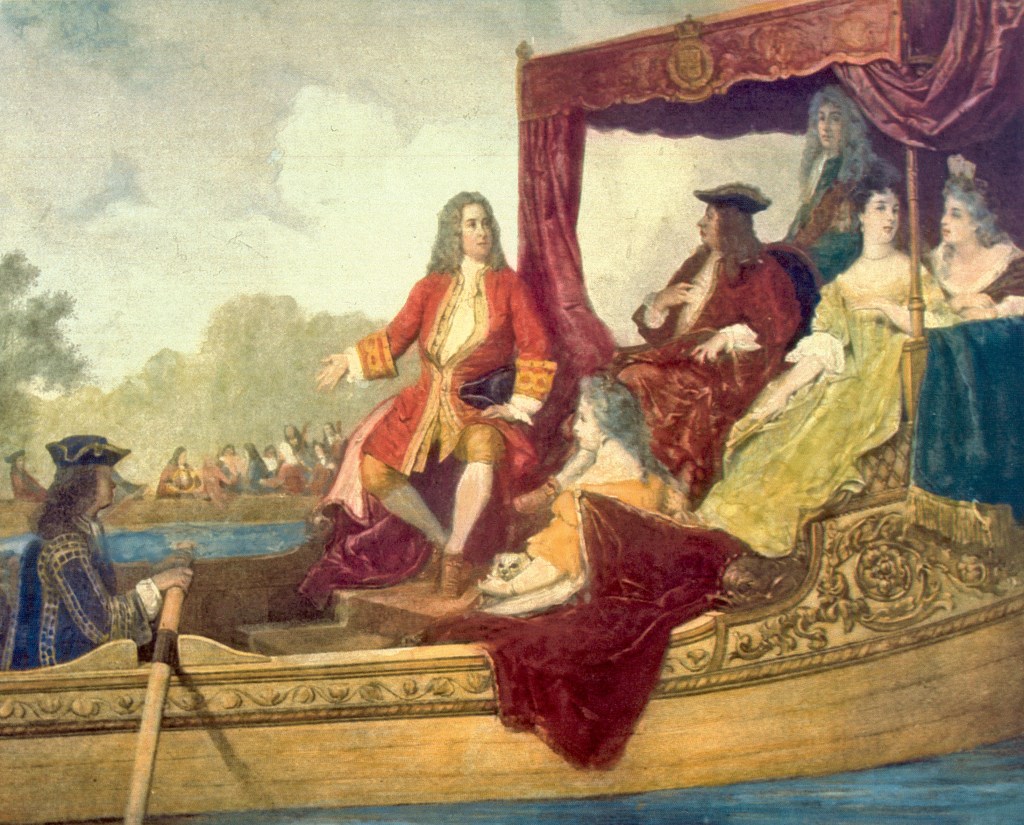
George I enjoys the River Thames with George Frideric Händel, in 1717

In Italian opera, a prima donna is the leading female singer in the company, the “first lady” opposite the male lead or primo uomo. Usually (but not always) a soprano, prima donne could be demanding of their colleagues with grand and sometime insufferable personae both on- and off-stage. Opera enthusiasts would divide into opposing “clubs” supporting or opposing one singer, over the other. The 19th century rivalry between fans of Maria Callas and Renata Tebaldi is an infamous example despite a personal friendship, between the two singers. When prima donne detest one another pandemonium, is sure to follow.

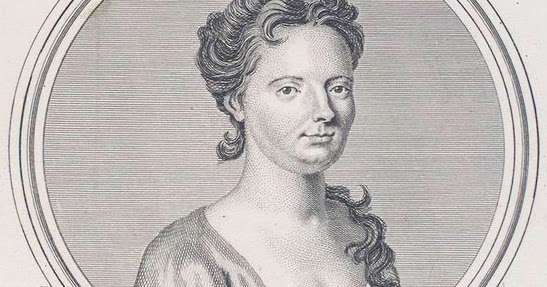
Händel’s work was popular in Georgian era society, so much so he was given free reign to hire his own performers. One such was Francesca Cuzzoni, a fiery soprano with the reputation as being among the greatest, of 18th century divas. Unkindly described by one opera historian as “doughy” and plain, a “short, squat” performer she nevertheless sang, with the voice of the angels. Widely regarded as one of the finest Sopranos in all Europe Händel hired Cuzzoni, in 1722.

Händel himself was no slouch when it came to being the Temperamental Artist. He was lucky even to be alive following a furious argument in 1704 when a button was all that stood in the way of the skewering blade of fellow composer, Johann Mattheson.

On rehearsal for her London debut, Cuzzoni became furious over one aria claiming the role was written, for someone else. She refused even to perform when Händel, a great bear of a man physically picked the woman off the ground by her waist, and threatened to throw her out a window.

Problem solved.

Francesca Cuzzoni, by James Caldwall

Francesca Cuzzoni went on to become a smashing success, for four years the undisputed Queen, of the London opera. In 1726, Händel sought to capitalize on this success and reached out to his Italian agents, for a second Star. So it was the mezo-soprano Faustina Bordoni was hired, for the following season.

Younger and considerably more attractive than the older Cuzzoni the pair had been rivals, back in Italy. Notwithstanding, Händel and other composers wrote a series of operas featuring a two-female lead taking great care to give the two, equal prominence.

You know where this is going, right?

Faustina Bordoni pastel, in 1724

Baroque opera loved nothing more than a love triangle and the two were often cast, as rivals for the affections of one man. The degree to which the two divas’ professional rivalry bled into their personal lives is a matter of some discussion but the behavior of their fans, is not.

The “clash” between the two soon became public knowledge. Opera-going aristocrats began to take up sides enthusiastically egged on, by the press. Society ladies would dress in the respective fashion of their particular heroine and hiss and catcall, at the appearance of the other.

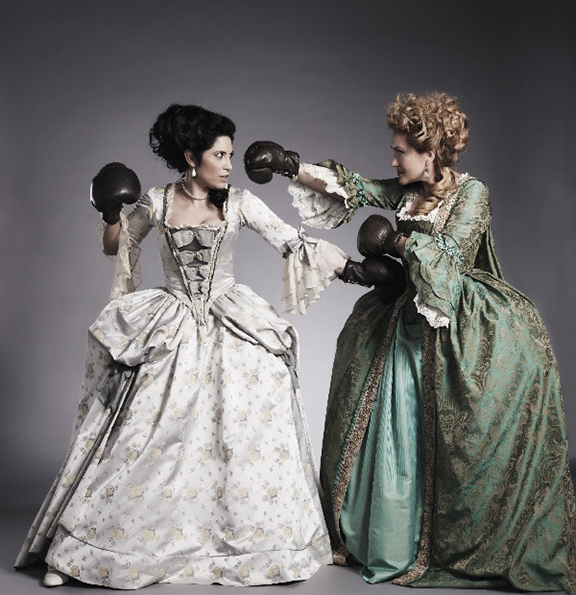
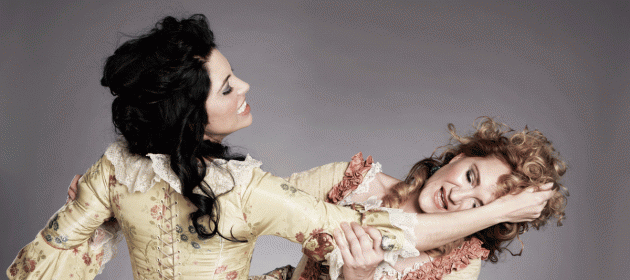
Things got out of hand during a performance of Bononcini’s Astianatte. Fights broke out among the audience when Cuzzoni turned and unleashed a torrent of Italian invective, at her rival. The pair hurled insults at one another. You know the words. These two, knew ALL of them them. Verbal combat soon became physical the performance, be damned. The scene beggars the imagination. A wild west bar fight in stalls and stage alike as two divas tore at each other’s costumes, and pulled each other’s hair.

In the end, the two were physically dragged from the stage their performance, abandoned.

Theater management canceled Cuzzoni’s contract. King George would have none of that and threatened to withdraw their allowance, and that was the end of that. The two divas kept an uneasy truce for the following season, but something had to give.

In the end, Faustina Bordoni was offered a guinea more for the 1728 season. One schilling, one pence. Predictably, Francesca Cuzzoni threw a tantrum and immediately resigned, and returned to Italy.

Faustina Bordoni lived on to a happy and prosperous old age and died on November 4, 1781. No so Francesca Cuzzoni who faded into poverty and obscurity eking out a living it is said, making and selling, buttons.

Back in 1728, theater management dearly wished the whole sorry mess would just go away. No such luck. John Gay’s Beggar’s Opera was a smash hit that season, “the most popular play of the eighteenth century” satirizing Italian opera with its perpetually feuding heroines Polly Peachum, and Lucy Lockit.

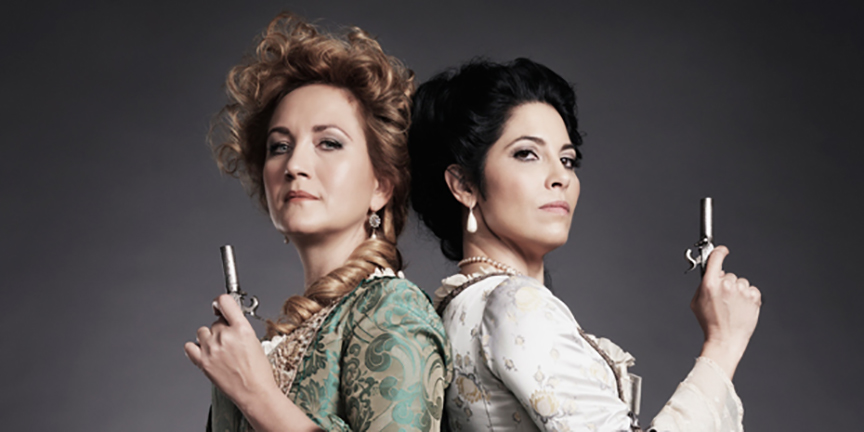
Hat tip “Rival Queens” featuring Simone Kermes, and Vivica Genaux

November 3, 1752 Quacks

As for the man who blinded Händel and all but murdered Bach, he worked most of his 72 years blinding hundreds of unfortunates before he himself, lost his sight. The English writer Samuel Johnson later described the man’s life as “an instance of how far impudence may carry ignorance.”

From Brahms to Beethoven, Mendelssohn to Mozart, German composers have formed the core and the nucleus, of western music. And not just the classical stuff. Frankfurt-born Hans Zimmer has composed scores for over 150 different films including The Lion King, the Pirates of the Caribbean series, Gladiator, and the Dark Knight trilogy. The German-born Persian composer Ramin Djawadi may not be a household name but we know his scores for the 2008 Marvel film Iron Man and season 7 of Game of Thrones, both nominated, for Grammy Awards. The German-American singer/songwriter Henry John Deutschendorf Jr. may not be a household name but his stage name certainly is. We remember him, as John Denver.

1685 was a good year for German composers, George Frideric Händel born on February 23 in Halle and Johann Sebastian Bach barely a month later, in Eisenbach. Bach’s father Johann Ambrosius was a 7th generation musician and encouraged the boy, to learn the violin. Not so Händel ‘s father. A respected barber-surgeon aged 63 at the time of Händel’s birth to his second wife Dorothea, Georg expected his son to study civil law.

Little George found means to smuggle a clavichord into an attic room where he would steal away to practice, while his parents slept.

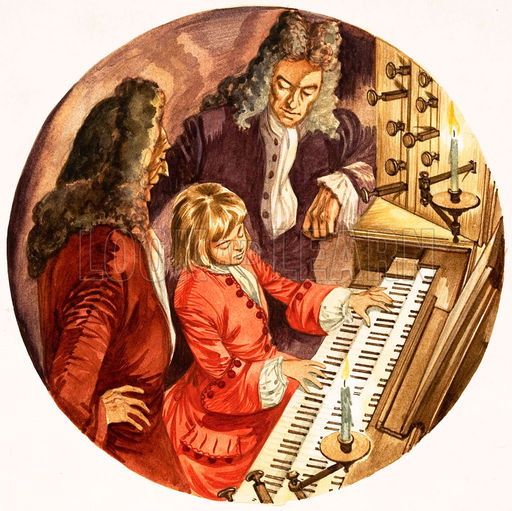
The boy was yet to turn ten when he accompanied his father to the court of the Duke of Johann, Adolf I. Somehow, George found himself on the organ stool and, when he began to play, Georg could only wonder where THAT came from. The Duke was so impressed he persuaded his father to allow him to study music and the rest, is history.

J.S. Bach was only ten when he lost both of his parents, only eight months apart. It was an uncle, Johann Christoph, who introduced the boy to the organ. Like Händel , Bach went on to become one of the most prolific composers of the Baroque era.

From 1727 to this day the anthem Zadok the Priest is performed at coronation ceremonies, of British royalty. The magnificent strains of George Frideric Händel’s “Messiah” and Johann Sebastian Bach’s “Christmas Oratorio” are favorites, of the Christmas season.  And yet there is another, darker connection between the two men. While the two never met both composers were blinded, by the same quack physician.

In the Dutch language a kwakzalver is a seller of cures, nostrums and potions of dubious origin, and little efficacy.   In 1665 an outbreak of Bubonic Plague ravaged London causing doctors to flee by the score leaving quacksalvers and charlatans to pray on the vulnerable, and the fearful.

So bad was it Daniel Defoe, author of Robinson Crusoe, penned the following: 

“Infallible preventive pills against the plague.” “Neverfailing preservatives against the infection.” “Sovereign cordials against the corruption of the air.” “Exact regulations for the conduct of the body in case of an infection.” “Anti-pestilential pills.” “Incomparable drink against the plague, never found out before.” “An universal remedy for the plague.” “The only true plague water.” “The royal antidote against all kinds of infection”;—and such a number more that I cannot reckon up; and if I could, would fill a book of themselves to set them down.

Daniel Defoe

British surgeon Dale Ingram remarked: “Every one [of the quacks in London] was at liberty to prescribe what nostrum he pleased, and there was scarce a street in which some antidote was not sold, under some pompous title.”

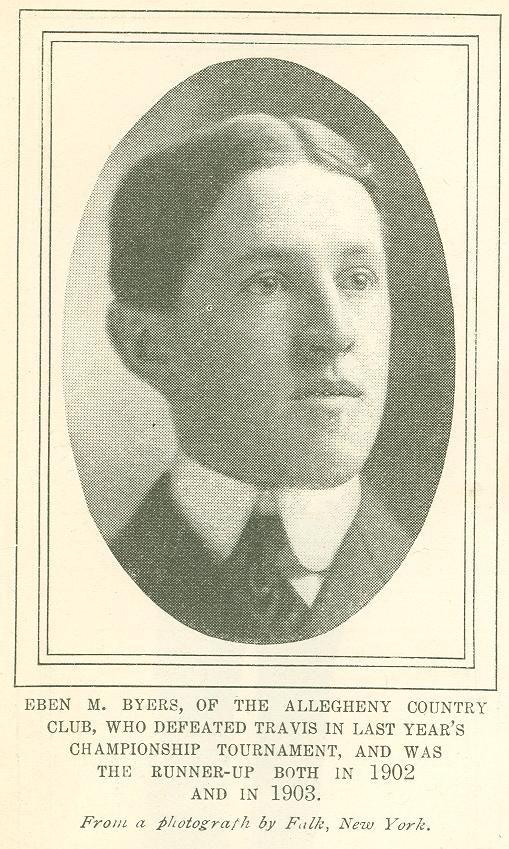
Clark Stanley claimed to have studied with native Hopi shaman and learned the medicinal benefits, of snake oil. The original snake oil salesman made a tidy sum until the US Congress passed the Pure Food and Drug Act, in 1906. In 1917, investigators discovered that Stanley’s elixir was nothing but ordinary mineral oil and beef fat flavored with red pepper, and turpentine. William Bailey’s RadiThor, a nostrum for the cure of erectile dysfunction was basically radium, dissolved in water. Ebenezer Byers, the wealthy Pittsburgh industrialist who won the 1906 US Amateur golf tournament was so enamored of the stuff he drank two to three bottles, every day. The federal government shut RadiThor down in 1932 but not before Byers met a horrible end, his skeleton destroyed and much of his skull eaten away, his jawless body buried, in a lead lined coffin. In 1822, British businessman James Morrison cured his own “inexpressible suffering” with a home made vegetable pill said to cure, whatever ails you. Morrison’s “vegetable universal medicines” were roundly criticized by the medical establishment of the time, but that didn’t seem to hurt business. In 1836 one of Morrison’s resellers was convicted of manslaughter when the post-mortem of one unfortunate revealed a belly full of Morrison’s pills, to be the cause of death.

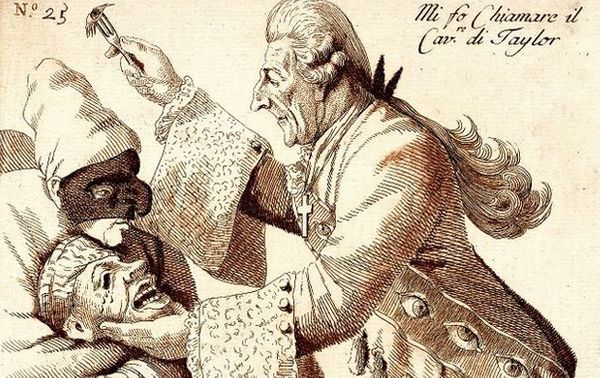
Which brings us to John Taylor and no, I’m not talking about the founding member, of Duran Duran. The self-styled “Chevalier” (knight) John Taylor was an oculist, Royal Eye Surgeon to none other than Britain’s King George, II.

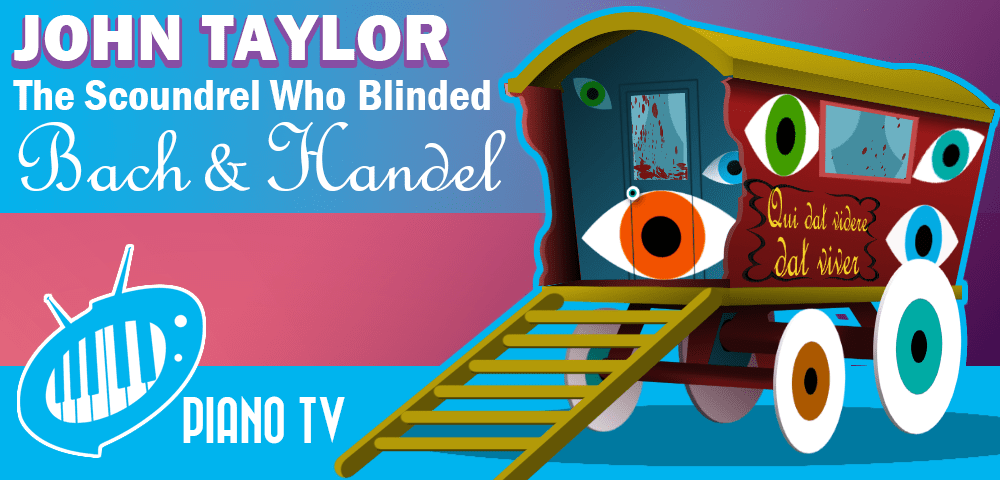
Flamboyant, egotistical and utterly without principle, Taylor would ride into town in a horse drawn carriage painted with images of eyes and the words qui dat videre dat vivere (giving sight is giving life), painted on the side. Victims err, I mean patients of this Baroque era ShamWow pitchman were instructed to leave the bandage on for seven days, plenty long enough for the good doctor to get paid, and leave town. When he wasn’t busy writing his two-volume autobiography “The Life and Extraordinary History of the Chevalier John Taylor”, Taylor would ride into town and deliver a speech on a street corner before performing surgery. On the street corner. In an age before anesthesia with little conception of bacteria the idea was to get in and out, as quickly as possible.

Bach was losing his sight when he underwent the first of two unsuccessful surgeries. After the second, the composer developed a painful post-operative eye infection. Unsurprisingly, a ‘cure’ of laxatives and bleeding did little to relieve the symptoms. Johann Sebastian Bach died of his infection, just a few months later.

Händel was suffering with cataracts when he met the good doctor. Taylor performed a “couching” of the lens on this day in 1752, the insertion of a sharp hook to dislodge the lens and push it down, to emit light. On those few occasions where the procedure succeeded the patient would wear enormous, thick glasses to compensate, for the rest of his life. The other 70 percent including Mr. Händel …went blind.

The man who blinded Händel and all but murdered Bach worked most of his 72 years blinding hundreds of unfortunates before he himself, lost his sight. The English writer Samuel Johnson described the man’s life as “an instance of how far impudence may carry ignorance.” Today the name of John Taylor is all but forgotten, while the works of Bach and Händel live on, after all these centuries.

There’s a reason they call this stuff…Classical.

November 2, 1985 The Curse of Harlan Sanders

Much has been written of the rise of imperial Japan and the military officers, who brought the nation to war. How different the 20th century might have turned out had those guys picked up baseball, instead.

Baseball as we know it was introduced to the nation, in 1872. To this day, the game remains the most popular sport in the country for participants and spectators, alike. In 1907, Ambassador to the United States Tsuneo Matsudaira commented: “the game spread, like a fire in a dry field, in summer, all over the country, and some months afterwards, even in children in primary schools in the country far away from Tōkyō were to be seen playing with bats and balls“.

Did I neglect to mention? The nation we’re talking about, is Japan.

Professional baseball got off to a rocky start in 1920s Japan and continued to flounder, until 1934. That’s when media bigwig Matsutarō Shōriki pulled off a “goodwill tour” with an all-star American team.

“The [1934] party included future Hall of Famers Earl Averill, Lou Gehrig, Charlie Gehringer, Lefty Gomez, Connie Mack, Foxx and Ruth, along with several other American Leaguers (asked to accompany the tour when the National League forbade its stars from coming along). Even Moe Berg, the big league catcher who would eventually work as a United States government spy, was a member of the ball playing entourage”.

H/T baseballhall.org

Much has been written of the rise of imperial Japan and the military officers, who brought the nation to war. How different the 20th century might have turned out had those guys picked up baseball, instead.

The first Japanese professional league was formed in 1936, becoming large enough to split into two leagues in 1950, the Central and Pacific.

Today, the Kansai region of Honshu is the 2nd largest metropolis, in all Japan. That’s where you’ll find the Hanshin Tigers, those perennial underdogs of Nippon Professional Baseball and arch-rival to the Yomiuri Giants of Tokyo, widely regarded as the kings, of Japanese baseball.

As a life-long Red Sox fan, this story is beginning to sound familiar.

November 2, 1985 was a time of unbridled joy for delirious Tigers fans, following Hanshin’s 6-2 drubbing of the Seibu Lions to win the ultimate prize, the Japan series pennant, of 1985.

Now you may not know this, but the Japanese people are crazy, about Kentucky Fried Chicken. Japan is the third largest market on the planet for the Colonel’s yard bird, #3 only behind the United States and China. Not bad for a fast food outfit that opened its first Japanese franchise on July 4, 1970.

Which brings us back, to baseball.

The Boston baseball fan is well acquainted with the “Curse of the Bambino”, the 86-year World Series championship drought, second only to the “Curse of the Billy Goat” denying victory to long-suffering Cubbies fans, for 106 years.

Since 1985, Japanese mothers have scared wayward children into acting right with the curse, of Colonel Sanders.

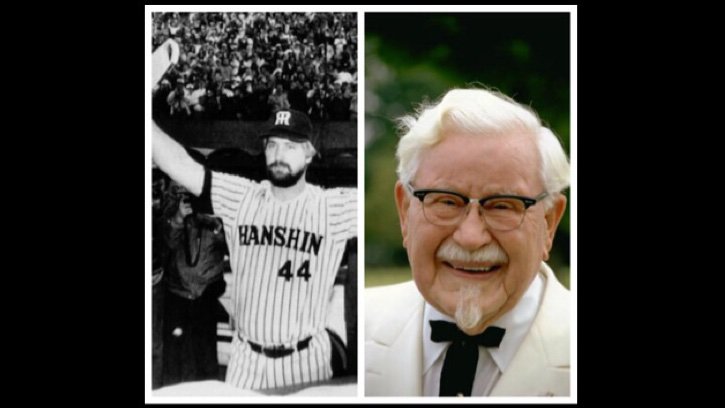
The Hanshin club emerged victorious in 1985, due in large part to the efforts of American slugger, Randy Bass. Delirious after unexpected victory in game one and superstitious as baseball fans the world over, Hanshin supporters gathered at the Ebisu Bridge over the Dōtonbori river in Osaka, to partake in one of the most bizarre spectacles, in the history of sports.

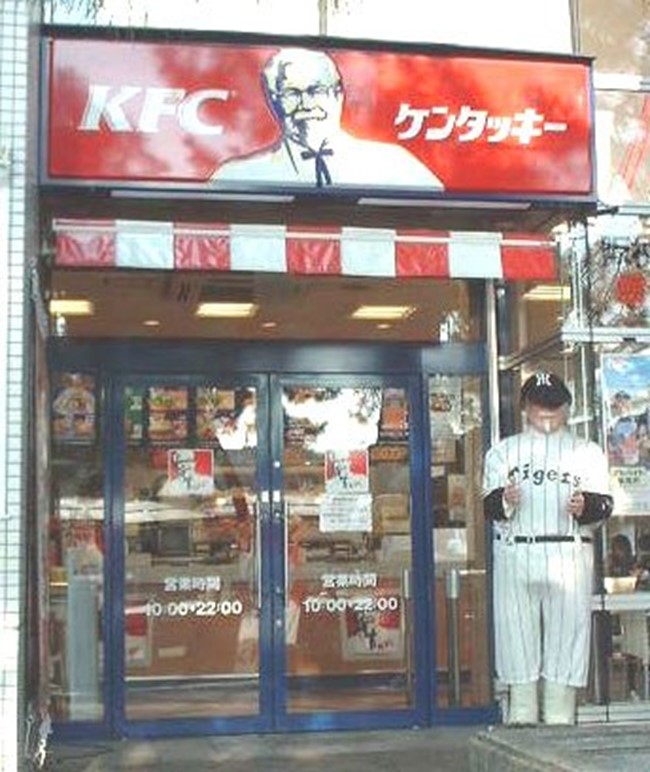
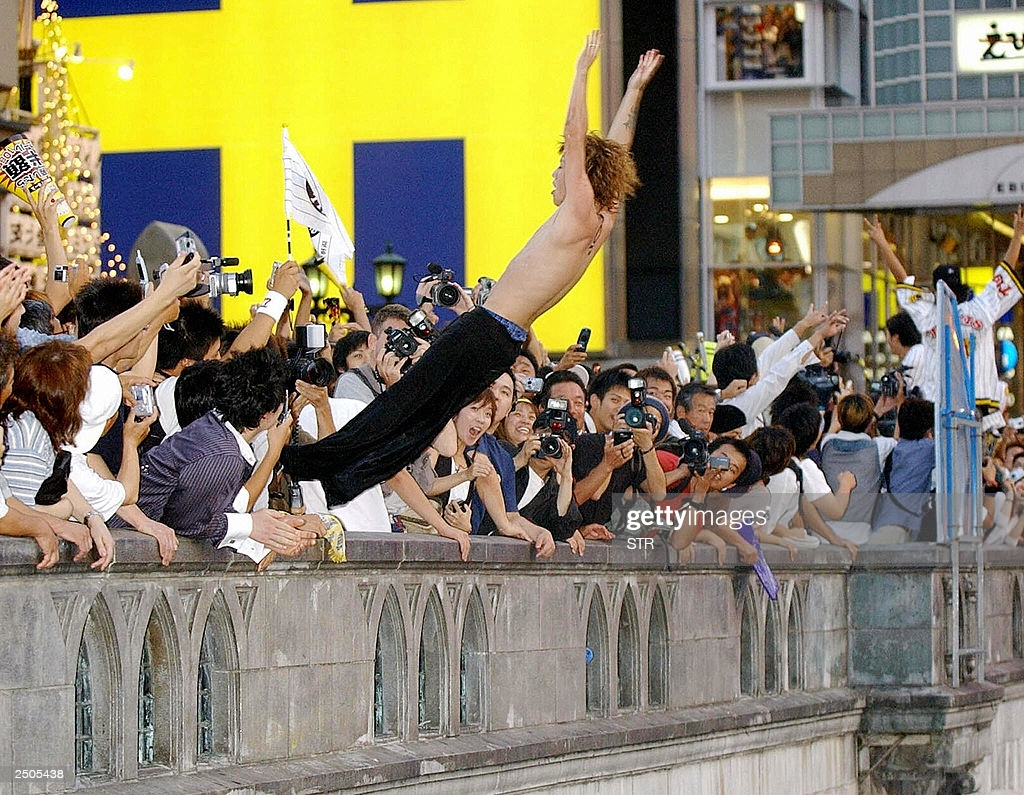
Fans would shout out the names of Tigers players and someone who resembled that player, even vaguely, would jump into the river. There being no Caucasians in attendance to represent Mr. Bass, the crowd took hold of a storefront statue of Harlan Sanders, and threw it into the River.

A young fan of the Hanshin Tigers dives into the Osaka river to celebrate the team’s first league championship win in 18 years 15 September 2003. Tigers defeated Hiroshima Carp 3-2. AFP PHOTO/JIJI PRESS (Photo credit should read STR/AFP via Getty Images)

What the hell. They were both white guys and they both wore beards, right?

Thus began the curse of Colonel Sanders, a losing streak brought on by the ghost of a man who didn’t appreciate being tossed, into a river. Brief rallies in 1992 and again in ’99 brought hope once again to the Hanshin faithful, (gosh, this story sounds Really familiar now), only to have cruel fate, block the way. Repeated efforts were made to retrieve the Colonel from the river, only to be met, with failure.

The curse, dragged on.

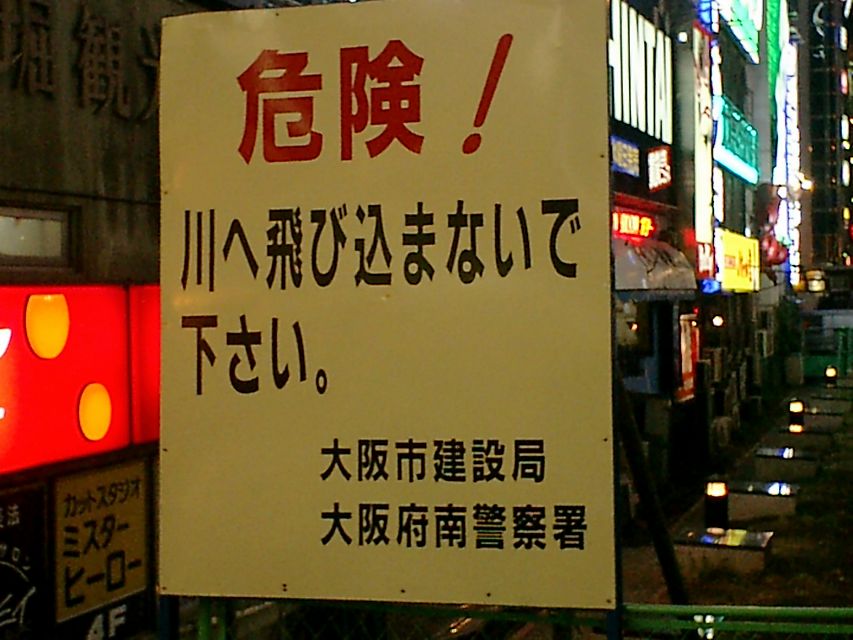
“Dangerous! Do not dive into this river. Osaka Regional Development Bureau and Osaka-Minami Police station” sign at the new Ebisubashi bridge H/T Wikipedia

The joy of victory smiled upon the land of Hanshin once again in 2003, when Yomiuri Giants MVP Hideki Matsui was traded to the New York Yankees, clearing the way to a Central League pennant for Hanshin. Even so, final victory remained elusive. The Japan series went to the Fukuoka Daiei Hawks that year, in 7 games.

Celebration turned to tragedy that year, when thousands of Tigers fans jumped into the river. 24-year-old Masaya Shitababa, drowned. The Osaka city council ordered construction of a new bridge over the Dōtonbori beginning in 2004, making further such jumps, next to impossible.

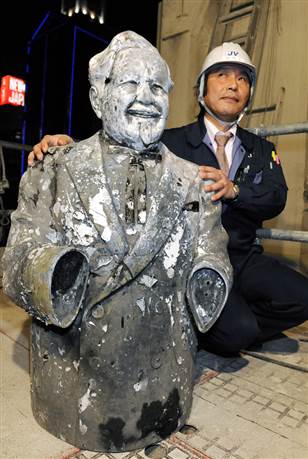
Divers discovered the upper part of Harlan Sanders’ statue on March 10, 2009 and the lower piece, the following day. And yet one hand and the Colonel’s eyeglasses, were nowhere to be found.

Colonel Sanders’ left hand and spectacles remain missing to this day and the KFC where it all started, is closed and gone forever. The October 26, 2021 English language edition of thehanshintigers.com blog mournfully reports: “Game 143 vs. Dragons: Lifeless Last Game, Pennant Lost”. So it is for long suffering fans of the Hanshin Tigers. The curse of Colonel Sanders, lives on.

Image.jpeg

November 1, 1945 X-Day

For years, everyone believed that semi-submersible craft in Fall River must have been a kamikaze vessel, from World War 2. The story that funny little boat had to tell was very different. The tale of a history, that never was.

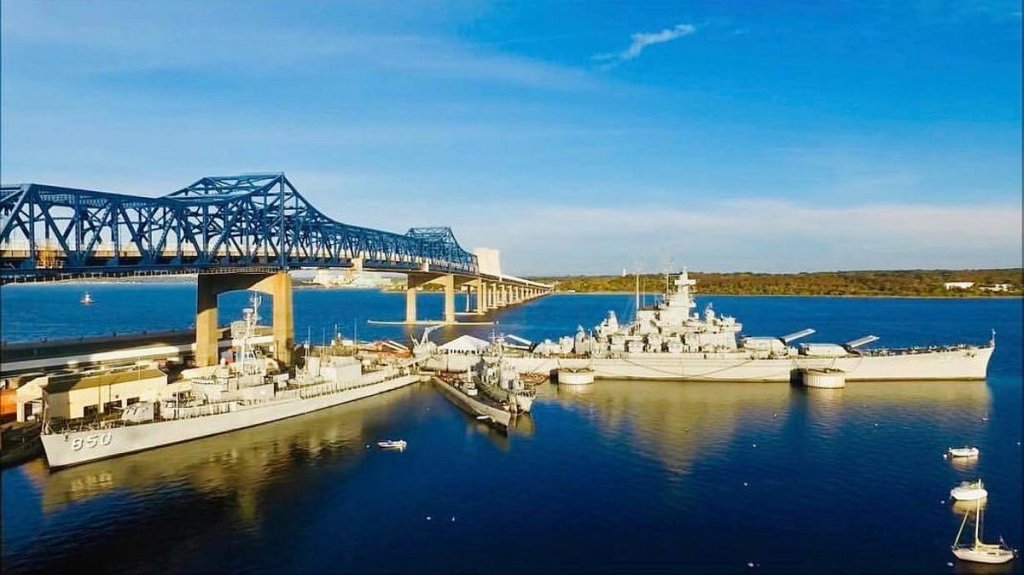
If you’re ever in southeastern Massachusetts, be sure to visit Battleship Cove in Fall River, the largest collection of World War 2 naval craft, in the world. The Battleship Cove museum sports some sixty exhibits, preserving the naval heritage of these iconic vessels and the veterans who served them.

To inspect battle damage visible to this day on the decks of USS Massachusetts is to realize United States armed forces once exchanged shots in anger with our French ally, at a place called Casablanca. The attack sub USS Lionfish once performed “lifeguard duty”, the rescue of downed fliers, off the coast of Japan. Her captain was Lieutenant Commander Edward D. Spruance, son of Admiral Raymond Spruance who commanded US naval forces during one of the most significant naval battles of the Pacific, the battle of the Philippine Sea.

To walk aboard USS Massachusetts or USS Lionfish, is to experience a side of WW2, fast disappearing from living memory.

Battleship Cove

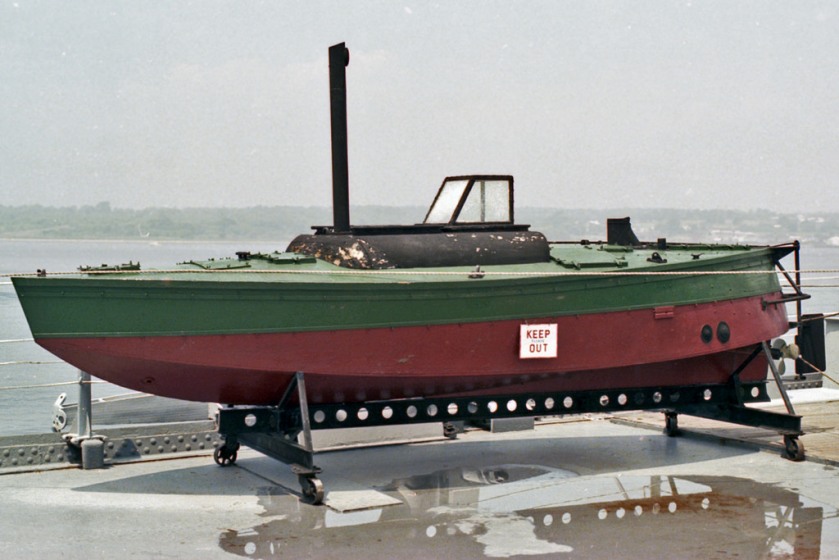
Walk among the wooden-hulled PT boats of the Pacific war, and there you will find a strange little craft. One of three planned for and only two, ever built. Closed at the top and semi-submersible, a Japanese kamikaze boat perhaps, designed for suicide missions against allied warships. Museum management believed just that and mislabeled the display, for years.

The other it turns out is on display at Central Intelligence headquarters, at Langley, Virginia. Years later a retired CIA employee visiting Battleship cove spotted the error. CIA files declassified in 2011 added detail to a very different story, from that of Japanese suicide vessels.  To the tale of a history, that never was.

On August 2, 1939, Hungarian physicist Leó Szilárd delivered a letter which would change history, to President Franklin Delano Roosevelt. Written in consultation with fellow Hungarian physicists Edward Teller and Eugene Wigner and signed by Albert Einstein, the letter warned that Nazi Germany was working to develop atomic weapons, and urged the American government to develop a nuclear program of its own.  Immediately, if not sooner.

The Einstein–Szilárd letter spawned the super-secret Manhattan project, culminating in the atomic bombs “Little Boy” and “Fat Man”, and ending the war in the Pacific in August, 1945.

At the time, precious few were aware of even the possibility of such a weapon.  Fewer still, the existence of a program dedicated to building one.  Vice President Harry Truman, second only to the Commander in Chief himself, was entirely ignorant of the Manhattan project and only read in following the death of the President in April, 1945.

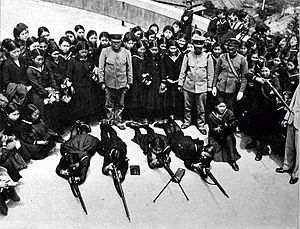
Female students with the Kokumin Giyū Sentōtai, the Volunteer Fighting Corps, prepare for the Allied projected invasion

The battle for the Japanese home islands was expected to be a fight like no other. Casualties of a million or more were expected, and for good reason. Japanese soldiers fought with such fanaticism, that hundreds continued to resist, years after the war was ended. The last holdout wouldn’t lay down his arms until 1974. 29 years, 3 months, and 16 days after the war had ended.

Such frenzied resistance would not be isolated to Japanese military forces, either. Japanese government propaganda warned of “American devils raping and devouring Japanese women and children.” American GIs looked on in horror in 1944, as hundreds if not thousands of Japanese soldiers and civilians hurled themselves to their death, at Laderan Banadero and “Banzai Cliff” on the northern Mariana island of Saipan. One correspondent wrote with admiration of such mass suicides, praising “the finest act of the Shōwa period”… “the pride of Japanese women.”

This is what their government, had taught these people to believe.

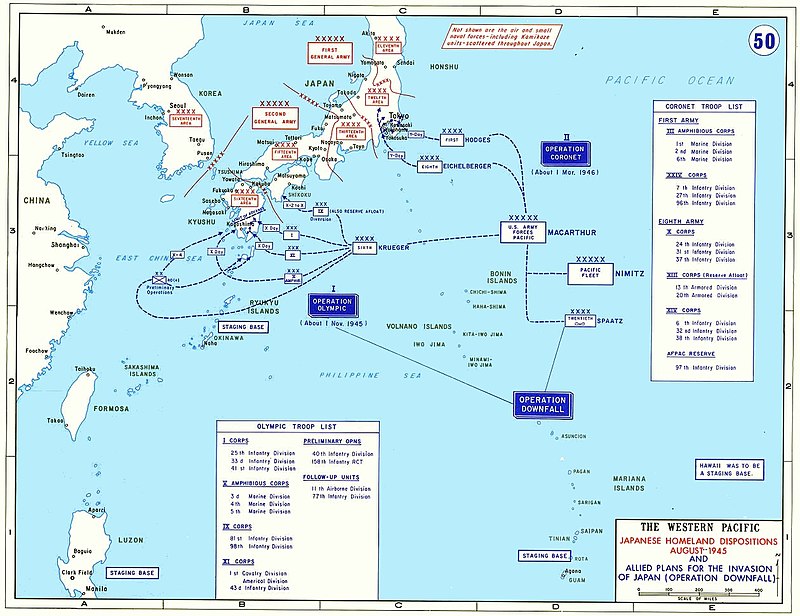
Plans for the final defeat of the Imperial Japanese Empire all but wrote themselves, phase one launched from the south against the main island of Kyūshū, and using the recently captured island of Okinawa, as staging area.  Phase two was the planned invasion of the Kantō Plain toward Tokyo, on the island of Honshu.

Adobe ImageReady
Operation Downfall

The story of the D-Day invasion begins with deception, a massive head fake intended to draw German defenders away from intended landing zones. “Operation Downfall” offered no such opportunities, for deceit. Geography dictated the method of attack, and everybody knew it. Virtually everything left of Japanese military might would be assembled for the all-out defense of Kyūshū, against what would be the largest amphibious invasion, in history.

This was to be a full frontal assault with no subterfuge and nowhere, to hide.

American military planners ordered half a million Purple Hearts, in preparation for the final invasion of the Japanese home islands. To this day, military forces have yet to use them all. As of 2003 some 120,000 Purple Heart medals still remained, in inventory.

The whole thing would begin on “X-Day”.  November 1, 1945.

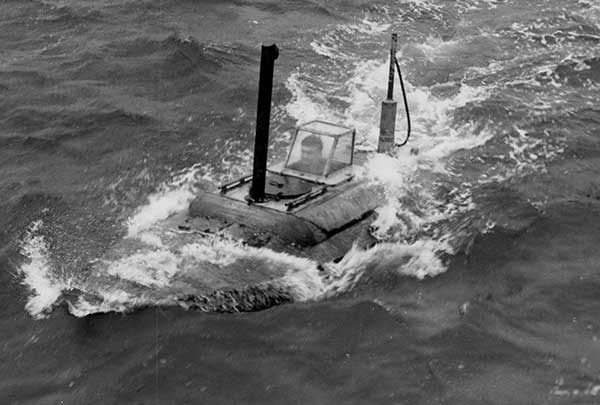
Which brings us back to that funny-looking boat, in Fall River. The Office of Strategic Services (OSS), predecessor to the modern CIA, built two of these semi-submersibles. The vessel was called “Gimik”, part of a top-secret operation code named “NAPKO”.

GIMIK, underway

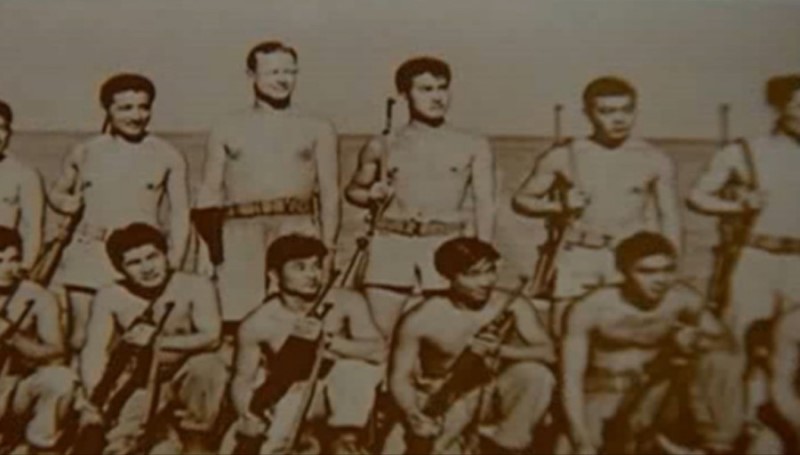
Ten teams were envisioned varying from five to a single individual. 55 Korean-Americans and Korean prisoners freed from Japanese prison labor camps were trained to infiltrate Japanese occupied Korea and possibly Japan itself, to collect intelligence and carry out sabotage against military targets in advance of Operation Downfall. None were aware even of the existence of the other teams lest any, were to fall into Japanese hands.

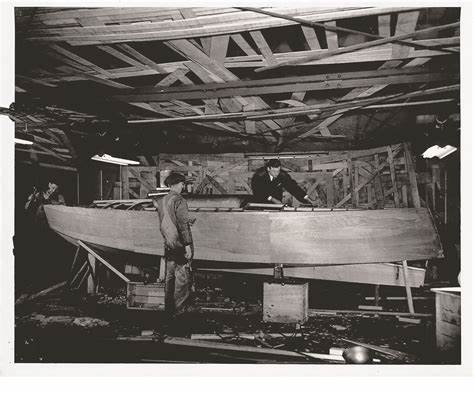
The GIMIK craft were built by John Trumpy and sons yacht yard of Annapolis Maryland, builders of the presidential yacht, Sequoia

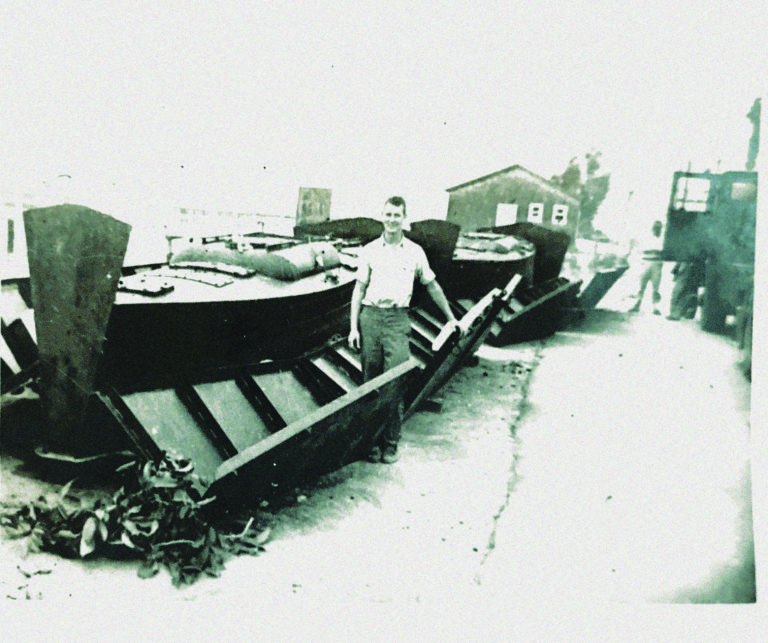
Operated by a single OSS officer with two Korean operatives and up to 1,000-pounds of equipment secured inside, the GIMIK craft would be their means of insertion. 19-feet long and built of plywood to avoid radar and sonar detection, the snorkel was wrapped in steel wool to confound discovery. The craft were to be delivered on theater via submarine in large metal boxes called “coffins’. After insertion, the vessels would go fully submerged and anchor to the bottom where they were equipped to operate, for up to four weeks.

Operated by a single OSS officer with two Korean operatives and up to 1,000-pounds of equipment secured inside, the GIMIK craft would be their means of insertion. 19-feet long and built of plywood to avoid radar and sonar detection, the snorkel was wrapped in steel wool to confound discovery. The craft were to be delivered on theater via submarine in large metal boxes called “coffins’. After insertion, the vessels would go fully submerged and anchor to the bottom where they were equipped to operate, for up to four weeks.

The NAPKO operation was conceived and run by OSS Colonel Carl Eifler, who hope to have as many as seven teams, operational. Tactical focus would then be placed on those best positioned, for ultimate success. As it turned out only two teams were ever ready, for the operational stage.

“Code-named ‘Kinec’ and ‘Charo.’ Both were very similar in concept, differing primarily in intended points of penetration and operating areas. Kinec envisioned landing five agents at Chemulpo Bay, about 20 miles outside Seoul on the country’s west coast; Charo was focused on Pyongyang following penetration via Wonsan and utilized three, rather than five, Korean agents. Typical of NAPKO missions, the teams were to carry minimal equipment and supplies: 100,000 yen, a radio, appropriate clothing for passing as locals, and a Japanese-manufactured shovel for burying the team’s equipment after landing.”

Hat tip former Special Forces NCO Steve Balestrieri, writing for SOFREP.com

The mission was extremely dangerous for obvious reasons.  Training was carried out during the summer of 1945 on Catalina Island, off the California coast.  The two boats, nicknamed “Gizmos”, were tested at night against the US Naval base in Los Angeles. Even this part was dangerous, since no one was told about the trials. Should such a vessel be detected entering the American installation, it would be treated as an enemy vessel, and destroyed.

In the end, the Gizmo teams never left American waters.  Several such tests were carried out without detection, leading to a scheduled departure date of August 26, 1945.  It was never meant to be.

A parallel and equally secret plan to end the war literally burst on the scene on August 6, 1945.  The war would be over, in another nine days.