May 3, 1915 Lest we Forget

“We are the Dead. Short days ago
We lived, felt dawn, saw sunset glow,
Loved and were loved, and now we lie
In Flanders fields”. – John McCrae

800px-Lieut.-Col._John_McCrae,_M.D.
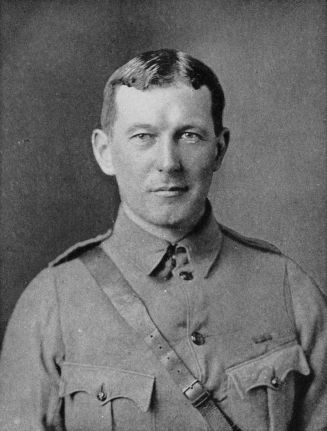
Dr. John McCrae

John McCrae was a physician and amateur poet from Guelph, Ontario. Following the outbreak of the “Great War” in 1914, he enlisted in the Canadian Expeditionary Force at the age of 41. Based on his age and training, McCrae could have joined the medical corps, but volunteered instead to join a fighting unit as gunner and medical officer.

McCrae had previously served in the Boer War.  This was to be his second tour of duty in the Canadian military.

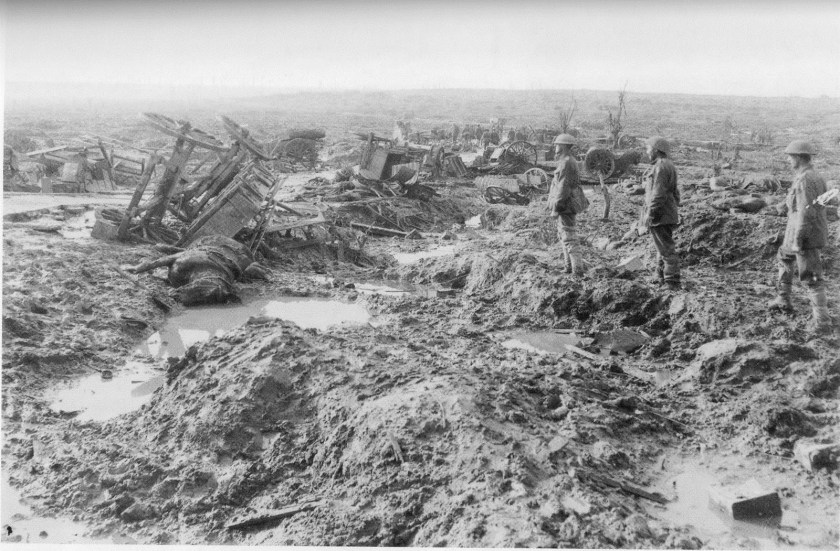
Dr. McCrae fought one of the most horrendous battles of the Great War, the second battle of Ypres, in the Flanders region of Belgium. Imperial Germany launched the first mass chemical attack in history at Ypres, attacking the Canadian position with chlorine gas on April 22, 1915. The Canadian line was broken but quickly reformed in an apocalyptic bloodletting that lasted more than two full weeks.

Dr. McCrae later described the ordeal, in a letter to his mother:

“For seventeen days and seventeen nights”, he wrote, “none of us have had our clothes off, nor our boots even, except occasionally. In all that time while I was awake, gunfire and rifle fire never ceased for sixty seconds … and behind it all was the constant background of the sights of the dead, the wounded, the maimed, and a terrible anxiety lest the line should give way”.
ypres (1)
Stop and imagine for a moment, please, what this looked like, what this smelled like, in color.

On May 3, Dr. McCrae presided over the funeral of friend and fellow soldier Alexis Helmer, who had died in the battle. He performed the burial service himself, when he noted how quickly the red poppies grew on the graves of the fallen. Sitting in the back of a medical field ambulance the following day, just north of Ypres, he composed this verse.  He called the poem, “We Shall Not Sleep”. 
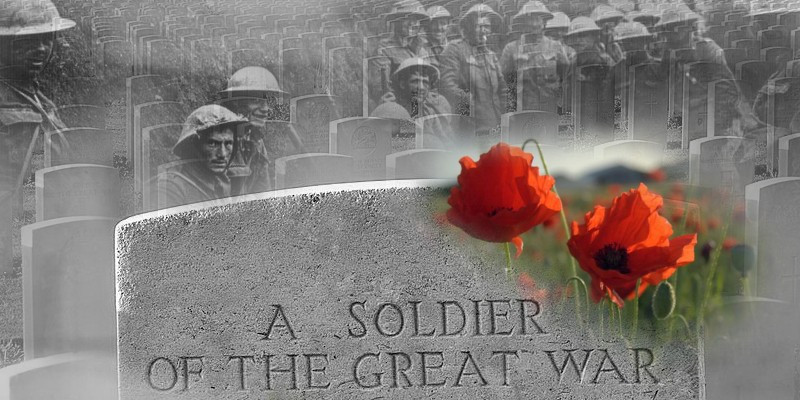
Today we remember John McCrae’s composition as:

In Flanders Fields

In Flanders fields the poppies blow
Between the crosses, row on row,
That mark our place; and in the sky
The larks, still bravely singing, fly
Scarce heard amid the guns below.

We are the Dead. Short days ago
We lived, felt dawn, saw sunset glow,
Loved and were loved, and now we lie
In Flanders fields.

Take up our quarrel with the foe:
To you from failing hands we throw
The torch; be yours to hold it high.
If ye break faith with us who die
We shall not sleep, though poppies grow
In Flanders fields.

Moina Belle Michael was born August 15, 1869 near Good Hope Georgia, about an hour’s drive east of Atlanta. She began teaching at age fifteen and, over a long career, worked in nearly every part of the peach state’s education system.

In 1918, Michael was working at the YMCA Overseas War Secretaries headquarters, in New York.  Browsing through the November Ladies Home Journal she came across Dr. McCrae’s poem. It was Saturday morning, November 9, 1918.  Two days before the armistice.

49a1160c9141869ce025a820a599ef56--flanders-field-lest-we-forget

John McCrae was in a grave of his own by this time having succumbed to pneumonia, while serving the No. 3 Canadian General Hospital, in Boulogne.  He was buried with full military honors at the Wimereux cemetery where his gravestone lies flat due to the sandy, unstable soil.

Michael had seen McCrae’s poem before but it got to her this time, especially that last part:

  “If ye break faith with us who die
We shall not sleep, though poppies grow
      In Flanders fields”

Moina was so moved she made a personal pledge to “keep the faith”, vowing always to wear a red poppy, in remembrance of the dead. She scribbled down a response, a poem, on the back of a used envelope.  She called it:
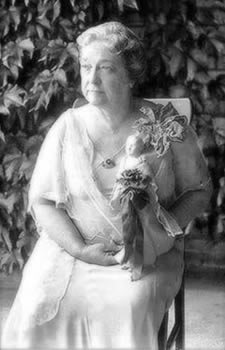
We Shall Keep the Faith

Oh! you who sleep in Flanders Fields,
Sleep sweet – to rise anew!
We caught the torch you threw
And holding high, we keep the Faith
With All who died.

We cherish, too, the poppy red
That grows on fields where valor led;
It seems to signal to the skies
That blood of heroes never dies,
But lends a luster to the red
Of the flower that blooms above the dead
In Flanders Fields.

And now the Torch and Poppy Red
We wear in honor of our dead.
Fear not that ye have died for naught;
We’ll teach the lesson that ye wrought
In Flanders Fields.

The vivid red flower blooming on the battlefields of Belgium, France and Gallipoli came to symbolize the staggering loss of life brought about by the Great War, the “War to End all Wars”. Before they had numbers, this was a war where the death toll from many single day’s fighting exceeded that of every war of the preceding century, military and civilian, combined.

ubbkvmk (1)

Since that time, the red poppy has become an internationally recognized symbol of remembrance, lest we neglect to remember the lives lost in all wars. I keep one always, pinned to the visor of my car. A reminder that no free citizen of a self-governing Republic should ever forget where we come from. Nor the price paid by our ancestors, to get us to this place.

May 2, 1536 Anne of a Thousand Days

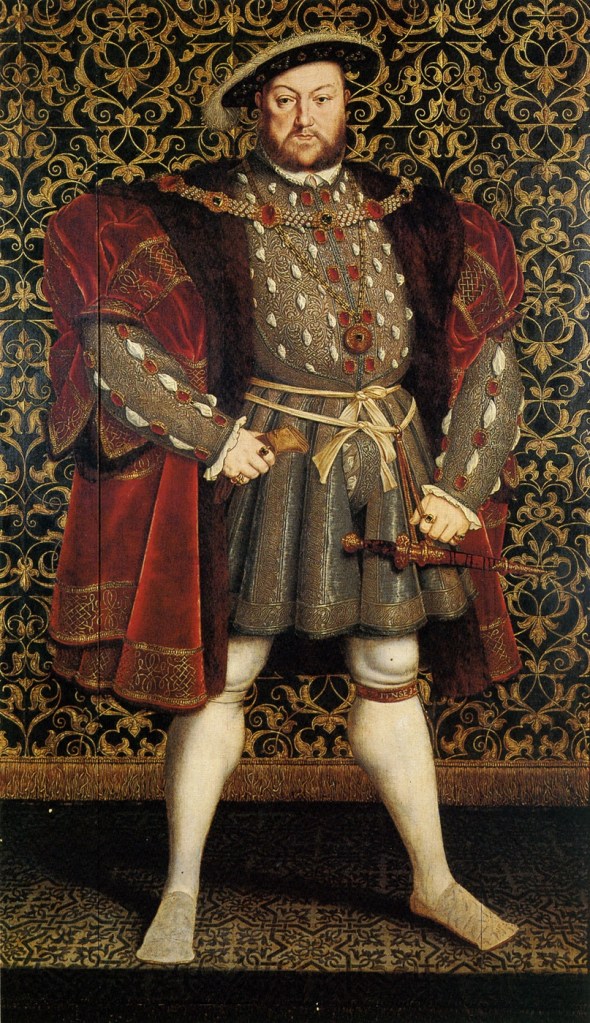
Henry VIII went on to have four more wives after Anne Boleyn, none of whom, bore the coveted male heir. Ironically, Henry himself may have been the problem.

Catherine of Aragon, the youngest daughter of Ferdinand and Isabella, came to England in 1501 to marry Arthur, heir to the British throne and eldest son of Henry VII. The future King died the following year leaving his younger brother to take the throne and ask for the hand of his brother’s widow, in 1509.

The Spanish princess-turned Queen Consort of England was by all accounts a devoted wife, but the marriage bore no sons. Catherine had borne six children by this time including one surviving daughter, Mary Tudor, but there was no male heir. Henry came to believe, or said he believed, it was God’s punishment for marrying his brother’s wife.

Henry VIII

The King carried on for a time with a succession of mistresses. Elizabeth Blount bore Henry the coveted male heir in the person of Henry Fitzroy, the only child born out of wedlock his father, acknowledged. Next came Margaret (Madge) Shelton and later her 1st cousin Mary Boleyn, who is reputed to have borne the King two children though Henry acknowledged, neither.

By late winter 1526, Henry had cast his eye on the daughter of Thomas Boleyn, 1st Earl of Wiltshire, Anne. Henry in a pickle. Catherine considered her marriage to the King to be legitimate, and indissoluble. Anne Boleyn was not about to give it up as a mere mistress, as her sister had. She was going to be the King’s wife, or remain a Lady in Waiting.

Anne Boleyn

Henry had written a book back in 1521, allegedly with the assistance of Sir Thomas More, a future saint of the Catholic church. The Book, Defence of the Seven Sacraments, attacked Martin Luther and the Protestant Reformation, then going on in Europe. The book earned Henry VIII the title Fidei Defensor, Defender of the Faith, bestowed by Pope Leo X.

Half a decade later Pope Clement VII refused to grant, Henry’s annulment. Henry retaliated closing monasteries and nunneries, in England.

Henry and Anne were secretly wed in November 1532 and formally married on January, 25. The newly appointed Archbishop of Canterbury Thomas Cranmer declared Henry’s marriage to Catherine null and void to which the Pope responded, with excommunication. The break with the church of Rome was now complete as Henry VIII became head, of the Church of England.

Later writers would label Anne Boleyn “the most influential and important queen consort England has ever had” but, the label would do her little good. In three short years of marriage, Anne bore King Henry a daughter who would live to adulthood to become Queen Elizabeth I, and three miscarriages.

Left: 20th century painting depicting Anne Boleyn deer hunting, with Henry VIII

Henry lost interest by 1534 following the birth of a stillborn male child. He began having affairs with other women. By April 1836 Henry had his sights on Jane Seymour while having Anne “investigated” for adultery, incest and plotting to kill the King.

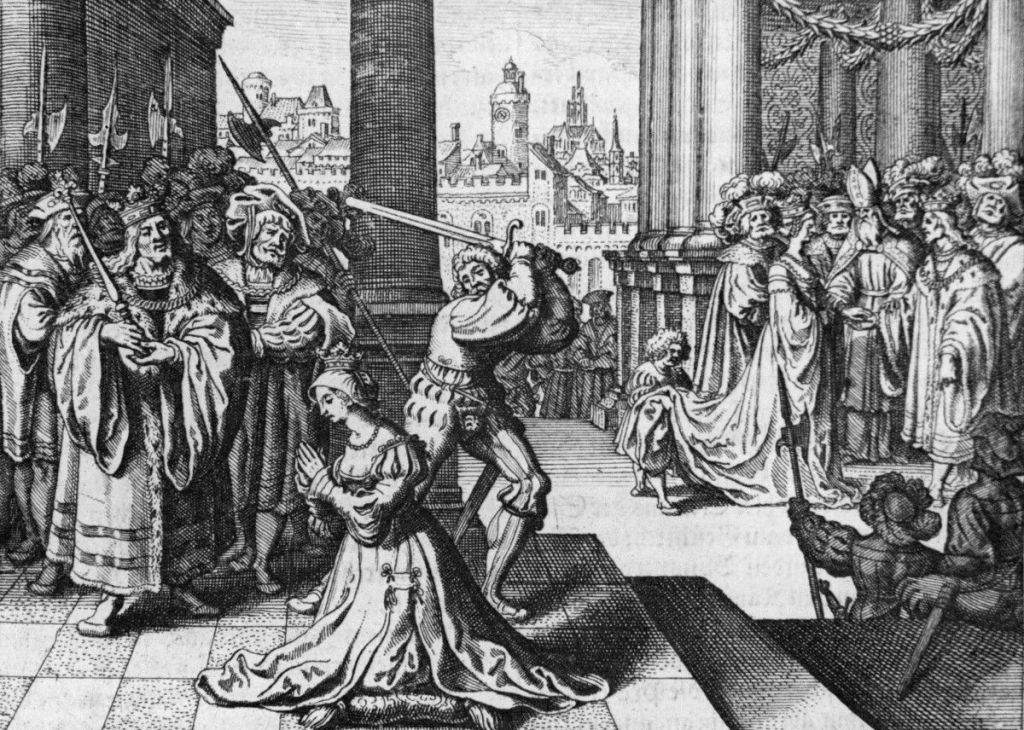
Anne Boleyn was arrested on this day in 1536 and brought, to the tower of London.

In Tudor courts the accused were required to prove their own innocence, 180° opposite what we now regard as a system of “justice”.  With no defense council nor even a clear idea of the charges laid against them, the defendant was made to provide their own defense in a spectacle before a crowd, numbering in the thousands.

Scene from the British period drama, Anne of a Thousand Days

Four supposed co-conspirators were tried before a special court of oyer and terminer.  As members of the aristocracy Anne herself and her brother George were tried separately.  

Even her detractors spoke well of Anne’s appearance in court.  George’s openly speculating about Henry’s virility and questioning paternity of the baby Elizabeth, did little to help the defense.  

A jury hand selected by the prosecution, each of whom had reason to favor conviction, delivered the verdict.  Guilty on all charges.  The sentence, death at the time, place and manner, of the King’s choosing.

In this case decapitation by sword, the sentence carried out on May 19. The following day, Henry VIII was engaged to Jane Seymour.

Henry would go on to have four more wives none of whom, bore the coveted male heir. Ironically, Henry himself may have been the problem. Researchers revealed in 2011 that Henry’s blood group may have been “Kell positive”, referring to the Kell antigen on the red blood cell of approximately 9% of all Europeans.

The presence of the Kell antigen would have initiated an auto-immune response in the mother’s body, targeting the blood of the baby inside of her. First pregnancies are unlikely to be affected but the mother’s antibodies would attack second and subsequent Kell-positive pregnancies, as foreign objects.

The science to prove or disprove the theory didn’t exist in the Tudor era, but it may not matter. Anyone attempting to bring such news to Henry VIII, very likely would have paid for it, with his head.

May 1, 1852 An Awful Language

“In early times some sufferer had to sit up with a toothache, and he put in the time inventing the German language”. – Mark Twain

Planning a business trip from Sunny Cape Cod™ to Presque Isle Maine I found myself pondering. What shall I do with the eternity it will take me to get there or six hours, fifty minutes, whichever comes first. I hit upon the idea of learning German, and why not? Books on Tape are free at my local library. I shall arrive at my meeting with mind fresh and horizons expanded by new adventures, in learning.

Right.

I emerged from my rolling dungeon some seven hours later, blinking like a marmot, flummoxed, exhausted and thoroughly convinced, of my own inadequacy. How the hell is anyone supposed to learn that stuff?

Turns out, I was not alone. No less a giant of the literary world than Mark Twain once said a person of modest gift could learn English in 30 hours, French in thirty days and German, in thirty years.

“I would rather decline two drinks than one German adjective.”

Mark Twain

Consider for example, verb separation. The German verb ankommen is a separable verb, a trait wisely shunned by the rest of the world’s 6,500 languages save for Dutch, Afrikaans and Hungarian:

a. Sie kommt sofort an. she comes immediately at – ‘She is arriving immediately.’
b. Sie kam sofort an. she came immediately at – ‘She arrived immediately.’
c. Sie wird sofort ankommen. she will immediately at.come – ‘She will arrive immediately.’
d. Sie ist sofort angekommen. she is immediately at.come – ‘She arrived immediately.’

Hat tip Wikipedia for that one

And forget about Gender. Every noun has a gender in German for which there are no means save brute memorization, to learn. Then it turns out, a young lady has no gender at all while a turnip, does. A fish scale has a gender but a fishwife, an actual female, does not.

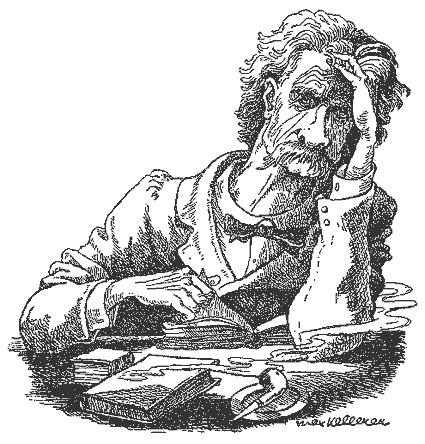
Illustration by Max Kellerer from German edition of Die Million Pfund-Note from the Dave Thomson collection

“Surely there is not another language that is so slipshod and systemless, and so slippery and elusive to the grasp. One is washed about in it, hither and thither, in the most helpless way; and when at last he thinks he has captured a rule which offers firm ground to take a rest on amid the general rage and turmoil of the ten parts of speech, he turns over the page and reads, “Let the pupil make careful note of the following exceptions.” He runs his eye down and finds that there are more exceptions to the rule than instances of it”.

Mark Twain, a Tramp Abroad

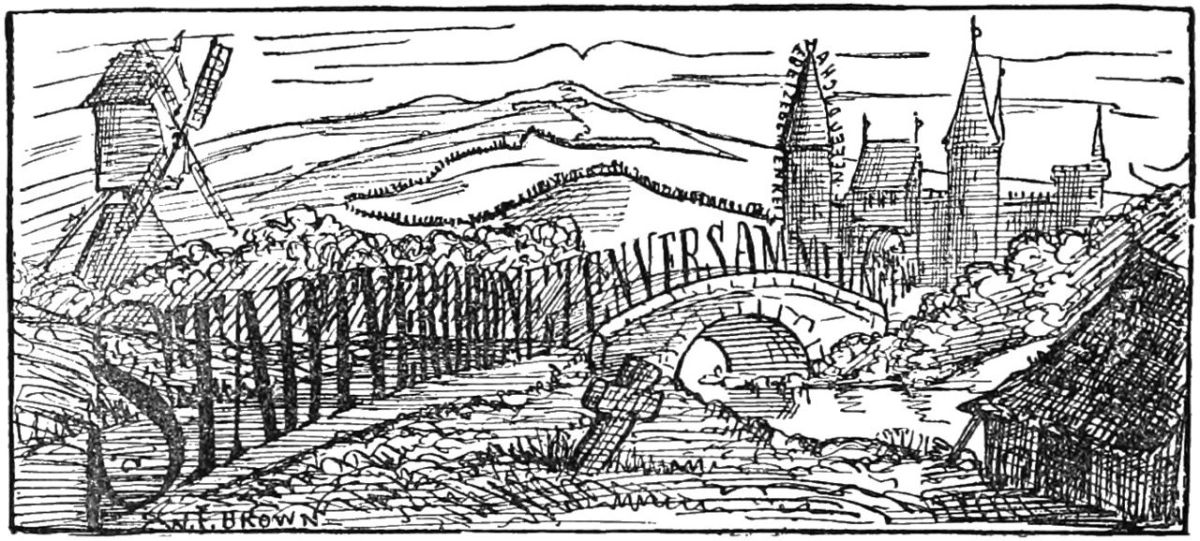
Take an art class sometime and the first thing you’ll learn about, is perspective. In the German language whole sentences run together into single words so long as themselves, to have perspective. Consider, “Generalstaatsverordnetenversammlungen“. For the German as a second language learner, what does that even mean!?

It’s all in the perspective

‘Never knew before what eternity was made for. It is to give some of us a chance to learn German.’

Mark Twain

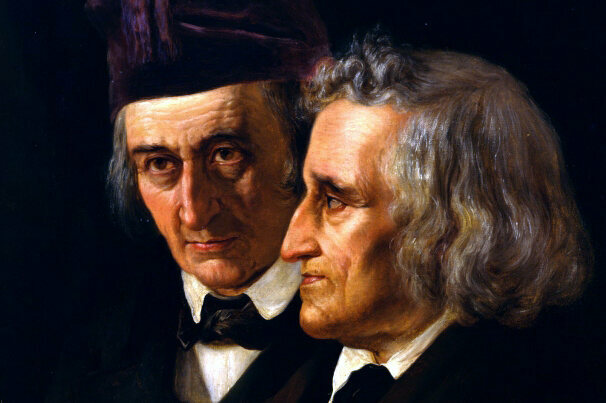
Today we remember Jacob and Wilhelm Grimm for their collection of folklore and fairy tales, first published in 1812 and expanded seven times, by 1857. Snow White and the Seven Dwarves, Red Riding Hood, Rapunzel. There are few among us not steeped in their work but, did you know. They also wrote the dictionary of the German language? Sort of.

Jacob and Wilhelm, the Brothers Grimm

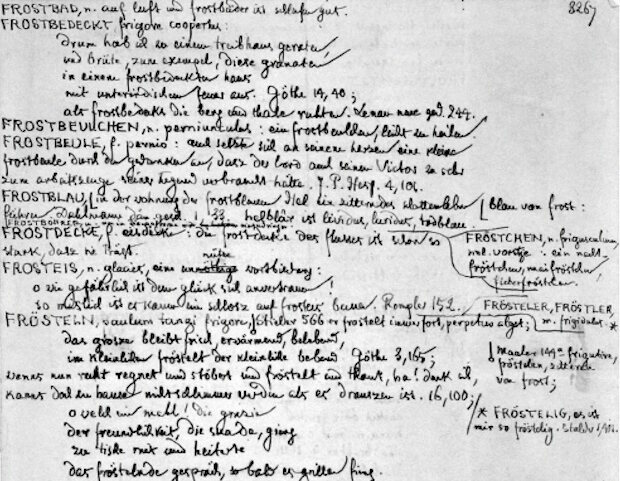
In 1837, the Brothers Grimm needed to pay the rent. Taking a local publisher up on their offer the first part was released on this day, in 1852. Two years later, the project included ‘A’ through “Biermolke”. (Beer whey). “Biermolke” through E came about in 1860, the year after Wilhelm, died. Jacob died three years later with the last entry, “Frucht,” “Fruit”.

The Grimm brothers project outlived the formation of the German state and two world wars at last coming to completion, in 1961.

The “Deutsches Wörterbuch“, the dictionary of the German language fills a whopping 330,000 headwords in 32 volumes. By way of comparison, the Oxford English Dictionary is enough to make a bookshelf groan, with 20 bound volumes.

124 years in compiling and THAT was all, by native speakers. So, about that 30 years thing, to learn the German language. Sure thing, Mark ol’ pal. Sure thing.